

close
Choose Your Site
Global
Social Media

Author: Site Editor Publish Time: 2026-04-20 Origin: Site
Having a kids trampoline in the backyard offers a fun and exciting way for children to stay active, improve their coordination, and enjoy outdoor play. It provides an excellent opportunity for exercise while also offering endless entertainment. However, as with any outdoor activity, safety should always be the top priority. While trampolines can be a great source of fun, it's essential to ensure they are used correctly to minimize the risk of injury. By choosing the right trampoline, setting up proper safety features, and following usage guidelines, parents can create a safe environment for their children to jump, laugh, and play freely.
When selecting a trampoline for your child, it's important to take into account several factors to ensure you choose the best one for your yard, your child’s needs, and the safety of everyone involved.
Before purchasing a trampoline, consider the available space in your yard. It's essential to ensure that the trampoline fits comfortably in the area, leaving room for safe clearance around the edges. The size of the trampoline should also correspond to the number of children who will be using it. Smaller trampolines may work well for single users or smaller yards, while larger trampolines are suitable for multiple jumpers, providing more space to play safely. Typically, trampolines range from 8 to 15 feet in diameter, so choose based on both your space and your child's play needs.
The shape of the trampoline also plays a role in how it functions and fits into your space. Round trampolines are the most common choice, offering a balanced and predictable bounce that naturally encourages jumpers to stay in the center, making them safer for younger children or beginners. On the other hand, rectangular trampolines provide a higher, more intense bounce, making them better suited for older kids or those looking to perform tricks. Rectangular trampolines also provide more jumping area and are often preferred for larger yards or by children with more trampoline experience.
It's important to check the weight limit of the trampoline before making a purchase. This ensures that the trampoline can safely accommodate the number of kids who will be using it. Exceeding the weight limit can compromise the stability and safety of the trampoline. If more than one child will be jumping at once, make sure the trampoline is rated to support their combined weight. Always follow the manufacturer's weight guidelines to prevent any accidents or damage to the trampoline’s frame and springs.
When selecting a trampoline for your child, it’s essential to ensure it includes key safety features that reduce the risk of injury and ensure a fun, secure jumping experience. Here are the most important safety features to look for:
A safety netting enclosure is one of the most crucial safety features for a kids trampoline. It acts as a protective barrier, preventing children from falling off the trampoline while jumping. The net should fully enclose the trampoline and be securely attached to the frame to avoid gaps where kids could slip through. High-quality netting should be made of durable, UV-resistant material to withstand outdoor conditions, and it should be tall enough to prevent children from accidentally bouncing over the edge. A properly installed safety net can significantly reduce the likelihood of falls and serious injuries.
Padding around the springs and frame is vital to ensure safety and comfort during use. Springs and the trampoline’s metal frame can pose significant hazards if they are left exposed. Without padding, children may land on or near the springs, causing painful pinches, cuts, or even more severe injuries. The padding should cover the entire frame, including the springs, and be made of thick, durable foam that is wrapped in weather-resistant fabric. This protective layer reduces the risk of injury while adding extra cushioning for the child’s jumps. It also ensures that the trampoline is more comfortable to use.
The quality of materials used in the construction of the trampoline is directly linked to its durability and safety. Look for trampolines made with weather-resistant materials, such as galvanized steel for the frame and UV-resistant fabric for the mat. These materials will help prevent rusting, fading, or weakening due to exposure to sun, rain, or snow, ensuring the trampoline lasts longer and remains safe to use. Additionally, the jumping mat should be made from heavy-duty, tear-resistant material to handle repeated use. Choosing high-quality materials ensures the trampoline remains sturdy, safe, and reliable over time.
By ensuring your kids’ trampoline includes these key safety features, you can provide a secure environment for your children to enjoy hours of active fun while minimizing the risk of accidents and injuries.
Proper setup is crucial for ensuring the trampoline is safe and stable for use. Here’s how to set it up securely:
Follow the manufacturer’s instructions carefully to assemble the trampoline. Start by attaching the frame, ensuring all parts are connected and tightened. Then, evenly attach the springs to the mat, followed by the safety netting and padding. Finally, check all components to ensure they are secure and there are no loose parts.
Place the trampoline on a flat, level surface to avoid instability. Keep the area clear of obstacles like trees and fences. Ideally, place it on soft ground such as grass or soil. Avoid hard surfaces like concrete. Ensure the trampoline is a safe distance from structures to give kids enough room to jump safely.
Anchor the trampoline using ground stakes or tie-down straps to keep it stable, especially in windy conditions. Install any stabilizing legs or supports that come with the trampoline. Regularly check for loose parts or signs of wear and tighten bolts as needed.
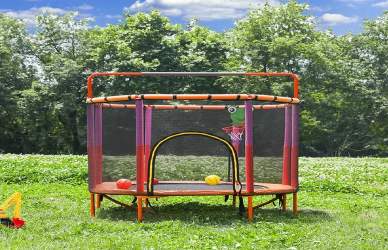
To ensure a fun yet safe trampoline experience, it's important to follow specific guidelines for supervision, age/weight restrictions, and safe jumping practices.
Always supervise children while they are using the trampoline. Even with the best safety features, accidents can still happen. Active supervision helps ensure children follow safety rules, prevents risky behavior, and allows adults to intervene quickly if needed.
Adhere to the age and weight guidelines set by the manufacturer. Most trampolines are designed for children aged 6 and up. For younger children, consider smaller trampolines with lower weight limits. Also, only allow a certain number of jumpers at once, as trampolines have weight capacities. Typically, one jumper at a time is recommended to avoid collisions and reduce the risk of injury.
Establish clear safety rules to ensure safe play:
· No flips or somersaults: These moves can result in serious injuries.
· One jumper at a time: This prevents accidental collisions and falls.
· Jump in the center: Encourage children to stay in the middle of the mat to avoid falling off the edge.
· No rough play: Pushes or shoves can lead to accidents, so it’s best to keep the jumping fun and light.
By following these guidelines, you can help ensure that trampoline play is both enjoyable and safe for everyone.
Proper maintenance is key to ensuring your trampoline remains safe and in good working condition over time. Regular checks and care help prevent accidents and extend the life of the trampoline.
Regularly inspect your trampoline to check for wear and tear on important parts:
· Springs: Look for rust, broken, or loose springs. Rusted or damaged springs can affect the bounce and stability.
· Mat: Check for holes, tears, or fraying. A damaged mat can be a tripping hazard or tear completely if used improperly.
· Frame: Examine the frame for any bends, cracks, or damage. A compromised frame can cause instability or collapse.
Inspect the trampoline at least once a month, especially after harsh weather or heavy use.
If you find any damaged parts, it’s important to replace or repair them immediately.
· Springs and mats: If springs are rusty or broken, or if the mat is torn, replace these parts as soon as possible.
· Frame damage: Any bending or cracking in the frame requires immediate attention. If it’s severe, replacing the frame may be necessary.
Always use replacement parts recommended by the manufacturer to ensure proper fit and safety.
When not in use, store your trampoline properly to protect it from the elements:
· Cover it: Use a weather-resistant cover to shield the trampoline from rain, snow, and UV damage. This helps preserve the material and padding.
· Disassemble for winter: If you live in a region with harsh winters, consider disassembling or storing the trampoline to prevent weather damage.
· Store indoors: When possible, move smaller parts (like ladders or nets) indoors during extreme weather to avoid deterioration.
By performing routine inspections, making necessary repairs, and storing the trampoline properly, you can ensure long-term safety and enjoyment for your kids.
Smaller, round trampolines are ideal for tight spaces, providing enough jumping area without overwhelming the yard.
Secure the trampoline with anchors or straps designed for wind resistance, and remove ladders to prevent unauthorized access.
Most trampolines are safe for kids aged 6 and up, though always check manufacturer guidelines for specific age recommendations.
Set clear rules like no flips, only one jumper at a time, and remind them to stay in the center of the mat to avoid falls.
In conclusion, selecting a safe trampoline and maintaining proper safety protocols is crucial for ensuring a fun and injury-free experience for your kids. By choosing a trampoline with essential safety features like a secure safety net, padded springs, and durable materials, you’re providing a safe environment for active play. Regular inspections, prompt repairs, and proper storage are also key to keeping the trampoline in good condition over time. At Zhejiang Zoshine Sports Equipment Co., Ltd., we are committed to offering high-quality, safe trampolines that are designed with your child’s safety in mind. By following these guidelines and making safety a priority, you can create a fun, secure backyard where kids can jump, play, and stay active, giving you peace of mind while they enjoy the outdoors.


