

close
Choose Your Site
Global
Social Media

Author: Site Editor Publish Time: 2026-02-05 Origin: Site
Choosing the right trampoline should be based on facts, not guesswork. Top rated rectangle trampoline with enclosure reviews help families, athletes, and buyers understand real performance before investing. A rectangle trampoline stands out for its predictable bounce, efficient use of backyard space, and reliable enclosure safety. These reviews reveal how models perform in outdoor conditions, how frames handle repeated use, and how enclosures protect users. In this guide, we analyze performance, safety, sizing, and user experience to help you choose with confidence.
A rectangle trampoline earns top ratings because its bounce stays even across the full mat. Reviews often highlight how energy transfers smoothly from springs to surface. Unlike round designs, users do not drift toward the center. This makes movement predictable and controlled. Gymnast-style springs along the long sides create balanced lift. For outdoor trampoline use, consistency matters. It supports skill repetition, safer landings, and shared use. Many reviewers note reduced strain and better rhythm. This reliable bounce explains why rectangle trampolines rank high for training and recreation.
Top rated rectangle trampolines pair performance with enclosure systems that fully surround the jump area. Reviews praise tall nets that stay taut during use. The enclosure keeps jumpers inside the safe zone without restricting movement. Parents value zip-free or overlap entrances. They reduce snag risk and simplify supervision. For outdoor trampoline setups, wind resistance also matters. Reviewers often mention reinforced net stitching and stable pole sleeves. These details improve trust. Safety-focused enclosures are a key reason rectangle trampoline models earn strong ratings.
A rectangle trampoline uses backyard space efficiently. Reviews often mention how the straight edges align well with fences or patios. This shape allows larger jump areas without wasted corners. For outdoor trampoline planning, this matters. Families gain more usable surface in limited yards. Athletes gain room for linear movement. Reviewers appreciate how placement feels intentional rather than intrusive. The shape also supports structured play and drills. Efficient layout, combined with enclosure safety, pushes rectangle trampolines into top rated status.
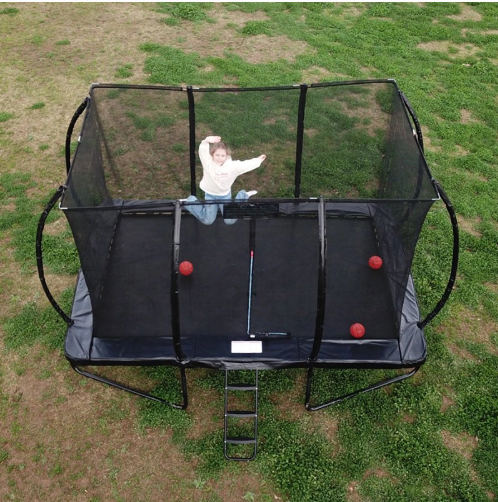
Frame quality appears often in top rated rectangle trampoline reviews. Buyers describe galvanized steel thickness, joint fit, and weld integrity. These details signal durability. Outdoor trampoline exposure demands rust resistance and structural stability. Reviews often mention how frames remain rigid after months of use. When buyers report minimal flex and quiet operation, ratings improve. Strong frames support heavier loads and repeated impact. They also keep enclosures aligned. Review-based rankings rely heavily on these durability signals, not just stated specifications.
Enclosure feedback plays a major role in rankings. Reviews often focus on how nets connect to mats. No-gap designs earn praise because they block access to springs. Users feel safer letting children jump freely. For outdoor trampoline buyers, UV resistance matters too. Reviews note whether nets fade or loosen over time. Strong enclosure poles and padding also influence trust. When users report stable nets after storms or heavy use, ratings climb. Enclosure design quality directly shapes top rated lists.
Star ratings summarize experience, but detailed comments add value. Reviewers often describe assembly clarity, first impressions, and long-term comfort. High ratings usually reflect consistent satisfaction across these stages. For rectangle trampoline rankings, reviewers value honest performance over flashy extras. Outdoor trampoline buyers especially reward reliability. When reviews mention repeat purchases or recommendations, trust increases. Ranking systems weigh both quantity and depth of feedback. Real-world satisfaction confirms whether a model truly deserves top rated status.
Premium rectangle trampoline models earn praise for controlled lift and responsiveness. Reviews describe smooth takeoff and stable landings. These models often feature longer springs and reinforced frames. Advanced users value how the mat responds evenly during complex movements. Outdoor trampoline conditions test consistency, yet reviews note reliable performance. Enclosures remain firm without restricting motion. Many reviewers mention confidence during high jumps. These traits explain why premium models dominate top rated rectangle trampoline reviews for serious users.
Family-focused rectangle trampolines rank high because safety features align with real use. Reviews highlight thick padding, soft-touch netting, and secure entry systems. Parents value predictable bounce that reduces collisions. For outdoor trampoline placement, families also note weather resistance. Reviewers often mention peace of mind during group play. High safety scores come from consistent enclosure performance and sturdy frames. These models balance fun and protection. That balance keeps them near the top of review rankings.
Value-focused rectangle trampoline models earn strong reviews when performance meets expectations. Buyers often compare price against frame quality and enclosure reliability. Reviews praise models that deliver solid bounce without premium pricing. For outdoor trampoline buyers, value also includes longevity. Reviewers note when materials age well. High ratings appear when value models avoid shortcuts in safety. Strong feedback places these options among top rated choices for cost-conscious buyers.
No-gap enclosure systems receive consistent praise in rectangle trampoline reviews. Users describe how nets attach directly to the mat edge. This design blocks access to springs and frame edges. Parents feel reassured during active play. For outdoor trampoline use, this matters more as visibility drops at dusk. Reviewers report fewer slips and safer exits. Injury prevention remains a key reason buyers rate these systems highly. The feedback reinforces enclosure design as a top safety advantage.
Padding quality shapes user confidence. Reviews often mention foam thickness and coverage consistency. Thick pads absorb impact and reduce contact risk. Pole protection also matters. Reviewers praise sleeves that stay in place during use. For outdoor trampoline exposure, padding durability matters. Reviews note resistance to cracking or compression. When padding holds shape, satisfaction rises. These safety details help rectangle trampolines maintain high ratings across user groups.
Stability features appear often in positive reviews. Buyers mention wide leg bases and secure anchoring options. Outdoor trampoline setups benefit from added ground contact. Reviewers describe reduced movement during energetic use. Stable frames keep enclosures upright and nets tensioned. Trust builds when users feel minimal sway. This confidence translates into higher ratings. Stability and anchoring feedback strongly support top rated rectangle trampoline status.
Selecting the right rectangle trampoline size requires understanding both usable jump area and required safety clearance. Reviews often reference recommended buffer zones of at least 1.8–2.4 meters around the frame to allow safe entry, exit, and enclosure flex. Straight edges make it easier to align the trampoline parallel to fences or patios without wasted corner space. Larger models support longer movement paths, which improves flow during use. Buyers report higher satisfaction when dimensions are chosen based on yard geometry rather than maximum size alone.
Top rated reviews frequently distinguish between static load and dynamic load performance. Users describe how higher-rated rectangle trampolines maintain rebound stability under heavier single users or staggered multi-user activity. Frames with higher load tolerance show less deflection, which preserves bounce consistency and reduces frame fatigue. Outdoor trampoline buyers also value capacity margins, since weather exposure can affect materials over time. When real-world performance aligns with stated capacity, reviews reflect greater confidence and long-term trust in the product.
User reviews often separate solo jumping from shared use because performance demands change once more than one person is on the mat. For outdoor trampoline buyers, understanding how load distribution, bounce behavior, and user interaction differ helps set realistic expectations and explains why rectangle designs receive stronger comparative ratings.
| Performance Factor | Single-User Use (Rectangle Trampoline) | Multi-User Use (Rectangle Trampoline) | Practical Application | Technical Reference / Data | Key Considerations |
|---|---|---|---|---|---|
| Load distribution | Load concentrated at one landing zone | Load distributed along length of mat | Allows controlled solo training or shared family play | Rectangular mats distribute force through parallel spring rows | Avoid clustering users at one end |
| Bounce behavior | Maximum rebound height and precision | Slightly reduced height, stable rhythm | Maintains predictable bounce under shared load | Dynamic rebound efficiency typically remains >85% under partial load (manufacturer test data, verify) | Not designed for synchronized jumping |
| Dynamic load range | 80–100% of rated single-user dynamic load | 40–70% of rated dynamic load per user | Supports varied use without structural instability | Typical dynamic load rating: 400–450 lb (180–205 kg) single user | Always respect per-user limits |
| User interference | Minimal, full control of trajectory | Reduced interference due to linear movement zones | Safer spacing for families and teens | Rectangular geometry enables parallel jump paths | Clear usage rules improve safety |
| Frame response | Localized elastic response | Distributed frame deflection | Reduces sudden rebound loss during shared use | Straight-beam frames manage bending moments more evenly | Ground anchoring improves stability |
| Bounce consistency | Very high consistency | Moderate to high consistency | Improves satisfaction during group play | Spring alignment minimizes phase mismatch between users | Expect natural energy dampening |
| Outdoor use impact | Minimal cumulative stress | Higher cumulative fatigue load | Suitable for frequent family use | Hot-dip galvanized steel frames resist corrosion and fatigue | Schedule periodic inspections |
Tip:For multi-user outdoor trampoline use, prioritize models with higher dynamic load ratings and longer springs. These features help preserve bounce quality when weight is shared, while clear per-user limits prevent performance drop and extend structural lifespan.
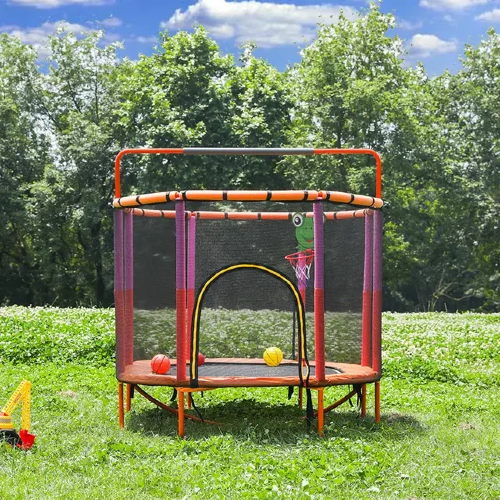
Rectangle trampoline designs provide a more linear and predictable energy return, which directly supports structured skill training. Reviews often reference how consistent rebound height helps users regulate takeoff force and landing timing. This stability improves neuromuscular coordination and reduces corrective movements mid-air. Compared with round designs, the absence of inward pull allows athletes to control direction and spacing. Outdoor trampoline users practicing flips or sequences report clearer progression and fewer unintended drifts, making rectangle trampolines better aligned with systematic training goals.
Reviews highlight that rectangle trampolines integrate more naturally into standard backyard layouts. Straight edges allow placement parallel to fences, walls, or property lines, which improves space efficiency. This layout flexibility supports safer clearance zones and easier access paths. Outdoor trampoline owners often mention improved yard organization and reduced visual clutter. Efficient placement also simplifies supervision, as sightlines remain clear. These spatial advantages contribute to higher satisfaction and influence positive comparative rankings.
For serious users, performance is not defined by entertainment value but by control, repeatability, and structural reliability. Reviews from athletes and high-frequency users consistently reference measurable characteristics rather than subjective impressions. The following breakdown translates those review insights into practical, technical factors that explain why rectangle trampolines dominate top-rated lists for advanced use.
| Evaluation Dimension | Rectangle Trampoline | Round Trampoline | Practical Application | Technical / Physical Basis | Key Considerations |
|---|---|---|---|---|---|
| Load distribution across mat | More uniform force distribution from center to edges | Maximum force concentrated at center | Supports linear approach, precision takeoff, and repeatable drills | Parallel spring alignment along long sides reduces elastic coefficient variance (lower Δk) | Frame alignment must remain precise to maintain balance |
| Bounce consistency | High consistency, minimal height variance | Height varies significantly by landing zone | Enables repeatable skill training and controlled landings | Measured vertical rebound variance typically ≤ 5–8% on premium models | Requires periodic spring tension inspection |
| Spring length and type | Commonly 190–220 mm high-tensile galvanized springs | Typically 140–180 mm springs | Longer springs provide smoother, more linear rebound | Increased spring length reduces peak impact force (N) | Longer springs increase demands on frame rigidity |
| Maximum dynamic load (single user) | Commonly 400–450 lb (180–205 kg) | Typically 250–330 lb (113–150 kg) | Suitable for adult and advanced youth training | Dynamic load values derived from ASTM F381 testing protocols | Not equivalent to combined multi-user weight |
| Frame fatigue resistance | Straight-beam geometry resists cyclic bending | Circular frames experience localized stress zones | Withstands high-frequency, repeated impact | Straight beams follow predictable bending stress models with longer fatigue life | Ground must be level to avoid torsional stress |
| Movement predictability | High, stable rebound trajectory | Moderate, trajectory redirected toward center | Critical for flips, tumbling, and technical progression | Trajectory stability directly tied to uniform elastic gradient | Requires skill adaptation for beginners |
| Long-term outdoor performance | Low deformation, slow rebound degradation | Central mat fatigue develops faster over time | Ideal for permanent outdoor trampoline installations | Hot-dip galvanized steel frames typically 1.8–2.2 mm wall thickness | Regular inspection of bolts and joints required |
Tip:When evaluating a rectangle trampoline for advanced or outdoor trampoline use, prioritize spring length, dynamic load rating, and frame wall thickness. These parameters correlate more closely with long-term performance than size or brand claims alone.
For families, a rectangle trampoline works as a long-term backyard structure rather than a short-term toy. Reviews often emphasize enclosure height, padding thickness, and predictable rebound as key safety factors. A controlled bounce reduces unexpected lateral movement, which lowers collision risk during shared play. Parents also value structural durability, since outdoor trampoline installations face weather exposure year-round. Consistent feedback shows that families prefer models with stable frames and low maintenance needs. This reliability supports routine use, clearer safety rules, and less constant supervision over time.
Active teens benefit from the linear movement pattern of a rectangle trampoline, which supports progressive skill development. Reviews highlight how consistent rebound allows teens to repeat jumps with measurable improvement. This repeatability helps build muscle memory and spatial awareness. Outdoor trampoline sessions feel more structured, especially for tumbling-style movements. Teens also respond well to responsive mats that provide feedback without excessive rebound loss. As skills advance, users report higher confidence and fewer missteps, reinforcing strong performance-focused ratings.
Home training users evaluate rectangle trampolines using criteria similar to gym equipment. Reviews focus on rebound consistency, frame stiffness, and enclosure stability under repeated use. A predictable bounce reduces joint stress and supports controlled landings. Outdoor trampoline setups allow regular practice without travel, which increases training frequency. Users often note that professional-style spring layouts and rigid frames preserve performance over time. These characteristics make rectangle trampolines suitable for disciplined routines, not casual use, shaping their high rankings among advanced buyers.
Top rated rectangle trampoline with enclosure reviews highlight safety, performance, and durability. A rectangle trampoline offers consistent bounce, efficient space use, and reliable enclosure protection for outdoor use. Strong frames and thoughtful design reduce long-term risk and improve satisfaction. Zhejiang Zoshine Sports Equipment Co., Ltd. delivers value through durable structures, safety-focused enclosures, and dependable manufacturing support, helping buyers invest with confidence and achieve lasting backyard enjoyment.
A: A Rectangle Trampoline earns high ratings for consistent bounce, strong frames, and secure enclosure systems.
A: A Rectangle Trampoline offers predictable movement, full enclosure safety, and better control during shared outdoor use.
A: A Rectangle Trampoline provides directional bounce control, while round models push users toward the center.
A: Yes, a Rectangle Trampoline is designed for outdoor trampoline use with durable frames and weather-resistant enclosures.
A: A Rectangle Trampoline may cost more, but reviews show better long-term value and performance.


