

close
Choose Your Site
Global
Social Media

Author: Site Editor Publish Time: 2026-06-25 Origin: Site
Parents often face a familiar dilemma when evaluating backyard play options. You want your children to enjoy active, screen-free outdoor time, but you also worry about falls, hardware failures, and long-term upkeep. Balancing this desire for fun with genuine concerns about physical safety can feel overwhelming.
Safety goes far beyond how the product looks out of the box. A truly secure environment depends heavily on how you install the equipment, maintain it over time, and match it to your child’s developmental stage. If you ignore these elements, even premium backyard structures can quickly become hazardous.
An outdoor slide and swing set is only as safe as its base materials, its anchoring system, and the physical environment built around it. This guide provides an objective framework for evaluating backyard play equipment. You will learn exactly how to choose, install, and maintain a secure play area for your family.
Material matters: Cedar and powder-coated steel offer distinct structural advantages over untreated wood or thin plastics.
Installation is half the safety equation: Grass is not a sufficient fall surface; proper shock-absorbing ground cover and deep anchoring are non-negotiable.
Age-appropriateness prevents injuries: Scaling swing types and deck heights to specific age groups minimizes risk and reduces the "idle rate" (abandonment of the toy).
Maintenance is mandatory: A safe kids playset requires annual hardware tightening, wood sealing, and structural audits to remain compliant with baseline safety standards.
The foundation of any secure play structure lies in its core materials. When evaluating options, you must look past bright colors and focus on objective material strength. Different materials serve different structural purposes, and understanding their limits helps you make a safer choice.
Each primary building material offers unique benefits and requires specific upkeep. Here is a breakdown of the three most common options you will encounter.
Material Type | Primary Advantages | Safety Considerations & Limitations |
|---|---|---|
Cedar / Redwood | Naturally rot-resistant, highly stable, supports heavy dynamic loads. | Requires cyclical sealing to prevent drying and dangerous splintering over time. |
High-Density Polyethylene (HDPE) | Smooth, rounded edges, completely splinter-free, zero rust risk. | Lacks load-bearing capacity for older children; prone to UV degradation. |
Powder-Coated Steel | Exceptionally durable, immune to rot, handles high weight limits easily. | Can retain extreme heat in direct sunlight; joint welds require rust checks. |
Cedar and redwood are the industry standards for premium wooden sets. They contain natural oils resisting insects and decay. However, you must commit to resealing the wood every few years. High-Density Polyethylene (HDPE) works beautifully for low-height toddler structures. It eliminates splinter risks entirely. Yet, plastics cannot safely support the dynamic swinging force of older children. Powder-coated steel offers unmatched durability. Just remember to check for rust spots at the welded joints after heavy rain seasons.
Subpar hardware compromises the strongest wood or steel. You should always look for recessed bolts. Counter-sunk hardware prevents clothing from snagging, which is a major strangulation hazard.
Pay close attention to the swing hangers. They bear the brunt of friction and weight. Demand heavy-duty, commercial-grade hangers with nylon bushings. These bushings reduce metal-on-metal wear and prevent structural failure. Additionally, ensure all swing chains feature a plastisol coating. This rubberized grip prevents the chain links from pinching small fingers and protects the metal core from rust.
A trustworthy manufacturer provides clear, documented weight limits. They should specify the maximum weight per child and the total simultaneous occupancy. Avoid brands making vague claims like "built for the whole neighborhood."
Dynamic load differs vastly from static load. A child sitting still weighs 80 pounds. That same child swinging high generates significantly more force on the beam. Clear weight documentation proves the manufacturer engineered the set for actual physical use.
Children grow rapidly, and their physical coordination shifts every few years. When looking for a safe kids playset, you must match the architectural features to their current motor skills. This prevents accidental injuries and keeps the equipment engaging.
Toddlers lack core stability and hazard awareness. They require highly contained environments. Look for bucket swings featuring high backs and safety harnesses. Deck platforms should remain enclosed and sit no higher than three feet off the ground. Slides should feature a gentle slope with high side rails to prevent lateral tumbles.
As coordination improves, preschoolers want more independence. You can safely transition them to standard belt swings. At this stage, focus on safe climbing features. Sturdy handrails at every entry point are essential. Choose wider, flat wooden steps over rope ladders. Rope ladders demand advanced balance and present a high entanglement risk for this age group. Keep slide heights moderate to minimize fall severity.
Older children play harder and higher. This requires robust engineering. School-aged children need deeper deck platforms to accommodate larger bodies safely. Look for stronger trapeze bars and heavier weight-rated swing beams. A taller swing beam allows for a longer pendulum arc, which keeps older kids engaged and prevents them from abandoning the playset.
You want an investment that lasts. Assess whether the manufacturer allows for modular upgrades. Can you easily swap a bucket swing for a belt swing later? Can you add a rock wall once your child masters the wooden stairs? Modular sets extend the product lifecycle without forcing you to compromise structural safety or buy an entirely new system.
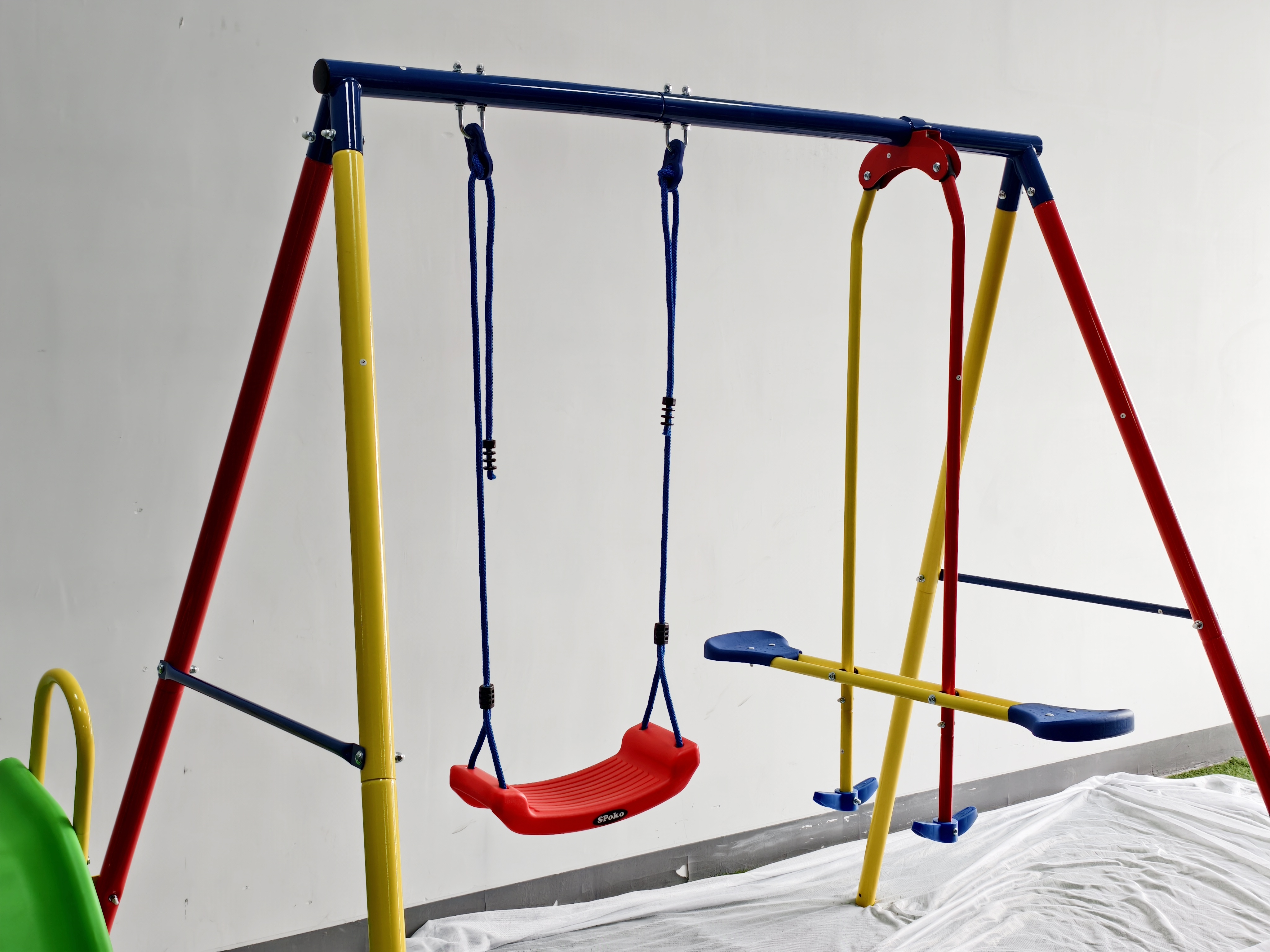
Even the most perfectly engineered structure becomes dangerous if installed poorly. The environment beneath and around the equipment dictates the true safety level of the play area.
Many parents place heavy playsets directly on a beautifully manicured lawn. This is a critical safety error. Grass loses its shock absorption quickly. Foot traffic compacts the soil, turning dirt into a surface as hard as concrete. A fall onto compacted dirt often results in severe fractures or concussions. You must create a dedicated fall zone. This safety perimeter should extend at least six feet in all directions from the equipment's edge.
You must replace the grass inside the fall zone with proper impact-attenuating materials. You have several reliable options:
Engineered Wood Fiber (Mulch): This is cost-effective and provides excellent shock absorption. However, you must maintain a depth of 9 to 12 inches. It requires frequent raking and annual topping off.
Rubber Nuggets: These do not rot or compress as quickly as wood. They offer superior bounce but cost significantly more upfront.
Poured-in-Place Rubber Mats: This offers a seamless, highly accessible surface. It requires professional installation but demands almost zero daily maintenance.
For residential loose-fill materials like wood fiber, a 9-inch depth effectively cushions falls from decks up to 7 feet high. Never compromise on this depth.
Wind uplift and lateral swinging forces will destabilize an unanchored set over time. Basic ground stakes only work for small, lightweight toddler plastic sets. For heavy wooden or steel structures, you need substantial anchoring.
Concrete-set anchors provide the ultimate security. You dig holes beneath the main support posts, sink the anchors, and fill the holes with concrete. This prevents the frame from lifting or "walking" across the yard when multiple kids swing simultaneously. Skipping this step guarantees future structural instability.
Cramming a large set into a small yard invites collisions with fences or trees. Accurately measuring your yard space ensures safety compliance. Follow these steps:
Measure your total available flat yard space, noting any underground utilities or sprinkler lines.
Determine the physical footprint of the playset model you want.
Add exactly six feet to every side of that footprint. (For swings, add twice the height of the swing beam to the front and back).
Map this total combined area out on your lawn using a garden hose or spray chalk.
Ensure no branches, wires, or hard structures enter this mapped zone.
Safety is an ongoing practice, not a one-time purchase. Neglecting basic maintenance drastically shortens the lifespan of the equipment and introduces creeping hazards.
The elements constantly attack backyard structures. Ultraviolet radiation from the sun aggressively breaks down plastics. Over several summers, vibrant plastic slides can fade and become brittle, risking unexpected cracks under weight. Moisture represents the greatest threat to wood. Rain and morning dew seep into untreated grain, fostering rot from the inside out. Understanding these environmental realities helps you stay proactive.
Before the heavy play season begins every spring, you must conduct a thorough physical audit of the entire structure. Make this an annual habit.
Tighten all nuts and bolts: Wood expands in the summer heat and contracts in the winter cold. This thermal cycling naturally loosens hardware. Go through every connection point with a wrench.
Inspect S-hooks: Check the S-hooks connecting the swing chains to the hangers. Friction wears them down. Ensure they remain fully closed. If you can slide a dime through the gap, you must replace the hook immediately to prevent the chain from slipping out.
Check for structural cracks: Minor surface checking (small splits in the wood grain) is normal for cedar. However, deep cracks threatening the integrity of a main beam require part replacement.
Sand down splinters: Run a gloved hand over high-traffic wooden areas like handrails and steps. Sand down any rough patches and reapply a non-toxic water sealant.
Eventually, children outgrow the equipment. Homeowners often overlook the reality of dismantling a massive wooden fortress. Rotted wood cannot be easily recycled, and heavy steel beams require trucks for scrap yard hauling. Factor the eventual removal effort into your long-term planning, and inspect the set diligently so it remains safe enough to potentially sell or pass on to another family rather than throwing it away.
With hundreds of models on the market, narrowing down your choices requires a strict decision framework. Use these criteria to separate reliable equipment from flimsy alternatives.
Never rely solely on a brand's marketing claims. Look for explicit mentions of compliance with recognized safety bodies. In the United States, the American Society for Testing and Materials (ASTM) and the Consumer Product Safety Commission (CPSC) set the gold standard for residential playground guidelines. If a manufacturer prominently displays ASTM F1148 compliance, they have subjected their designs to rigorous tip-over, load-bearing, and entrapment tests.
The warranty acts as a direct reflection of the manufacturer's confidence in their materials. A simple 1-year warranty on a massive wooden structure is a glaring red flag. Wood rots and warps over years, not months. Seek out brands offering pro-rated 5-to-10-year warranties on main structural wood components and steel beams.
Building a complex playset involves hundreds of parts, specialized torque requirements, and concrete anchoring. While doing it yourself saves upfront money, it introduces the risk of assembly errors. Stripped bolts, skipped anchors, or misaligned beams directly compromise safety. Weigh your personal carpentry skills honestly. Often, paying for professional installation guarantees structural compliance and provides peace of mind.
When you are ready to make a final choice, balance these four pillars:
Available Safety Footprint: Does the set plus the 6-foot fall zone fit comfortably in your yard?
Child’s Current Age: Does the architecture match their motor skills, and can it adapt as they grow?
Maintenance Willingness: Are you genuinely willing to seal wood annually, or should you opt for powder-coated steel?
Budget Reality: Does your budget cover the playset, the professional assembly, and the essential shock-absorbing mulch?
Outdoor slide and swing sets are incredibly safe, provided you treat them as serious structural installations rather than oversized disposable toys. The key to injury prevention lies in recognizing that the playset is only one part of the equation; the ground beneath it and the hardware holding it together matter just as much.
When shopping, prioritize playsets featuring transparent material sourcing, documented weight limits, and recessed hardware. Do not let the price tag of the structure blind you to the necessary secondary costs. Always factor the expense of proper shock-absorbing ground cover and robust concrete anchors into your initial budget.
Your next step is simple. Walk into your backyard with a tape measure. Accurately map out your available yard space, strictly including the mandatory 6-foot safety perimeter. Once you know your true footprint and establish a budget that includes surfacing materials, you can confidently browse models that will keep your children safe, active, and happy for years to come.
A: Powder-coated steel and cedar are the safest structural options. Steel offers incredible strength and requires very low maintenance, as it resists rot and splintering entirely. Cedar provides natural durability and excellent load-bearing capacity but demands regular sealing to prevent weather damage and splinters. Avoid thin plastics for older children.
A: The Consumer Product Safety Commission (CPSC) recommends a minimum depth of 9 inches for engineered wood fiber or mulch. This depth provides adequate shock absorption for residential playsets with deck heights up to 7 feet. You must rake and top it off annually to maintain this critical depth.
A: A high-quality cedar or redwood swing set typically lasts 10 to 15 years. However, this lifespan entirely depends on strict annual maintenance. If you neglect resealing the wood, ignore loose bolts, and let water pool around the base, the structure can become unsafe in as little as three years.
A: You should never place a playset directly on standard artificial turf. Basic turf provides zero shock absorption and acts like concrete during a fall. If you want artificial grass in the play area, you must install a specialized, CPSC-compliant shock-pad underlayment beneath the turf to attenuate impacts safely.


