

close
Choose Your Site
Global
Social Media

Author: Site Editor Publish Time: 2026-05-06 Origin: Site
Finding the perfect swing involves more than matching colors to your patio or living room decor. Purchasing a reliable Fabric Swing requires balancing tactile comfort alongside critical load-bearing safety and extreme weather resistance.
Buyers often forget these items function simultaneously as daily furniture, dynamic play equipment, and sensory therapy tools. Choosing the wrong textile can lead to uncomfortable heat retention, rapid mildew growth, or even dangerous structural failures under dynamic stress.
This guide evaluates fabrics based on precise technical specifications, environmental durability, and strict safety compliance to help you make a long-term investment. You will learn exactly how to match denier ratings, specialized weave patterns, and climate-specific traits to your everyday needs.
Indoor vs. Outdoor: 100% cotton dominates indoor sensory comfort due to high breathability, while solution-dyed synthetics (Polyester/Acrylic) are mandatory for outdoor UV and moisture resistance.
Structural Integrity: High Denier (500D+) nylon with Ripstop weaves offers the highest strength-to-weight ratio for adult or multi-user swings.
Safety Non-Negotiables: Regardless of fabric choice, secure anchoring to a structural ceiling joist or dedicated heavy-duty frame is a strict prerequisite.
Sensory Applications: Material selection directly impacts therapeutic outcomes (e.g., stretchable cotton for deep pressure, stiff canvas for platform stability).
Buyers routinely face a common business problem in the furniture market. People often choose materials based on visual aesthetics rather than hard performance data. This misguided approach inevitably leads to premature wear, fading colors, or daily discomfort.
Understanding the exact engineering behind your chosen material prevents buyer's remorse. We evaluate three primary categories dominating the market today.
Natural cotton remains the undisputed champion for skin-safe, indoor relaxation. Data backs up this tactile superiority. Premium 100% cotton canvas features a remarkable water vapor transmission rate of up to 1390 g/m²/day. This ensures superior breathability, keeping users cool during extended lounging sessions.
It is best for indoor environments, generating "calming input" for sensory integration, and sustaining direct skin contact. However, it carries significant environmental risks. Cotton is highly prone to moisture retention. It will shrink during washing and rapidly develop toxic mildew if you leave it outdoors.
If you want a hassle-free experience, synthetic workhorses deliver. Solution-dyed processes revolutionize how fabrics handle extreme sunlight. Manufacturers infuse color pigments into the synthetic polymer at the liquid stage before spinning the yarn. This drastic manufacturing shift greatly improves UV resistance and completely prevents premature fading.
These materials are best for everyday household use. They allow for easy wipe-downs after spills and handle moderate outdoor exposure beautifully.
Industrial applications favor nylon for its unmatched tensile strength. When assessing nylon, always look for high Denier ratings. A 500D or 1000D rating indicates thick, robust yarn capable of handling intense weight profiles.
We must clarify a common misunderstanding here. "Ripstop" is a reinforcing grid weave technique. It is not a base fabric itself. Manufacturers weave thick reinforcement threads into a crosshatch pattern. This grid physically prevents small punctures from expanding into catastrophic tears.
Nylon serves best for adult weight-bearing and high-activity use. It excels in outdoor environments, especially when manufacturers treat it with a Durable Water Repellent (DWR) coating.
Material Type | Key Spec / Feature | Primary Strength | Ideal Use Case |
|---|---|---|---|
100% Cotton Canvas | 1390 g/m²/day vapor transmission | Maximum breathability and softness | Indoor sensory rooms, bedrooms |
Solution-Dyed Acrylic | Liquid-stage color infusion | Extreme UV and fade resistance | Covered patios, everyday lounging |
Nylon (with Ripstop) | 500D+ rating / Grid weave | Tear prevention and load-bearing | Heavy adult use, rugged outdoors |
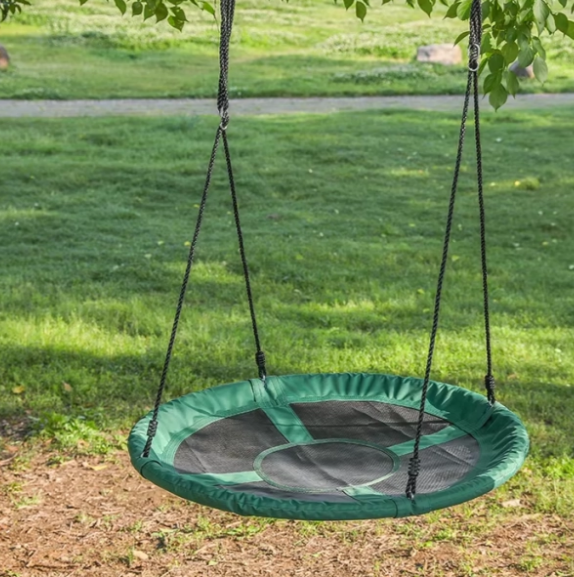
Your local environment dictates product survival. An Outdoor Fabric Swing must survive aggressive microclimates. It also needs to interact smoothly with the base furniture material supporting it.
High Humidity & Swampy Climates: Constant moisture demands specific defenses. You must use synthetic materials like Olefin or chemically treated Nylon. These actively resist mildew and mold spore penetration. Natural cotton acts as a sponge and is an absolute disqualifier here.
High Sun & Arid Climates: UV degradation remains the primary failure point in desert regions. Prolonged sun exposure physically breaks down molecular bonds. You should prioritize Sunbrella fabrics or solution-dyed polyester to prevent irreversible fabric embrittlement.
Hardware & Base Material Synergy: The base frame dictates safety and comfort. Resin bases feel exceptionally slippery. They require sturdy cushion tie-ins to prevent dangerous sliding. Conversely, dark metal bases retain extreme heat during summer. They require thicker, thermally insulating fabric layers to protect bare skin.
Winter Storage Requirements: Freezing temperatures destroy structures. Your fabrics should be entirely removable. Prolonged exposure to "freeze-thaw cycles" destroys both wooden swing frames and tightly woven textiles. Water seeps into the weave, expands into ice, and tears the fibers apart from the inside.
Best Practice: Always detach and store your textiles inside a dry, climate-controlled space before the first hard frost hits your region.
The solution categories available on the market go beyond simple visual style. The physical cut of the fabric directly dictates both physical and psychological benefits. You must match the silhouette to the intended user outcome.
Cocoon and Hammock Swings (Deep Pressure Therapy): These designs use stretchable fabrics, often heavy cotton blends. They provide a 360-degree physical wrapping effect around the user's body. Evidence-backed outcomes show immense benefits here. Rhythmic motion inside a compressive fabric can successfully lower cortisol levels. It helps regulate the vestibular system for both children and adults currently dealing with severe sensory overload.
Platform and Nest Swings (Active Development): These require exceptionally rigid fabrics. Manufacturers stretch heavy-duty canvas or tightly woven synthetics tightly over a flat, circular steel frame. This flat design forces core stabilization. Users must actively balance their bodies, which significantly improves proprioceptive input and muscle tone.
Woven Rope Chairs (Aesthetic & Airflow): This style provides a distinctly laid-back visual vibe. By replacing solid cloth with intricately woven cords, you achieve maximum airflow. This makes it ideal for humid outdoor lounging without the heavy, stifling bulk of solid fabric backing.
Implementation considerations often dictate long-term success. A premium fabric remains entirely useless if the supporting hardware fails under pressure. Proper installation eliminates severe household hazards.
You cannot compromise on structural mounting. Ceiling joist anchoring is absolutely mandatory for all indoor setups. You must locate the solid wood beams behind your drywall. Using simple drywall anchors or superficial plaster mounts poses an immediate, severe injury risk. Dynamic swinging multiplies the force exerted on the mount, easily ripping weak anchors straight out of the ceiling.
Nothing ruins a relaxing meditation session like metal screeching. Traditional metal suspension chains generate grating noises and shed metallic dust over time.
Pro-tip: Swap those clunky traditional metal suspension chains for heavy-duty marine or indoor climbing ropes. This simple modification eliminates grinding noises entirely. It creates a perfectly silent, buttery smooth sway.
Never install a hanging seat flush against a wall. Factor in the "clearance space" required for the full swinging arc. Experts recommend at least three to four feet of clear space in every direction. This precise spatial planning ensures zero collision risks with structural walls, sharp furniture edges, or fragile glass windows.
Risk assessment requires analyzing real-world product failures. By addressing common complaints seen across buyer reviews and DIY community boards, we can help you avoid costly mistakes.
Many homeowners attempt to construct homemade seats using standard upholstery cloth. This rarely ends well. Hand-sewn residential fabrics almost always lack the industrial-grade, load-bearing stitching required for dynamic human movement. Standard cotton threads snap under repetitive stress, leading to sudden, dangerous seam bursts.
Marketers frequently blur the lines here. Do not confuse the two terms. A waterproof material, like vinyl, blocks moisture entirely but feels terrible against the skin. Water-resistant fabrics repel light rain but will eventually soak through. DWR (Durable Water Repellent) coatings on premium nylon require periodic reapplication. You must use specialized fabric sprays every season to maintain their liquid-beading effectiveness.
Always confirm machine-washability before finalizing your purchase. Heavy canvas often shrinks drastically if tossed into a hot dryer. Rigid platforms and structured cocoons usually require careful spot cleaning. Using a mild detergent and a soft-bristle brush helps maintain structural integrity without degrading the color.
Common Mistake: Never use harsh bleach on synthetic outdoor fabrics. Bleach destroys the protective DWR coating instantly and weakens the core tensile strength of the nylon threads.
Selecting the right product boils down to a simple shortlisting logic. If you are buying a unit for indoor sensory relief or a child's bedroom, you should prioritize 100% cotton cocoon designs. These deliver unmatched breathability and comforting softness. If you are buying an exterior unit, always default to solution-dyed synthetics (Polyester/Acrylic) or DWR-treated Nylon utilizing Ripstop weaving techniques.
Your next-step action requires a tape measure and a stud finder. Before selecting a specific fabric cut, thoroughly verify your installation location. Locate your solid ceiling joists or measure the precise dimensions of your patio frame. Finally, clearly define whether the primary user needs relaxing, compressive support or highly active sensory engagement.
A: Soft, breathable cotton blends are safest for skin contact and sensory regulation, provided they are securely stitched and mounted.
A: Only if it is made of fully synthetic materials like Olefin or treated Nylon, though bringing it inside during heavy storms prolongs its lifespan and prevents mildew.
A: Depending on the Denier rating and stitching, commercial-grade nylon swings can safely support 200 to over 400 lbs, making them ideal for adults.
A: Ripstop features an integrated grid weave that physically stops small snags or holes from expanding under the user's body weight, preventing sudden failure.


