

close
Choose Your Site
Global
Social Media

Building a fabric swing demands a careful balance. You must merge sensory relief or leisure comfort with uncompromising load-bearing safety. A poorly constructed DIY swing introduces severe fall risks into your home or yard. Standard household sewing techniques usually fail under dynamic suspension forces. The sudden drops caused by these failures can lead to serious injuries. This guide provides a rigorous, evidence-based framework to do the job right. We will help you select the appropriate textiles and evaluate heavy-duty hardware. You will learn exactly how to execute a safe no-sew sensory build or construct a rigid, structured patio seat. Whether you want a calming indoor retreat for a child or a durable outdoor seat for yourself, structural integrity comes first. Read on to master the techniques professionals use to keep suspension systems secure.
Method Dictates Material: Sensory "cuddle" swings rely on high-stretch or specialized woven fabrics (like baby carriers), while structured swings require rigid, heavy-duty canvas.
Hardware is Non-Negotiable: Suspension relies on commercial-grade hardware (300 lb+ rated carabiners, welded steel rings, and heavy-duty eye bolts) anchored directly into structural joists.
The Sewing Risk: Standard household sewing machines and apparel thread can act like a "hole punch," weakening fabric under load. Physical hardware (grommets) or specialized MYOG (Make Your Own Gear) threads are required for safety.
Installation Boundaries: Safe usage requires adult weight testing, proper clearance zones, and physical failsafes like crash pads.
Users must define the primary function of the swing before purchasing materials. Sensory regulation and static lounging require completely different structural assumptions. You cannot use the same materials for an active, bouncing indoor seat that you would use for a rigid backyard lounger. Clarifying your end goal prevents costly and dangerous material mismatches.
Sensory swings serve a specific physiological purpose. They provide deep pressure touch, full-body flexion, and vestibular input. This design requires continuous, pliable fabric. Materials like spandex blends, trilobal nylon, or heavy-duty woven wraps work best. They wrap around the user, creating a secure cocoon.
This category almost entirely eliminates seam failure risks. It relies on structural knotting directly over carabiners. By removing stitched seams, you remove the weakest points in the fabric. This ensures maximum safety during spinning or bouncing movements.
Structured swings provide upright seating. They are often utilized for toddlers or as an Outdoor Fabric Swing. This architecture requires a rigid wooden frame to keep the seat open. You must build structural cross-bracing using heavy hardwood dowels.
This build involves high material complexity. You need multi-layered fabric with internal batting for comfort. You also need UV-resistant outdoor fabric to withstand the elements. Constructing it demands precision cutting, heavy-duty sewing techniques, or heavy mechanical fastening.
Your swing is only as safe as its weakest component. Selecting the correct textiles and mounting hardware forms the absolute baseline for a safe suspension system.
Different builds require vastly different textiles. Never substitute specialized fabrics with standard household linens. Bed sheets lack the tensile strength for dynamic point-loading and will tear unpredictably.
Swing Category | Recommended Materials | Material Properties |
|---|---|---|
Sensory/Cuddle | Nylon/Spandex blends, Trilobal, 100% woven cotton baby wraps | High elasticity (spandex) or zero-stretch structural safety (woven wraps). Continuous weave. |
Outdoor/Structured | Marine-grade canvas, heavy duck cloth | Rigid, high tensile strength, UV-resistant, and waterproof. |
Many beginners try to sew load-bearing seams using standard equipment. This introduces hidden dangers. Standard cotton thread and small stitch lengths weaken fabric integrity. A standard needle punctures the weave repeatedly. This creates a "perforation" effect, turning your seam into a tear-away line under heavy loads.
To solve this, you must change your approach. If you decide to sew, strictly use MYOG (Make Your Own Gear) standards. Use Nylon or Polyester ripstop fabrics paired with specialized heavy-duty synthetic thread. Use larger needles and longer stitch lengths.
If you prefer not to sew, rely on mechanical fasteners. Use large, two-part metal grommets (eyelets). These physically bite into the fabric and distribute weight across a metal ring rather than relying on thin threads.
Never compromise on your metal hardware. Commercial-grade components are required for any suspension project.
Carabiners/Hooks: You must use hardware with a minimum 300 lbs working load limit (WLL). Locking climbing carabiners are ideal.
Rings: Use 2-inch welded steel rings. Never use open-loop rings, as they will pry open under dynamic force.
Anchors: Utilize the largest gauge heavy-duty eye screws available. Alternatively, install specialized ceiling swivel mounts bolted deep into solid wood.
A no-sew sensory build is often the safest DIY route. By eliminating stitched seams, you rely entirely on the tensile strength of the textile and the security of your knots. Here is how you execute a safe Fabric Swing without touching a sewing machine.
Source 3 to 4 yards of continuous fabric. Trilobal fabric, heavy nylon, or a repurposed woven baby wrap work exceptionally well.
Inspect the material for any pre-existing snags or tears. Do not use damaged textiles.
Double-fold the fabric if you are accommodating users with higher body weights. This drastically reduces material deformation and adds redundant strength.
Proper knotting replaces the need for seams. Gather the fabric ends tightly together, ensuring no loose sections remain in the center. Feed the gathered ends completely through your heavy-duty carabiner or welded steel ring.
Tie a primary load-bearing knot. A tight overhand knot or a fisherman's knot provides excellent security. Pull the fabric aggressively to seat the knot tight against the hardware. Knot slipping is highly visible. This makes it much easier to inspect during daily use than a hidden torn internal seam.
Safety extends to how high you hang the equipment. Suspend the swing low to the ground. You want to allow the user's feet to easily touch the floor. This provides them with independent regulation and prevents high-altitude falls.
Building an upright patio or toddler seat requires woodworking and textile skills. You are constructing a rigid box frame suspended by ropes.
Begin by cutting durable outdoor canvas for the front, back, and seat panels. Include an internal layer of thick batting. This batting acts as an impact buffer and provides essential comfort. Cut the panels squarely to ensure the final frame sits level.
Instead of relying on flat load-bearing seams, you will create structural pockets. Fold the fabric edges inward on all four sides. Sew wide "rod pockets" using a reinforced zig-zag stitch. The zig-zag stitch allows for slight movement without snapping the thread. These pockets will hold the wooden frame together.
The wooden frame dictates the structural integrity of this build.
Cut four hardwood dowels (oak or poplar are best). Ensure they are a minimum of 1-inch thick.
Drill heavy-duty holes near the ends of each dowel for the suspension ropes.
Critical Assembly Logic: Insert the dowels into the fabric rod pockets. You must ensure the side dowels physically rest on top of the front and back dowels. Under weight, the ropes pull the side dowels downward. This compresses them against the front and back dowels, creating a self-locking cross-structure.
Thread heavy-duty braided rope (e.g., 3/16" 190+ lb test) through the drilled dowel holes. Tie secure knots directly below the wooden frame. To prevent the knots from unraveling, secure metal rope clamps directly above the knots. Hammer these clamps tight. Finally, carefully burn the ends of the synthetic rope with a lighter to stop fraying.
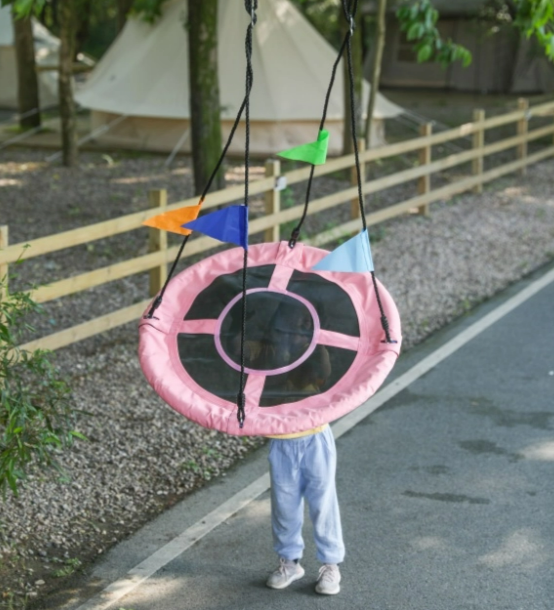
Your perfect build means nothing if the ceiling anchor fails. Proper installation requires locating structural elements in your home.
Never anchor any suspension equipment into drywall. Drywall has zero load-bearing capacity and will fail instantly. You must use a stud finder or deep-probing magnets to locate the exact center of a ceiling joist or roof truss.
Once located, pre-drill pilot holes. Driving large hardware into wood without a pilot hole can split the wooden joist, destroying its strength. Insert your large eye bolts deep into the pre-drilled holes.
If you have exposed architectures, consider alternative hacks. Routing heavy-duty suspension straps over exposed roof trusses avoids drilling entirely and distributes the weight over a larger area.
Never allow a child to use the equipment immediately after installation. A completed swing must always support the weight of a supervising adult first. Sit in the swing and gently apply dynamic pressure. Listen closely. Listen for fabric tearing, knot slipping, or joist creaking. If anything sounds strained, dismantle and inspect the setup.
Physical failsafes are mandatory. Place a dedicated crash pad made of high-density foam directly beneath the installation area. Enforce the "Crash Pad Boundary Rule" in your home: The swing must never swing beyond the physical limits of the padding underneath. If it does, the ropes are too long or the user is swinging too aggressively.
DIY projects offer customization, but they are not always the best path. You must honestly evaluate the costs and risks involved in building suspension equipment.
Calculate the real cost of a DIY approach. You must purchase premium WLL-rated hardware, specialized MYOG textiles, heavy-duty thread, and structural hardwood. You also invest significant hours into cutting, sewing, and testing. Frequently, the out-of-pocket costs for a safe DIY build meet or exceed the price of purchasing a pre-made, professionally load-tested alternative.
Commercial products offer distinct safety advantages. They undergo rigorous dynamic load testing in controlled environments. They often carry consumer product safety certifications (CPSC). This mitigates your personal liability. If you lack confidence in your sewing machine or your ceiling joists, relying on certified products is the smarter choice.
If pivoting to a purchase, evaluate vendors carefully. Do not buy cheap imports with vague specifications. Look for vendors who include heavy-duty swivel hardware in the box. Check the fabric denier rating to ensure high puncture resistance. Demand transparency regarding their weight limit testing protocols.
Safety dictates every step of creating suspended furniture. Whether you opt for a quick no-sew cuddle swing or a rigid patio frame, your components determine your success. Focus on these final steps to ensure a secure environment:
Always prioritize commercial-grade hardware over budget alternatives.
Ensure your ceiling anchors bite deeply into solid wood joists, never drywall.
Conduct rigorous adult weight tests before allowing regular use.
Remember that continuous adult supervision is required for all hanging equipment, regardless of build quality.
If you lack the specialized tools or heavy-duty materials required for a safe DIY build, do not risk it. Direct your efforts toward browsing heavy-duty hardware kits or highly-rated commercial swing alternatives to guarantee safety.
A: No. Regular bed sheets completely lack the necessary tensile strength for dynamic point-loading. They are prone to microscopic tears that expand rapidly under body weight. Using them introduces a severe fall risk. Always use specialized high-stretch nylon, trilobal fabrics, or heavy-duty woven baby wraps.
A: You should use UV-resistant, mold-resistant, marine-grade canvas or heavy duck cloth. These materials withstand prolonged sun exposure and repel moisture. They maintain their rigid structural integrity over time, unlike standard cotton, which degrades and rots when exposed to the elements.
A: The total weight limit is determined by your weakest link, not just the fabric. It depends on the hardware's working load limit, the security of the knot or seam, and the integrity of the ceiling joist. A properly built system using 300 lb-rated components and sturdy joists will easily hold an adult.
A: First, detach all metal carabiners and hardware. Wash the fabric on a gentle cycle using mild detergent. Always air-dry the material to prevent fabric shrinkage or heat degradation of synthetic fibers. After washing, carefully inspect and re-tie all load-bearing knots.


