

close
Choose Your Site
Global
Social Media

Author: Site Editor Publish Time: 2026-09-21 Origin: Site
Creating a dynamic space right outside your back door brings immense joy. You want kids outdoors, staying active, and moving away from screens. Investing in a family bounce station requires balancing recreational value, strict safety standards, spatial constraints, and long-term durability. It is never just about grabbing the largest model available. You must evaluate the terrain, understand safety features, and anticipate weather conditions.
This guide provides a structured approach to measuring space, selecting shapes, and verifying structural integrity. You will learn how user age, yard topography, and realistic maintenance capacities dictate your ideal choice. By the end, you will confidently navigate clearance zones, assess dynamic weight limits, and choose a structure built for years of outdoor use.
Space dictates size and shape: A minimum 3-to-5-foot safe clearance zone reduces your actual usable footprint.
Safety structures vary by design: An integrated trampoline with safety net (where the net sits inside the springs) significantly reduces pinch-point injuries.
Dynamic weight limits matter more than static: Capacity should be evaluated based on the heaviest single jumper, not just total aggregate weight.
Longevity is tied to UV resistance: Frame rust and UV degradation of the mat/net are the primary failure points for an outdoor trampoline.
Start by evaluating your physical space. A common mistake involves buying a 14-foot model for a 14-foot gap. You must calculate the true footprint before making a purchase.
Industry standards dictate a strict safety margin around the equipment. You need three to five feet of lateral clearance on all sides. This zone prevents jumpers from hitting fences, sheds, or trees during an accidental fall. Vertical space holds equal importance. Ensure at least 24 feet of overhead clearance. Always watch out for low-hanging branches and power lines.
Terrain directly dictates safety. Install your equipment on level ground. Grass or shock-absorbing wood chips provide the best foundation. Never place the frame directly on concrete or asphalt. Hard surfaces increase injury risks and strain the steel frame joints upon impact.
Before you shop, consult your Homeowners Association. Many HOAs enforce strict rules regarding backyard structures. They might require specific sightline hiding or restrict usage entirely.
Next, call your home insurance provider. They often classify a backyard trampoline as an attractive nuisance. This legal term means the equipment might attract wandering children, increasing your liability risk. Some policies require a locked fence around the yard. Others may cancel your coverage completely if you install one without proper notification.
Wind can lift large objects effortlessly. If your yard experiences high winds, specialized tie-down kits are mandatory. These kits use auger-style stakes driven deep into the soil. Straps loop over the frame to keep it grounded during storms. Assess your local weather patterns before finalizing your setup area.
Shapes drastically alter performance. Bounce dynamics change depending on spring placement and mat geometry.
Round models naturally guide jumpers back to the center. This centering effect makes them the safest choice for general family use. They are usually the most cost-effective option available.
Rectangle models perform differently. They provide an even bounce across the entire mat surface. Gymnasts prefer this shape because they can practice tumbling routines in a straight line. Additionally, rectangular designs fit perfectly into narrow or compact gardens.
Oval and square models serve as hybrid options. They maximize jumping area while fitting into oddly shaped yard configurations. They also separate multiple jumpers slightly better than round versions.
Shape | Bounce Dynamic | Best For | Space Efficiency |
|---|---|---|---|
Round | Draws jumper to the center | General family use, younger kids | Requires wide, open square space |
Rectangle | Even bounce across entire mat | Gymnasts, teens, athletes | Excellent for narrow gardens |
Oval / Square | Hybrid, slightly separated bounce zones | Multiple jumpers, specific yard shapes | Good balance of length and width |
Size directly impacts enjoyment and longevity.
8ft–10ft: These suit compact yards. They work best for single, younger jumpers. Toddlers get adequate bounce without needing massive physical force.
12ft–14ft: This represents the standard family size. It easily accommodates growing teenagers. The larger surface area offers a superior bounce dynamic. Teens can execute tricks safely.
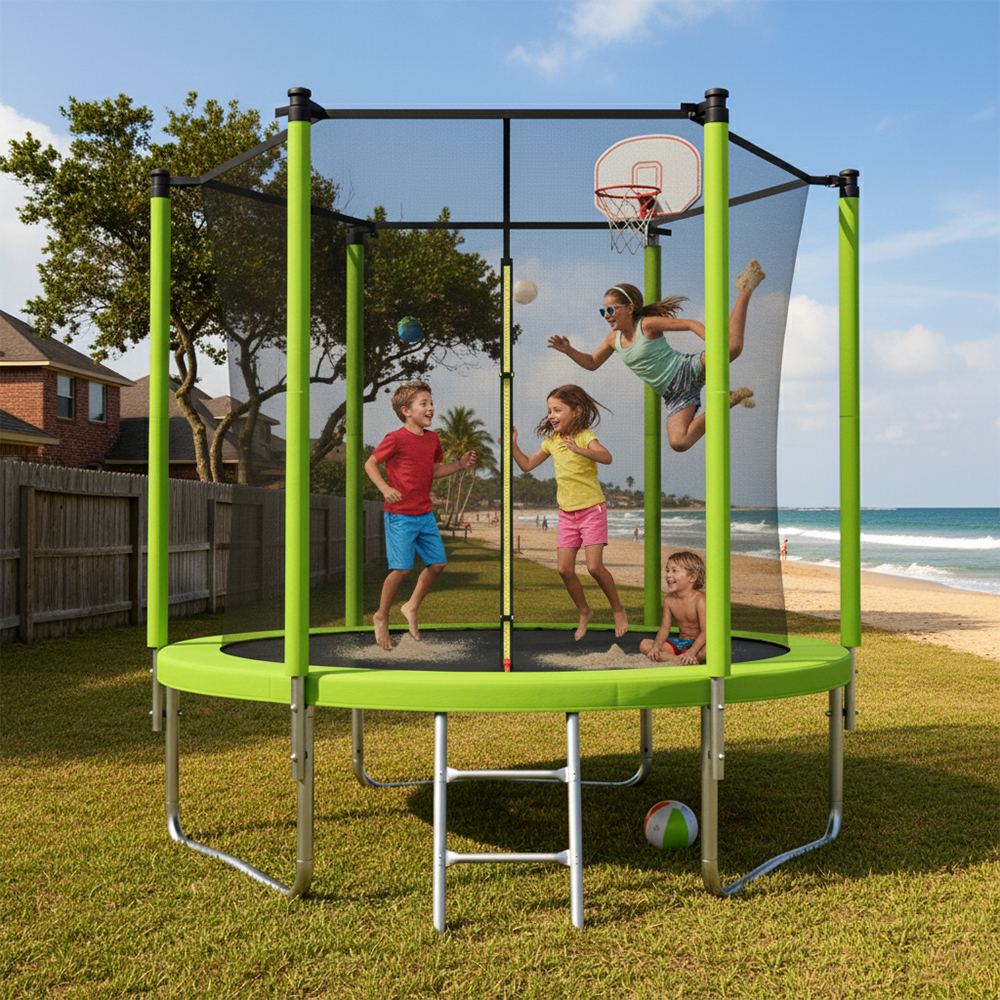
Modern designs prioritize user safety above all else. You must scrutinize the enclosure architecture, spring systems, and frame materials closely.
Nets prevent catastrophic falls. Traditional exterior nets attach to the outside of the frame. This exposes the springs and frame to the jumper. Modern engineering prefers interior nets. A trampoline with safety net integrated inside the spring line isolates jumpers completely. This interior architecture significantly reduces pinch-point injuries. Jumpers never interact directly with the steel components.
Innovation has introduced springless designs. These use flexible fiberglass rods instead of metal coils. The rods sit below the jumping surface, entirely eliminating pinch-points. They deliver a smoother, quieter bounce.
However, traditional galvanized steel springs remain highly popular. They offer familiar, robust performance. Replacing traditional springs is usually easier and faster. When evaluating standard Trampolines, ensure the padding covering the springs features thick, high-density closed-cell foam.
The skeleton must withstand immense dynamic forces. Identify non-negotiable specifications before buying. Look for double-galvanized steel. This treatment protects both the inside and outside of the tubing from moisture.
Rust-resistant powder coating adds another crucial layer of defense against rain and humidity. Inspect the weld points. Robust, reinforced T-joints or welded brackets prevent the frame from twisting out of shape over time.
Outdoor structures battle the elements daily. Rain, wind, and harsh sunlight relentlessly degrade materials over time.
Sunlight causes massive damage. UV exposure breaks down safety padding and netting much faster than structural wear impacts the frame. The mat can turn brittle quickly. The net may tear easily after just a few harsh summers.
Always look for high-density, UV-treated polyethylene (PE) or similar robust materials. UV-resistant coatings extend the life of soft parts significantly. You should physically inspect these soft materials at the start of every season.
Warranties tell you exactly how long the manufacturer expects the product to survive. Read the fine print carefully. Frame warranties often last ten years or more. Thick steel rarely fails early.
However, mat and net warranties frequently expire in one to three years. These soft parts take the brunt of the weather and physical abuse. A high-quality brand will stand behind its netting and padding for at least two to five years.
Parts will eventually wear out. Stress the importance of choosing a brand featuring an accessible supply chain. You must easily find replacement springs, mats, and enclosure nets. An otherwise perfectly good outdoor trampoline ends up in a landfill prematurely if you cannot source a simple replacement net. Pick established manufacturers known for long-term part support.
Before you finalize your purchase, review these critical details.
Manufacturers advertise weight limits, but these numbers can easily mislead buyers. You must understand the difference between structural load (static) and single-jumper weight limits (dynamic).
Static load refers to the maximum weight the frame can hold without bending. Dynamic load applies to the force generated by a single person bouncing at maximum height. Always evaluate capacity based on the heaviest single jumper in your household. A 500-pound total limit means nothing if the dynamic limit only supports a 150-pound person safely.
Assembly requires effort and patience. The reality of installation usually involves two to four hours of manual labor. You will need two adults, safety gloves, and basic tools. Stretching the mat onto the frame requires significant physical strength.
If you lack the time or physical ability, opt for professional installation services. Many retailers offer this as a convenient add-on at checkout.
Focus on functional add-ons rather than gimmicks.
Step ladders: These are vital for safe entry and exit, especially for younger children.
Weather covers: A thick cover protects the mat and padding from snow, ice, and UV rays, extending the lifespan of the equipment during winter.
Anchor kits: As discussed earlier, these secure the frame against high winds and extreme storms.
Making the right choice transforms your yard into a reliable hub for family fun. Prioritize clearance space and safety architecture first. You must ensure jumpers have adequate room and robust fall protection. Next, select the shape and size matching your garden footprint and family stage. Finally, align these functional needs with your realistic budget.
Always measure your yard twice. Account for lateral space and overhead clearance meticulously. Verify your home insurance policy and HOA rules before finalizing your purchase. Taking these calculated steps guarantees years of safe, active enjoyment for your entire household.
A: You need a minimum of three to five feet of clear, lateral space around the entire perimeter. This zone prevents jumpers from hitting fences, walls, or sheds. Additionally, you must secure 24 feet of vertical clearance to avoid overhanging branches and power lines.
A: Yes, many high-quality models withstand winter weather. However, you should remove the safety net and padding to prevent heavy snow from stretching or tearing the materials. Using a weather cover over the mat protects it from ice and UV degradation during the colder months.
A: Springless designs eliminate pinch-points and remove rigid steel components from the jumping area, making them inherently safer in those specific aspects. However, traditional models using interior safety nets (where the net separates the jumper from the springs) also provide excellent, comparable safety standards.
A: You must use specialized ground anchoring kits. These kits feature heavy-duty auger stakes. You drive the stakes deep into the soil and strap them tightly over the steel frame. Do not rely on sandbags, as severe winds can easily lift unanchored frames.


