

close
Choose Your Site
Global
Social Media

Author: Site Editor Publish Time: 2026-07-06 Origin: Site
Investing in a backyard play area represents a significant commitment of both physical space and financial resources. However, constant exposure to unpredictable weather elements guarantees some level of natural structural degradation over time. You cannot simply install these outdoor structures and ignore them. We need to move far past the standard "clean it once a year" advice to ensure genuine longevity. Routine maintenance directly impacts both daily safety and your long-term return on investment. This article introduces a highly standardized, evidence-based approach to preserving structural integrity. We will explore how to maintain compliance-level safety standards season after season. You will also learn practical frameworks for evaluating when to repair specific components versus when to replace them entirely.
Material matters: Wood, metal, and plastic require distinct chemical and physical maintenance protocols.
Timing is structural: Seasonal shifts (freeze-thaw cycles and peak UV exposure) dictate the maintenance calendar, not arbitrary dates.
Hardware dictates safety: 80% of preventable wear occurs at friction points (S-hooks, hangers, and bolts).
Strategic upgrades: Modular replacements extend the life of the core frame without requiring a full system overhaul.
Every outdoor swing slide set faces three primary environmental antagonists. Sun exposure, moisture, and friction constantly attack the framework. Ultraviolet radiation constantly bombards the structure during daylight hours. This sustained UV exposure causes severe plastic embrittlement, fading colors, and weakening synthetic bonds. Eventually, untreated plastics become highly brittle and prone to shattering upon impact. Moisture combined with freeze-thaw cycles attacks the structural integrity of organic materials. Water seeps into tiny crevices during rainstorms. When temperatures drop, this trapped water freezes and expands. This process leads to irreversible wood rot and dangerous splintering along load-bearing beams. Meanwhile, kinetic friction steadily wears down metal hardware during everyday use. Swing chains grind against hangers, and bolts slowly loosen under the vibration of active play.
Recognizing these baseline vulnerabilities helps you prioritize the most critical care routines. The ultimate goal of backyard maintenance extends far beyond simple aesthetic preservation. Our success criteria focus specifically on mitigating deep structural fatigue. When you follow a consistent care regimen, you can reasonably extend the functional lifespan of the structure by an additional five to ten years. Ignoring these elemental threats invites rapid deterioration. Neglect ultimately compromises both safety and usability, putting active children at risk of preventable injuries.
Different structural materials react uniquely to environmental stress. To maintain a truly weatherproof swing set, you must tailor your chemical and physical protocols accordingly. Applying the wrong treatment to a specific material often accelerates degradation rather than preventing it.
Wooden frameworks require keen observation and regular testing. You must learn to distinguish between cosmetic "checking" and dangerous structural splitting. Checking involves natural hairline cracks appearing along the grain as timber expands and contracts. These superficial cracks rarely affect overall weight capacity. Deep splits running directly through bolt holes, however, indicate severe mechanical failure. Experts recommend applying high-quality water-repellent sealants and UV-protective stains on a verified cadence. You should reapply these protective chemical treatments every one to two years. Your exact schedule depends heavily on local climate severity. Conduct a simple bead test by dropping water onto a flat wooden beam. If the moisture absorbs instantly, the wood requires immediate resealing.
Metal components demand equal vigilance against moisture. You should regularly identify high-risk rust zones across the frame. Specifically, focus your attention on structural weld points and ground-contact anchors. Soil moisture constantly threatens metal footings. When surface rust appears, use a stiff wire brush to aggressively remove the oxidation. Scrub the affected area until you expose bare metal. Once clear of rust dust, apply a premium rust-inhibiting enamel. This specialized paint seals the vulnerable metal from further moisture exposure and prevents deep corrosive pitting.
Plastics on slides, roofs, and swings face entirely different threats. Harsh cleaning chemicals like bleach quickly degrade plastic integrity. Bleach strips away factory-applied UV inhibitors, leading to sudden microscopic cracks under physical weight. Instead, rely on non-abrasive, eco-friendly fungicidal soaps to safely remove stubborn mold and mildew. Following a thorough deep clean, spray all plastic components using dedicated UV-protectant formulas. These automotive-grade sprays restore essential flexibility, enhance color vibrancy, and help the synthetic material resist aggressive sun damage.
Material Maintenance Protocols
Material Type | Primary Threat | Recommended Treatment | Service Frequency |
|---|---|---|---|
Natural Wood | Moisture absorption & splintering | UV-protective stain & water sealant | Every 12 to 24 months |
Coated Metal | Oxidation & structural rust pitting | Wire brushing & rust-inhibiting enamel | Inspect bi-annually; paint as needed |
HDPE Plastic | UV embrittlement & mold growth | Eco-friendly fungicidal soap & UV spray | Clean quarterly; spray bi-annually |
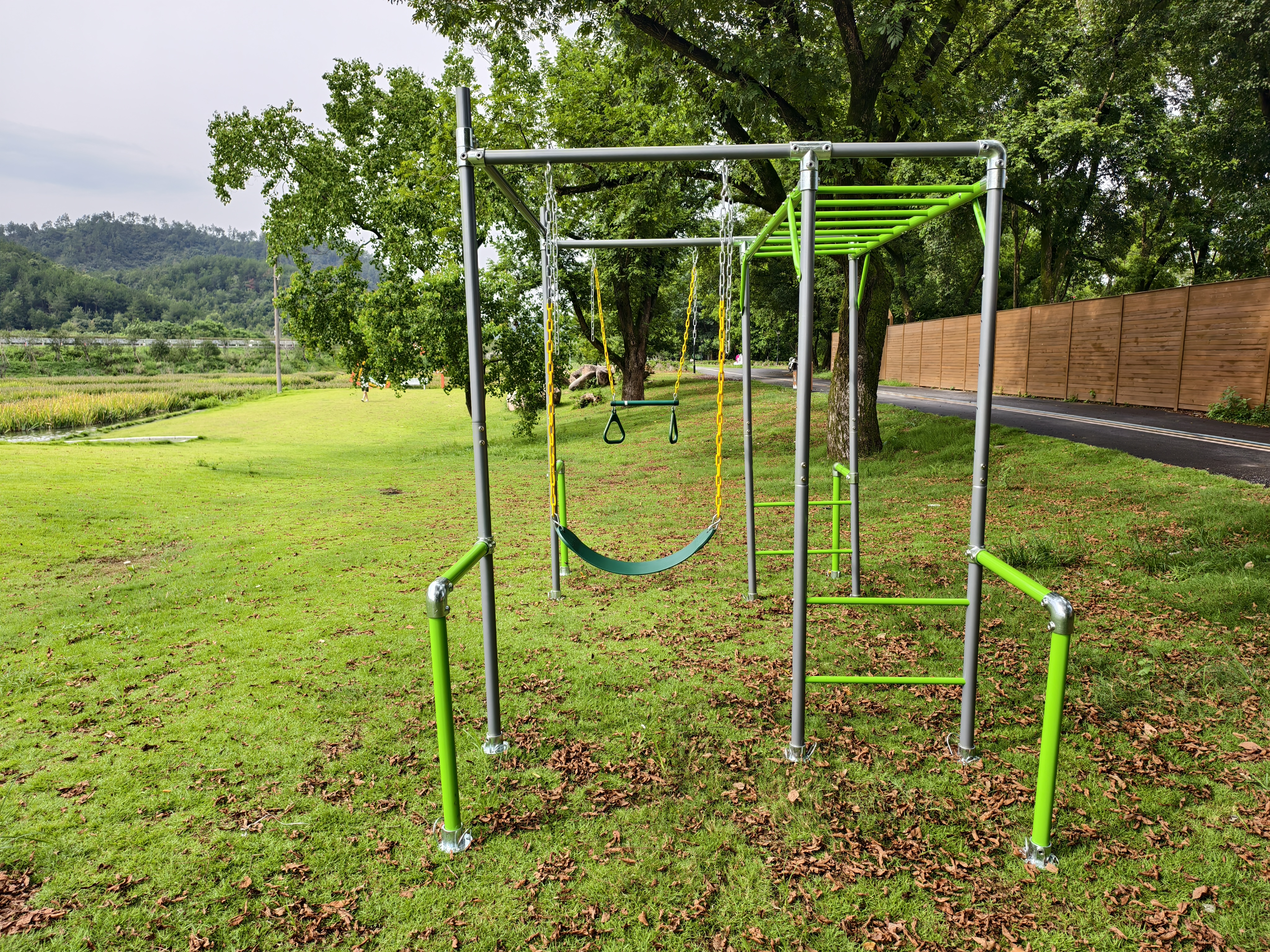
Timing heavily influences long-term structural integrity. Seasonal temperature shifts dictate a proper maintenance calendar far more accurately than arbitrary dates. Planning your inspections around weather changes ensures maximum protection.
Begin your year using a comprehensive spring pre-season audit. Extreme winter weather causes significant wood expansion and contraction. You must check every structural joint carefully before allowing children to resume regular play. Follow these specific pre-season steps:
Re-torque all hardware: Tighten every nut, bolt, and lag screw to ensure lateral stability. However, avoid aggressive over-tightening. Crushing the wood fibers weakens the core frame and invites water intrusion.
Address ground corrosion: Inspect metal ground anchors for ice-melt corrosion. Salt used on nearby pathways easily washes into the soil, rapidly deteriorating galvanized steel footings.
Evaluate frost heave: Check if freezing ground temperatures pushed the support posts upward. Re-level the entire structure to prevent uneven load distribution.
Implement high-frequency in-season checks while kids actively use the equipment during summer months. We recommend following a strict visual inspection checklist every two weeks.
Search underneath roofs, slide canopies, and hollow tubes for wasp nests or aggressive insect activity.
Run a thick gloved hand over highly trafficked wooden railings to detect new splinters safely. Sand down rough patches immediately using medium-grit sandpaper.
Wiggle handles, steering wheels, and climbing brackets to locate unnoticeable loose hardware.
Check the temperature of plastic slides on sunny afternoons to prevent serious thermal burns.
As autumn temperatures drop, execute a deliberate winterization strategy. Remove flexible components like canvas canopies, trapeze rings, and plastic swing seats. Store these sensitive items indoors inside a dry garage or shed. Prolonged freezing temperatures make synthetic materials highly brittle and prone to shattering. Finally, apply heavy-duty tarping protocols over the remaining static frame. Ensure you protect ground anchors from deep freezes by piling extra mulch around the footings to prevent concrete fracture.
You cannot achieve true playground safety without rigorously maintaining the kinetic hardware and the shock-absorbing ground beneath it. Moving metal-on-metal parts endure immense daily friction, while the surfacing absorbs kinetic impact.
Friction point lubrication stands as a critical best practice for injury prevention. Apply a high-quality white lithium grease or specialized heavy-duty silicone spray directly to moving metal joints. Focus your efforts on swing hangers, tire swivels, and glider brackets. This vital routine prevents audible squeaks and drastically reduces long-term metal fatigue. Avoid using standard solvent-based penetrating sprays. Solvents wash away quickly during rainstorms and fail to provide lasting, waterproof lubrication.
Evaluating wear constraints ensures compliance with rigorous safety standards. You must measure S-hook closure gaps and monitor chain-link thinning on a regular basis. According to CPSC and ASTM structural guidelines, S-hooks must remain completely closed. They should show no gap larger than the thickness of a dime. Open hooks pose severe snagging hazards for winter clothing or drawstrings. Additionally, closely examine the chains supporting the swings. If individual chain links thin out by more than 25% of their original diameter due to friction, replace the entire chain assembly immediately.
Remember, the playground surface acts as an essential extension of the set itself. Shock-absorbing surfaces require consistent, labor-intensive upkeep. Over time, heavy foot traffic displaces protective materials, pushing them away from high-impact zones like the bottom of the slide. You must establish top-up requirements for wood mulch, pea gravel, or poured rubber mats. Maintain a safe fall zone depth of at least nine inches for loose-fill materials. Regularly rake displaced mulch back under the swings to prevent serious concussions or fractures.
Even meticulously maintained equipment eventually faces hard structural limits. Knowing exactly when to repair a broken part versus when to replace the entire system protects your family and your budget.
Start by applying strict evaluation criteria. You must carefully identify the difference between terminal structural failure and isolated component failure. Deep core rot inside load-bearing A-frames indicates terminal failure. If you can push a flathead screwdriver deep into the main support beam with minimal resistance, the wood is compromised. This necessitates a complete structural replacement. Severe metal flaking at primary structural joints also signals the end of a safe lifespan. Conversely, a faded plastic steering wheel or a torn canvas roof represents an isolated, easily fixable cosmetic issue.
Component modularity offers excellent cost-efficiency for modern families. Premium manufacturers specifically design these systems to allow isolated upgrades. Swapping out a degraded plastic tube slide or replacing rusted swing chains makes excellent financial sense. You successfully preserve the healthy core wooden frame while instantly refreshing daily safety and visual aesthetics.
Adapting the structure to user growth maximizes your initial backyard investment. Toddlers quickly outgrow basic bucket swings. You can leverage modular add-ons like trapeze bars, intricate climbing walls, and heavy-duty tire swings. This deliberate upgrading strategy successfully transforms a basic toddler-focused play area into a high-capacity, multi-functional swing set suitable for older, heavier children. Scaling the system prevents early equipment obsolescence and keeps older kids actively engaged outdoors for years.
Proactive, season-specific maintenance guarantees long-term durability and structural safety. We detailed how environmental forces constantly test your equipment through UV radiation, moisture, and kinetic friction. By treating wood, metal, and plastic components differently, you actively prevent rapid deterioration. Following a highly structured, season-based calendar protects the main frame from destructive freeze-thaw cycles. Carefully monitoring hardware friction points ensures daily safety and extends the overall functional lifespan of the equipment.
Take immediate action this weekend. Conduct a thorough baseline audit of your current play equipment using the criteria discussed above. Identify any loose hardware, splintering wood, or dangerously thinning chains. If you are currently shopping for an upgrade, use these maintenance realities to inform your purchasing decisions. Look for commercial-grade residential sets built explicitly to withstand your specific local climate zone.
A: You should restain or seal the wood every one to two years, depending heavily on your climate severity. Perform a simple water-bead test. Drip water onto a horizontal wooden beam. If the water instantly soaks into the grain, the protective barrier has failed, and you must reapply sealant immediately to prevent rot.
A: Power washing carries significant risks for wooden components. High-pressure streams easily gouge softwoods like cedar and strip away protective sealants, severely damaging the wood fibers. If you choose to power wash, use the lowest pressure nozzle setting and maintain a wide distance. Hand-washing with soft brushes remains the safest method.
A: White lithium grease or silicone-based sprays perform best for outdoor kinetic hardware. You should avoid standard penetrating solvents like WD-40. Solvents clean away rust but evaporate rapidly, leaving the friction points unprotected. Lithium grease creates a lasting, waterproof barrier that significantly reduces metal-on-metal wear and eliminates annoying squeaks.
A: Replace S-hooks immediately if you observe any noticeable gap widening or metal thinning. Safety guidelines mandate that S-hooks must remain pinched completely closed. A gap wide enough to slip a credit card through poses a severe snagging hazard for clothing. Additionally, replace hooks showing deep rust or structural fatigue.


