

close
Choose Your Site
Global
Social Media

Author: Site Editor Publish Time: 2026-07-03 Origin: Site
Creating a backyard play zone presents a common dilemma for parents. You deeply want a high-engagement, active environment for your children. However, strict safety realities, limited yard space, and long-term durability heavily complicate the buying process. Purchasing playground equipment is a substantial, multi-year investment. It requires careful evaluation of physical footprints, material types, and strict safety compliance. Making impulsive choices often results in cramped layouts or rapid material decay. Improper planning can even lead to structural safety hazards. Our purpose here is to provide a realistic, criteria-driven framework. We will help you systematically select and prepare for a backyard play system. You will discover how to map out safe boundaries and evaluate structural materials. Ultimately, you will gain the exact knowledge needed to choose the right equipment for your family.
Space dictates selection: A safe installation requires a minimum 6-foot clearance obstacle-free "fall zone" around the equipment perimeter.
Material dictates maintenance: Cedar, vinyl-sleeved wood, and powder-coated steel offer different tradeoffs between upfront cost, climate resilience, and annual upkeep.
Safety starts at ground level: Grass is not a recognized safety surface; budgeting for rubber mulch or engineered wood fiber is essential.
Assembly realities: Expect 12–24 labor hours for DIY assembly, plus pre-installation site leveling.
Backyard transformations begin with strict spatial awareness. You cannot simply drop a large play structure onto a patch of grass. Proper spatial planning ensures children play safely without colliding into fences or trees. The Consumer Product Safety Commission (CPSC) provides specific mandates for residential playground layouts.
The CPSC establishes a clear baseline for playground safety perimeters. They require a minimum six-foot safe zone stretching outward in all directions. You must measure this distance from the outermost edge of the play structure. This area is officially known as the fall zone. It must remain completely free of hard obstacles. You should never place a play structure near retaining walls, low tree branches, or concrete pathways. A child exiting a fast tube slide needs this designated runoff space to land safely.
Swing sections demand even more space than static towers. You must calculate the specific clearance needed in front of and behind swing beams. Industry standards dictate clearance equaling twice the height of the pivoting point. Imagine a standard eight-foot swing beam. You must multiply this height by two. This means you need sixteen feet of clearance facing forward. You also need an additional sixteen feet extending backward. This creates a total thirty-two-foot operational zone solely for the swinging motion.
Buyers often confuse product dimensions for the required yard space. We must differentiate between the physical dimensions of the set and the playable footprint. The total physical footprint merely describes the assembled equipment size. The playable footprint includes the equipment plus all mandatory fall zones and swing arcs. You might purchase a compact 10x10 foot tower. However, you actually need a 22x22 foot dedicated space to safely host it.
You must acknowledge the physical reality of residential landscapes. Backyards are rarely perfectly flat. Many homeowners falsely assume they can install heavy equipment on gently sloping grass. We must emphasize the severe limitations of installing on slopes exceeding one or two degrees. Uneven terrain causes massive structural stress on wooden joints. Gravity slowly pulls the structure downhill during dynamic play. Severe slopes create dangerous tipping hazards. You must properly level the ground before considering any installation.
Your choice of material heavily dictates your future weekend chores. Different materials offer unique tradeoffs between structural longevity, aesthetic appeal, and annual maintenance requirements. Understanding these variables prevents buyer remorse. We will examine the three dominant materials used in modern play structures.
Many families prefer the classic appearance of natural timber. Cedar and redwood dominate the residential playground market. They offer excellent natural resistance to fungal decay and wood-boring insects. Natural wood also blends beautifully seamlessly residential landscaping. However, wood is an organic material. It requires strict annual maintenance. You must apply water-repellent sealants or oil-based stains every season. Skipping this maintenance leads to checking. Checking refers to the natural splintering and cracking of wood fibers. Over time, neglected wood suffers structural rot.
Metal structures provide excellent durability for active families. Powder-coated steel offers an exceptionally high strength-to-weight ratio. These frames handle heavy usage without bending or warping. Steel structures require virtually zero structural maintenance. You do not need to stain or seal them annually. However, they do carry specific drawbacks. Powder coatings are susceptible to rust if deep scratches expose the bare steel underneath. Furthermore, metal retains heat aggressively. Dark-colored slides or metal poles become dangerously hot in direct afternoon sunlight. You must position these sets carefully in shaded areas.
Vinyl-sleeved wood represents the premium tier of playground construction. Manufacturers take pressure-treated lumber and encapsulate it completely within thick PVC vinyl. This process delivers remarkable benefits. The vinyl shell permanently prevents splinters, wood rot, and wasp nesting. It requires absolutely no staining or weatherproofing. You simply wash the structure with a garden hose. The primary drawback is the initial price point. Vinyl-sleeved options typically cost significantly more than bare cedar. Furthermore, the components are exceptionally heavy. This extra weight makes DIY installation considerably more difficult.
Material Category | Primary Advantage | Main Drawback | Upkeep Requirement |
|---|---|---|---|
Cedar / Redwood | Natural resistance to insects and beautiful landscape integration. | Prone to checking (splintering) and fading over time. | Requires annual staining and sealant application. |
Powder-Coated Steel | High strength-to-weight ratio and no structural warping. | Rusts if scratched; retains intense heat in direct sunlight. | Minimal; requires touch-up paint for deep scratches. |
Vinyl-Sleeved Wood | Zero rot, no splinters, and prevents insect nesting. | Highest initial price point and extremely heavy components. | Virtually none; occasional washing with soap and water. |
Carefully weigh these factors when researching options. If you dislike annual yard work, vinyl-sleeved structures provide peace of mind. If you prioritize budget and aesthetics, traditional cedar remains an excellent choice. Many families ultimately prefer the robust feel of slide and swing sets built from sustainably sourced timber.
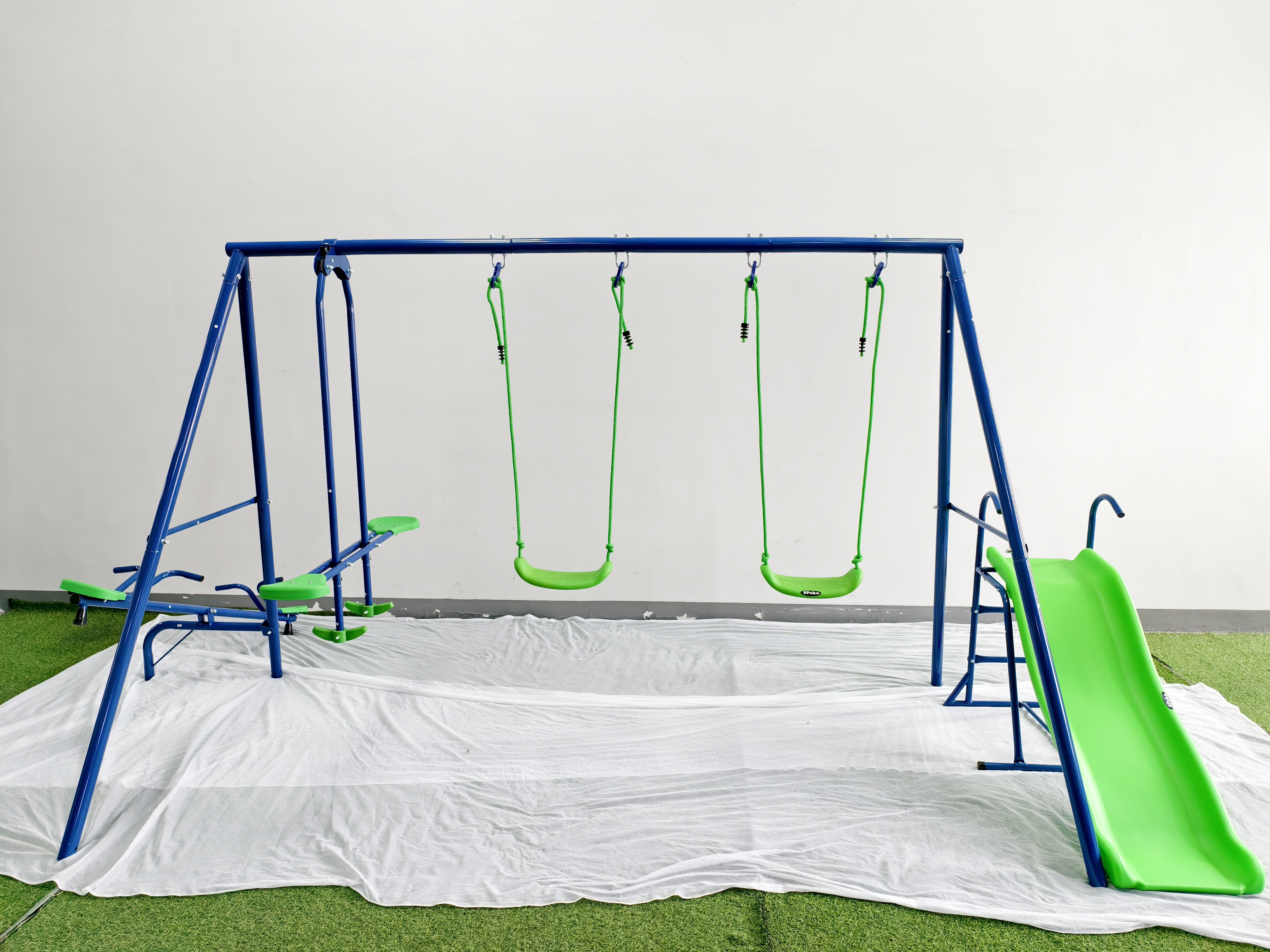
Choosing the right structural layout maximizes backyard engagement. You want a design adapting to your specific yard dimensions and family needs. A massive sprawling playset is useless if it consumes your entire outdoor living space. Let us explore smart configuration strategies.
Families with compact urban or suburban yards face unique challenges. You must evaluate vertical tower designs to maximize playable area. Vertical configurations minimize horizontal spread without sacrificing exciting features. Manufacturers achieve this by stacking play elements. They often feature integrated climbing walls built directly into the tower base. You will frequently find under-deck sandboxes or picnic tables tucked beneath the main platform. This vertical stacking strategy keeps the overall footprint incredibly tight. You gain maximum play value per square foot.
Children grow rapidly, and their physical abilities evolve constantly. Buying a fixed, static structure sometimes leads to boredom within a few years. We highly recommend discussing buying frameworks allowing future expansion. Modular systems let you add components as children age. You might start with a basic tower and a slide. Two years later, you can attach challenging monkey bars or a spiraling tube slide. Expandable designs gracefully handle increasing dynamic load requirements as toddlers become teenagers. This strategy ensures your outdoor swing slide set grows alongside your family.
Families with multiple children need versatile play zones. You must select configurations offering varying challenge levels simultaneously. A two-year-old and an eight-year-old play very differently. Look for multi-height decks. A lower deck featuring a short, gentle slide safely accommodates toddlers. An attached higher deck with a steep wave slide challenges older siblings. Swing beams should feature interchangeable hardware. You can hang a standard belt swing right next to a baby bucket swing. This thoughtful planning keeps everyone engaged and safe simultaneously.
Visual appeal often distracts buyers from structural realities. A playset might look fantastic but harbor dangerous design flaws. You must strictly evaluate the underlying safety architecture. We look closely at hardware quality, ground surfacing, and load bearing metrics.
Hardware serves as the critical nervous system of any play structure. You should always advise looking for commercial-grade connectors. Inspect the bolt designs carefully. Recessed bolts are mandatory. They sit flush inside the wood, preventing children from snagging clothing or skin. Lock nuts are another non-negotiable feature. They resist the constant vibration of active play, preventing the frame from loosening over time. Heavy-duty swing hangers must feature thick nylon bushings. These internal plastic sleeves prevent brutal metal-on-metal friction. Without nylon bushings, swing hangers quickly grind themselves apart.
Many parents believe a lush lawn provides adequate safety padding. This is a dangerous misconception. Standard turf drastically fails formal impact tests. Soil compacts into a rock-hard surface under continuous foot traffic. You must evaluate proper protective surfacing options to prevent severe head injuries.
Engineered Wood Fiber (EWF): EWF provides excellent shock absorption. It knits together to form a firm, springy mat. It is relatively affordable but requires topping off annually as it decomposes.
Rubber Mulch: Recycled tire mulch offers superior impact attenuation compared to wood. It drains water instantly and never rots. However, it costs significantly more upfront and can heat up in sunlight.
Poured-in-Place Rubber: This commercial-style surface provides ultimate safety and accessibility. It requires professional installation. It represents the highest possible investment but delivers unmatched longevity.
Understanding weight restrictions prevents catastrophic frame failures. You must clarify the difference between static weight limits and dynamic load limits. Static weight limits describe deck capacity. This tells you how many children can safely stand on the main tower simultaneously. Dynamic load limits are far more critical. They measure the extreme physical stress applied to the swing beam during active, forceful swinging. A high dynamic load rating proves the manufacturer used sufficiently thick structural beams. Always verify these specific metrics before finalizing any purchase of an outdoor slide and swing set.
The journey from purchasing to playing involves intense physical labor. Buyers frequently underestimate the logistics of residential playground installation. Preparing the site and managing heavy freight delivery requires careful orchestration. Let us examine the true realities of bringing a playset to life.
We must warn buyers clearly: playground sets do not self-level. You cannot simply prop up a sagging corner with wooden shims. Doing so destroys the structural integrity. You must discuss the absolute necessity of professional grading. If your yard slopes, you must dig out the high spots to create a perfectly flat plateau. Creating a level foundation prevents the structure from torquing under pressure. Depending on your yard, proper leveling might require renting a sod cutter or hiring a local landscaping crew.
These massive products do not arrive via standard parcel carriers. Large sets arrive strictly via LTL (Less Than Truckload) freight shipping. Freight carriers operate under specific rules. Note that large sets usually require curbside drop-off planning. The driver will lower a massive pallet onto your driveway using a liftgate. They will not carry boxes into your backyard. You must physically move hundreds of pounds of lumber and hardware from the driveway to the installation site yourself. Plan to have several strong friends available on delivery day.
You face a major decision regarding the actual build process. Building it yourself saves money but costs serious time. We provide realistic DIY timelines. You should often expect 12 to 24 labor hours for DIY assembly. This typically translates to two or three full weekends for two capable adults. The process involves sorting hundreds of screws and deciphering complex diagrams.
Conversely, you must discuss when it is financially prudent to hire certified installers. Professional crews can build a massive structure in six hours. Utilizing certified professionals often guarantees warranty preservation. Many manufacturers void warranties if they discover improper DIY assembly methods. If you possess complex terrain or lack heavy carpentry experience, hiring professionals is an incredibly wise investment.
Designing a safe and thrilling backyard play area requires a methodical approach. We recommend utilizing a sequential decision process. First, measure the yard meticulously, strictly accounting for all mandatory fall zones and swing arcs. Next, determine your material budget by weighing upfront pricing against long-term maintenance realities. Finally, select a configuration accommodating your children's current ages while allowing room for future modular expansion.
Your immediate next-step action is highly practical. We encourage readers to grab landscape spray paint or wooden stakes today. Go outside and physically mark your yard to visualize the required footprint. Map out the tower base and the full swing clearances. Perform this exercise before adding any product to your online cart. This simple physical visualization prevents costly spatial mistakes and guarantees a successful backyard transformation.
A: Yes, you frequently do. Requirements vary heavily by local municipality. Homeowner Associations (HOAs) generally require formal approval regarding maximum height limits, material colors, and property line setbacks. Always submit a detailed site plan to your HOA board before purchasing.
A: You must manage moisture actively. Discuss proper drainage strategies first. Avoid direct soil contact by placing concrete footers or thick paver blocks beneath the main structural posts. Using protective surfacing like rubber mulch also prevents wet soil from resting against the wood.
A: Lifespan depends entirely on the material type. Frame your expectations accordingly. You can expect 5 to 10 years for untreated or neglected wood. Conversely, you will easily see 15 or more years for rigorously maintained cedar, powder-coated steel, or vinyl-sleeved structures.
A: No, we strongly advise against it. Installing on slopes causes severe structural stress on the frame joints. It also creates immediate tipping hazards during aggressive swinging. We recommend professional site leveling as a strict, non-negotiable prerequisite before assembly.


