

close
Choose Your Site
Global
Social Media

Author: Site Editor Publish Time: 2026-06-30 Origin: Site
Making the purchase decision for a backyard playset often involves serious friction. You are considering a multi-year investment. It permanently alters your backyard landscaping. It also demands a significant upfront budget. Choosing a simple plastic toy is easy. Evaluating a full-scale backyard structure goes far beyond picking the most colorful option.
You must carefully balance structural safety, ongoing maintenance demands, and your child’s rapid growth phases. Many parents buy blindly. They end up regretting the purchase just three years later when the structure feels too small or unsafe. Without a clear plan, you risk wasting money on a setup unsuited for your environment.
This article provides an evidence-based, skeptical-friendly framework. We aim to help you evaluate and shortlist the right setup for your family's actual daily needs. You will learn how to assess building materials, measure yard space correctly, and prioritize long-term features. Let us cut through the marketing noise to give you the practical facts you actually need.
Space is the ultimate constraint: A playset requires a minimum 6-foot clearance "fall zone" in all directions, demanding precise yard measurements before browsing.
Material dictates maintenance: Cedar, vinyl-sleeved wood, and powder-coated steel each carry distinct lifespan realities and annual maintenance requirements.
Age adaptability maximizes ROI: Purchasing modular sets prevents the equipment from becoming obsolete within three years as children's motor skills develop.
Hidden implementation costs: Site leveling, surfacing materials (mulch/rubber), and HOA compliance often add 20–30% to the base purchase price.
Before you even look at product catalogs, you must analyze your physical space. A beautifully designed kids slide and swing set becomes a hazard if squeezed into an inadequate area. Space dictates your options entirely.
Industry safety organizations mandate a strict clearance perimeter. We call this the "fall zone." You must maintain a minimum six-foot safety perimeter around all active edges of the structure. This rule applies to ladders, rock walls, and the exit of any slide. Swings require even more space. You must measure twice the height of the swing beam extending forward and backward. If your swing beam stands eight feet tall, you need sixteen feet of clearance in both directions.
Ground leveling presents another harsh reality for parents. Many people hold a dangerous misconception. They believe a massive wooden structure can sit directly on sloped grass. It cannot. Structural integrity relies on perfect weight distribution. A lean of just a few degrees puts immense stress on the hardware joints. If your yard shows a grade variance exceeding two inches, you face two choices. You must hire professionals for yard grading, or you must build a custom retaining wall. Ignoring a slope guarantees an unsafe play environment.
Finally, neighborhood regulations often derail installation plans. Do not schedule a delivery before checking local rules. Follow this simple checklist to avoid zoning hurdles:
Verify property lines: Ensure the entire structure and its fall zone remain strictly inside your property boundaries.
Check fence height restrictions: Many homeowner associations (HOAs) restrict structures rising above the standard six-foot privacy fence.
Review aesthetic guidelines: Certain neighborhoods dictate specific wood stains, roof canopy colors, or material types.
Confirm underground utilities: Call your local utility marking service before driving any anchoring stakes into the ground.
Choosing the right material determines your weekend maintenance schedule for the next decade. Every material claims high durability, but real-world weathering tells a different story. You must align your material choice for a children outdoor playset with your willingness to perform upkeep.
Wood remains the traditional favorite for residential backyards. Solid cedar and redwood offer a beautiful, natural aesthetic. They naturally resist rot and repel insects. Wood also absorbs less heat than metal during peak summer sun.
However, wood demands relentless upkeep. You cannot simply build it and forget it. Wood requires annual or biennial staining and sealing. Moisture and ultraviolet light will dry out untreated wood rapidly. Without a strict sealing schedule, the beams will splinter, warp, and suffer structural degradation. You must factor in the time and cost of premium sealants every single year.
Vinyl-sleeved wood represents the premium tier of backyard equipment. Manufacturers take thick structural wood timbers and encase them completely in a heavy-duty vinyl shell. This process eliminates splinters entirely.
The primary advantage is virtually zero maintenance. You never need to stain, paint, or seal the structure. An occasional power wash keeps it looking brand new. It offers the highest durability in harsh climates. The realities, however, involve a steep premium price point. These structures also carry a massive footprint and weigh significantly more. Moving them after installation is incredibly difficult.
Metal structures provide a high strength-to-weight ratio. They offer a sleek, modern look. They also generally come at a lower cost compared to premium wood sets.
The main drawback involves rust risk. While powder coating protects the main beams, moisture inevitably attacks joint connections and hardware holes over time. You must inspect joints regularly for oxidation. Furthermore, metal can get dangerously hot in direct sunlight. You must position these structures in shaded areas to protect bare skin during summer months.
Below is a quick comparison chart detailing the primary materials:
Material Type | Primary Advantage | Biggest Drawback | Annual Maintenance Level |
|---|---|---|---|
Cedar / Redwood | Natural look, low heat retention | Splintering, color fading | High (Staining/Sealing) |
Vinyl-Coated Wood | Zero splinters, extreme durability | High initial cost, very heavy | Low (Occasional washing) |
Powder-Coated Steel | Affordable, modern appearance | Rust vulnerability, gets hot | Medium (Rust inspection) |
Evaluating safety goes deeper than checking for sharp edges. You must examine the engineering choices behind the product. The hardware and connectors bear the entire dynamic load of swinging children.
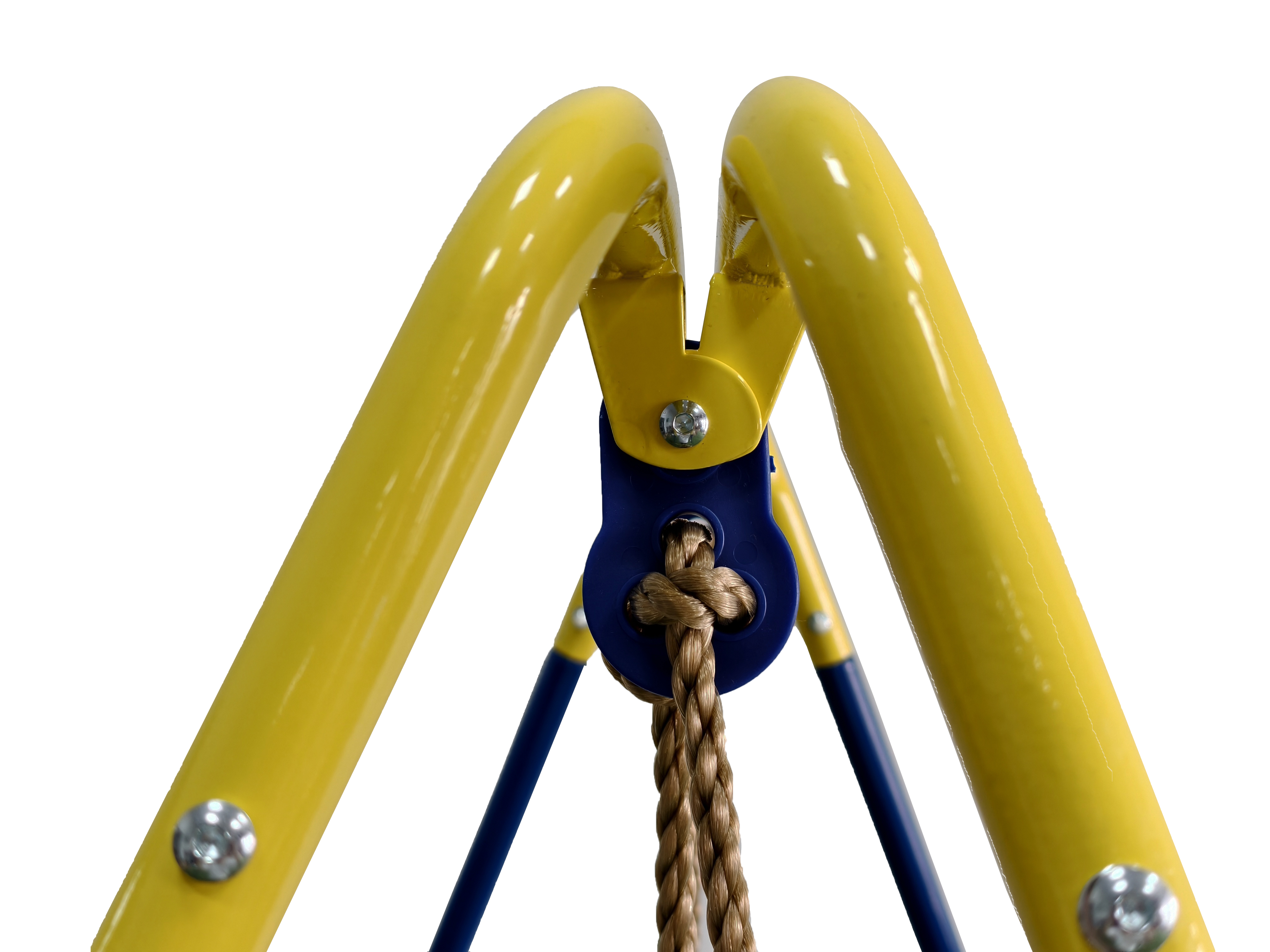
You must prioritize recessed hardware. Bolts protruding from beams catch clothing easily. This causes immediate strangulation hazards or severe friction burns. Look for commercial-grade swing hangers. Cheap carabiners wear down quickly due to constant metal-on-metal friction. High-quality systems use nylon bushings to reduce wear and eliminate squeaking. Lock-nuts are another critical feature. Constant vibration from active play loosens standard nuts. Lock-nuts feature a nylon insert preventing the hardware from backing out.
Weight capacity transparency separates premium brands from budget options. Many companies advertise aggregated weight limits. They might claim a set "holds up to 800 lbs." This number misleads buyers entirely. It assumes eight small children distribute their weight perfectly across every station. You need to look for per-child or per-component weight limits. A rating of "150 lbs per swing" tells you the true structural thickness of the swing beam. It proves an adult could likely test it safely.
Your safety investment extends to the ground below. A fall onto basic backyard grass often results in fractures. Compacted soil offers zero fall attenuation. You must invest in proper surfacing materials. Consider the following options:
Engineered Wood Fiber (EWF): This is not standard gardening mulch. EWF knits together to create a wheelchair-accessible, highly shock-absorbent layer.
Rubber Mulch: Shredded tires offer superior bounce and longevity. They do not decompose, though they absorb more heat.
Pour-in-Place Rubber: The ultimate safety standard used in commercial parks. It costs the most but requires zero maintenance and provides maximum impact absorption.
Parents frequently voice a common regret in parenting forums. They spend thousands of dollars on a beautifully compact toddler set. Three years later, their seven-year-old finds it completely boring. You must design for motor skill progression to maximize your return on investment.
Toddlers and young children need sensory play. They benefit from short slides, bucket swings, and built-in sandboxes. These features build foundational balance. However, school-age children crave physical challenges. They need tall rock walls, monkey bars, and higher deck heights. A five-foot deck height feels mountainous to a three-year-old but perfectly scaled for an eight-year-old. Buying a slightly larger frame gives your children room to grow into the challenge.
The smartest purchases feature modular upgradability. You should evaluate frames allowing you to swap accessories easily. A sturdy A-frame lets you hang a baby bucket swing today. Two years later, you unclip it and attach a belt swing. Later still, you can install a trapeze bar or gym rings. Look for systems offering expandable forts. Some brands let you bolt on a wider, faster slide or attach an entire monkey bar module when your child turns six. Modular systems prevent the equipment from becoming obsolete.
You must also consider the aesthetic lifespan. A giant, primary-colored plastic structure looks appropriate while children are toddlers. However, it may clash with mature landscaping five or ten years down the road. Wood and neutral-toned vinyl integrate much better into natural backyard environments. Consider how the structure will look from your kitchen window a decade from now. A well-maintained wooden set eventually blends into the tree line, preserving your property's visual appeal.
Purchasing the equipment represents only the first step. Getting it functioning in your yard involves distinct logistical hurdles. You must choose between doing it yourself and hiring professional installation crews.
DIY assembly appeals to budget-conscious families. However, you must maintain realistic expectations regarding timeframes. A standard wooden set arrives in multiple heavy boxes containing hundreds of unorganized pieces. Assembling it takes two capable adults roughly 15 to 20 hours. You need specialized drill bits, levels, and considerable patience. Rushing the process leads to unlevel decks and loose joints.
Improper DIY assembly also carries significant risks. Many premium manufacturers include strict warranty clauses. If you fail to install the ground anchors correctly or over-tighten bolts causing wood splits, you void the warranty instantly. Professional installers complete the job in a few hours. They guarantee structural compliance and protect your long-term warranty coverage.
Your next steps require a structured approach. Recommend setting a shortlist criteria based on strict priorities. Follow this order:
First, narrow down by footprint: Discard any models failing to leave a six-foot safety perimeter in your yard.
Second, filter by material: Decide immediately if you have the time for annual wood staining or if you must pay the premium for vinyl.
Third, evaluate the deck height: Prioritize frames featuring at least a five-foot deck to ensure longevity for growing children.
Finally, pick specific play features: Add the slides, swings, and rock walls fitting your child's current and future motor skills.
Selecting the ideal outdoor play equipment demands careful spatial planning and honest material evaluation. The best playset is always the one fitting the physical constraints of your yard while matching your personal maintenance appetite. Ignoring the necessary fall zones or underestimating wood upkeep will quickly turn an exciting purchase into a backyard burden.
We encourage buyers to prioritize robust structural frames and high deck heights. These foundational elements adapt over time. Avoid sets maxed out with exclusively toddler-friendly accessories. By focusing on modularity, high weight capacities, and commercial-grade hardware, you guarantee a safe environment. You also secure a decade of active, engaging outdoor play.
Measure your yard twice, ensuring a mandatory 6-foot safety perimeter around the entire play area.
Choose materials based on your willingness to perform annual maintenance.
Buy a larger frame featuring a taller deck height so children can grow into the equipment.
Invest heavily in shock-absorbent ground surfacing rather than relying on compacted lawn grass.
A: It rarely adds direct monetary value to real estate. Depending heavily on the buyer demographic, it acts as a slight selling point for young families or a deterrent for retirees unwilling to remove it. You should focus strictly on the personal family use and developmental ROI rather than home equity.
A: A basic untreated or poorly maintained wooden set typically lasts 5 to 7 years before showing severe rot or splintering. Conversely, a rigorously maintained premium cedar set, or a high-end vinyl-coated structure, easily lasts 10 to 15 years, surviving your child's entire play lifespan.
A: You can, but safety experts strongly advise against it. Compacted lawn soil offers zero shock absorption for falls. Additionally, it creates a maintenance nightmare. Mowing and weed-whacking carefully around multiple wooden posts damages the wood over time. We recommend building dedicated play borders filled with proper safety surfacing.


