

close
Choose Your Site
Global
Social Media

Author: Site Editor Publish Time: 2026-07-08 Origin: Site
Parents often face a tough dilemma. You want your children engaging in healthy, active play outside. However, you also read pediatric injury statistics and worry about safety. The American Academy of Pediatrics frequently highlights the risks of poorly designed jumping equipment. How do you find a proper balance? We created this guide to help you figure it out. Our primary goal is to provide a strict, evidence-based evaluation framework. You will learn how to identify a genuinely safe kids fitness trampoline for your family. We will show you how to avoid cheaply manufactured hazards masquerading as bargains. Many low-cost options fail quickly under basic stress tests. Remember, safety never comes from flashy marketing labels or colorful packaging. It relies entirely on structural engineering, verified safety compliance, and strict usage rules. Let us walk you through the essential features you must check before making a final purchase.
Standard yard trampolines are not the same as engineered fitness/safety models; structural integrity dictates injury risk.
A high-quality trampoline with safety net must feature a no-gap enclosure system and UV-treated mesh.
Springless designs or heavily padded, overlapping spring covers are non-negotiable to prevent pinch and impact injuries.
Independent safety certifications (ASTM, TÜV) are mandatory baseline requirements, not premium upgrades.
Let us explore the reality of emergency room visits. Pediatricians regularly report specific injury patterns across the country. Most accidents happen when multiple jumpers collide in mid-air. One child absorbs the massive kinetic energy of another. This transfer often results in fractures or severe ankle sprains. Other frequent hazards include falling off the mat completely and landing on hard ground. Kids also suffer injuries by striking unpadded metal frames or getting pinched in bare coil springs.
Some parents view these backyard items as simple toys. This casual mindset often leads to poor purchasing decisions. People buy based on a low price tag rather than sound engineering. You should treat them as serious athletic equipment instead. High-end models are engineered specifically to eliminate these structural hazards. By understanding how injuries occur, you can choose designs that actively mitigate these risks. We highly recommend prioritizing structural integrity over a massive size. Good design permanently removes the mechanical failures leading to common backyard injuries.
The frame acts as the skeleton of your jumping equipment. Material specifications matter immensely here. You need heavy-duty, double-galvanized steel frames. Galvanization prevents interior rust and catastrophic structural buckling. Untreated steel rusts quickly from the inside out, weakening the entire support system. This protection becomes especially vital when selecting an outdoor kids trampoline exposed to rain, snow, and morning dew.
Next, look closely at the leg design. Cheap models use straight vertical legs. Straight legs are incredibly prone to tipping over during aggressive bouncing. You want W-shaped or U-shaped legs instead. They disperse dynamic jumping forces evenly across the ground. Pay close attention to joint integrity as well. High-stress junctions require reinforced T-sockets. Heavy-duty structural welds also stop the frame from warping under pressure.
Finally, consider wind resistance. Sudden gusts can lift large yard equipment easily. The wide jumping mat acts just like a massive sail. You must use integrated anchor kits for any outdoor setup. They lock the base firmly to the earth. Follow these steps when evaluating the base construction:
Check the steel thickness gauge listed by the manufacturer.
Inspect the interior and exterior galvanization coating details.
Count the number of W-shaped legs providing solid ground contact.
Verify the inclusion of heavy-duty steel ground anchors in the box.
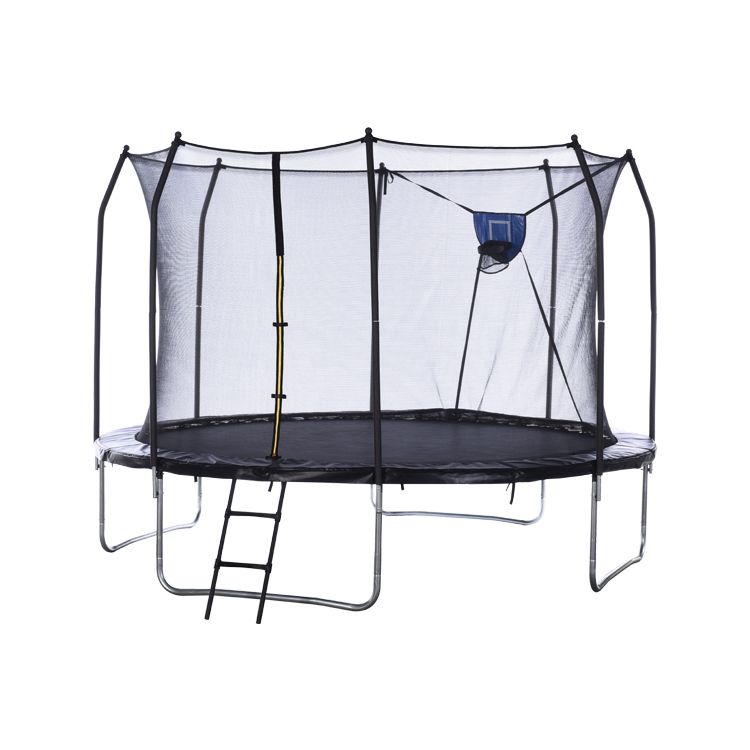
Traditional metal coil springs create dangerous pinch points for small toes. Skin and hair easily get caught in the expanding coils during a jump. Springless technology offers a significantly safer alternative. Designs using flexible fiberglass rods or heavy-duty bungee cords eliminate pinch zones entirely. They also provide a smooth, silent bounce. If you prefer traditional metal springs, premium padding remains absolutely non-negotiable.
You must ensure they use high-density, closed-cell foam pads. These pads need to tie down securely over the springs. Thin PVC covers tear easily in the sun and expose the bare metal underneath. Consider these specific padding requirements:
Use closed-cell foam to prevent long-term water absorption and mold.
Ensure the pad overlaps the jumping mat by at least two to three inches.
Check for durable bungee ties holding the protective pad firmly in place.
A "no-gap" mat design provides another essential layer of protection. The jumping mat should seamlessly lock or sew directly to the bottom of the enclosure net. This clever design eliminates the dangerous void where feet easily slip through. You also need shock-absorbent net poles. Rigid, unpadded metal enclosure poles present a major concussion hazard. Look for curved poles bowing outward away from the jumping space. They should feature thick, UV-resistant foam covers. This smart design actively keeps children away from hard impacts.
The enclosure net serves as your primary fall prevention tool. Not all nets offer the same level of security. You must thoroughly evaluate the mesh density and material quality. A reliable trampoline with safety net requires tightly woven polyethylene (PE). This robust material prevents tiny fingers from getting tangled in the holes. It also resists severe sun degradation over time. Cheaper nylon nets often degrade quickly under harsh UV rays, becoming brittle and prone to sudden tearing.
A good net needs proper tension and flexibility. It should not act like a rigid brick wall. Instead, a safe net catches the jumper softly. It then redirects them safely back toward the center of the mat. Entry and exit points demand your scrutiny too. Flimsy overlapping doors frequently fail over time, leaving an open gap. We recommend heavy-duty overlapping zipper doors. Add secondary exterior clip locks as a backup. This dual-system stops kids from falling out accidentally. It also prevents them from opening the net mid-jump.
Manufacturers often boast about extremely high weight capacities to sell products. You need to understand the critical difference between static and dynamic loads. A static load simply measures resting weight. Dynamic load accounts for the massive downward force of a jumping human body. A 300-pound static limit does not equal safe usage for three 100-pound kids. It safely supports only one active jumper at a time.
This brings up the strict "one jumper at a time" reality. No advanced safety feature ever overrides the danger of multi-user collisions. Parents must enforce strict solo jumping rules regardless of the equipment size. Age-appropriate sizing also plays a crucial role in injury prevention. Small indoor bouncers suit toddlers best. They offer lower bounce returns and keep falls close to the ground. Conversely, reinforced outdoor models better serve elementary and middle schoolers who generate much more force.
Age Group | Recommended Type | Primary Safety Focus |
|---|---|---|
2 - 5 Years | Small Indoor Bouncers | Low ground clearance, handle bars, low dynamic bounce |
6 - 9 Years | 8ft - 10ft Outdoor Models | No-gap enclosures, heavily padded springs, UV-treated nets |
10+ Years | 12ft+ Heavy-Duty Models | High dynamic load capacity, anchor kits, heavy-gauge steel |
Independent safety certifications serve as mandatory baseline requirements. They are never just premium upgrades for luxury models. You want to see ASTM International (US) or TÜV SÜD (Europe) badges prominently displayed. These specific certifications mean the product passed rigorous laboratory testing. They evaluate material toxicity, maximum structural load limits, and long-term UV resistance.
Beware of vague marketing claims on packaging. Badges stating "safety tested" mean absolutely nothing without verifiable third-party documentation. Always look for the actual certification number in the manual. Next, analyze the manufacturer's warranty. The warranty length directly reflects material durability. Long warranties on the frame and net show high manufacturer confidence. A one-year frame warranty usually signals cheap, thin steel that will bend. Seek out brands offering at least five to ten years of coverage on structural metal components.
We created a simple structural evaluation chart to help you audit potential purchases quickly:
Evaluation Criteria | High-Quality Standard | Red Flags to Avoid |
|---|---|---|
Frame Material | Double-galvanized heavy-duty steel | Untreated, thin metal tubing prone to rust |
Spring Cover | Closed-cell foam, securely tied down | Thin PVC material that easily shifts around |
Net Enclosure | Tightly woven PE, high tension flexibility | Loose nylon netting, weak single zippers |
Investing in jumping equipment requires a serious, safety-first approach. You must always prioritize structural safety over a massive size or a remarkably cheap price. A flimsy yard toy puts children at unnecessary risk for serious injury. High-quality engineering protects them while they play and exercise. Your next step involves auditing your shortlisted products thoroughly. Use the strict criteria we outlined above. Start by examining the frame material and the net enclosure design. Verify the safety certifications and check the warranty length. Check the springs or springless mechanisms for adequate padding. Never compromise on these core elements. By demanding excellence, you ensure years of healthy, injury-free fun.
A: Springless models featuring a no-gap enclosure system offer the highest safety levels. They remove dangerous metal coils entirely and eliminate pinch points. If you choose traditional springs, ensure they have thick, closed-cell foam pads that securely overlap and lock to the jumping mat.
A: You should inspect the netting for UV degradation and micro-tears every season. Sun exposure weakens synthetic materials over time. Most safety experts recommend replacing the net every one to two years to maintain optimal tension and prevent catastrophic rips during a fall.
A: No product can guarantee 100% safety. Nets successfully prevent dangerous falls to the ground. However, they do not prevent poor landings, twisted ankles, or multi-jumper collision injuries on the mat itself. Active adult supervision remains absolutely required during all jump sessions.
A: You should never install jumping equipment directly on concrete, asphalt, or hard-packed dirt. The hard surface amplifies impact forces and drastically increases tip-over risks. Always place them on energy-absorbing surfaces like soft grass, thick wood chips, or dedicated rubber safety mats.


