

close
Choose Your Site
Global
Social Media

Author: Site Editor Publish Time: 2026-07-03 Origin: Site
Purchasing play equipment represents a significant multi-year investment for your family. Many parents make decisions based purely on visual appeal or the lowest upfront price. This approach often causes unexpected headaches down the road. Without careful planning, two negative outcomes frequently occur. The system either becomes quickly outgrown, we see this often, or it creates distinct safety risks because it fails to match your children's physical capabilities.
A successful purchase requires a strategic approach. You must align deck heights, weight capacities, and modular components with current developmental stages and future growth. You must also evaluate yard dimensions and your available maintenance bandwidth before deciding. Read on to discover how you can systematically future-proof your backyard play area. We will guide you through age-based criteria, spatial planning, material durability, and essential safety compliance. These practical insights will help you make the safest and most engaging choice for your family.
Match deck heights to the oldest child, but ensure swing attachments are safe for the youngest.
Allocate a minimum 6-foot safety perimeter (fall zone) around the equipment.
Factor in long-term maintenance: Cedar requires annual sealing, while vinyl-sleeved sets carry a higher upfront cost but demand less upkeep.
Prioritize modular designs that allow you to swap bucket swings for belt swings or add challenging attachments as children age.
Different developmental stages require specific structural components. They balance safety with appropriate physical challenges. Evaluating play equipment based on age ensures long-term usability. When selecting a kids swing set, carefully map the features to your family's current developmental phase.
Toddlers are just beginning to master their gross motor skills. They require maximum structural support and strict fall prevention features. High-back bucket swings are absolutely mandatory. They provide necessary core support for toddlers who lack upper body strength. You must also look for fully enclosed forts or decks. Open platforms pose severe fall risks for this age bracket. Keep slide lengths short, ideally under 8 feet, to control descent speeds.
Safety remains the primary focus here. Prioritize smooth transition points between different play zones. Choose step-ladders featuring sturdy handrails rather than rock walls or complex rope climbs. Toddlers need secure grips as they navigate upward. Avoid exposing them to wide gaps or challenging climbs.
As children enter the preschool years, their agility and confidence increase dramatically. You can now introduce standard belt swings alongside bucket swings. Mid-height deck towers reaching 4 to 5 feet work perfectly for this age. Add interactive elements to engage their growing imagination. Steering wheels, built-in sandboxes, and tic-tac-toe panels offer great sensory play opportunities.
Despite their increased mobility, safety remains paramount. Preschoolers still need enclosed upper rails to prevent accidental falls during energetic play. You can introduce standard slides featuring manageable slopes. We suggest avoiding steep wave slides until they develop better balance and landing coordination.
Older kids require significantly more physical stimulation to stay engaged. They need taller deck heights ranging from 5.5 to 7 feet. Look for heavier weight capacities. You should demand a minimum of 150 lbs per swing position. Advanced agility features become highly important now. Think about adding monkey bars, trapeze rings, and vertical rock walls. These features challenge their upper body strength and coordination.
Structural stability becomes crucial at this stage. The equipment must handle aggressive swinging and jumping. Heavy-duty swing beams and A-frame anchors provide the necessary support. Flimsy structures will wobble under the dynamic weight of older children, creating dangerous instability.
Proper spatial planning prevents costly installation mistakes. A yard might look enormous, but play structures require specific clearances to remain safe.
Base dimensions do not equal required yard space. A common mistake involves measuring only the physical footprint of the equipment. You must follow the industry-standard rule of adding a 6-foot obstacle-free safety zone in all directions. This perimeter protects children who might jump from a swing or fall from a slide. It must remain clear of fences, trees, hardscapes, and other structures. If you have a swing beam, extend the safety zone slightly further in front of and behind the swings.
We view deck height as a reliable lifespan indicator. A 4-foot deck might look perfectly sized for a toddler, but it quickly feels cramped for an 8-year-old. Choosing a 5-to-6-foot deck offers the best longevity for growing families. It accommodates taller children comfortably. It also maintains enough clearance underneath for built-in sandboxes or picnic tables.
Evaluate spatial trade-offs carefully when choosing configurations. A compact single swing set frame attached to a basic slide is ideal for urban or small yards. It maximizes active play without consuming the entire lawn. Conversely, expansive multi-tower sets require dedicated, leveled backyard zones. They offer maximum play value but demand extensive spatial planning and permanent landscaping commitments.
Selecting the right material determines how much weekend time you will spend on upkeep. Each material offers distinct advantages and inherent risks.
Wood materials like Cedar, Redwood, and Treated Pine remain highly popular. They offer a beautiful natural aesthetic. Wooden structures feel heavy, sturdy, and highly customizable. However, they carry significant maintenance risks. You must commit to realistic maintenance schedules. Wood requires annual staining or sealing to prevent rot, splintering, and checking. Checking refers to natural cracking along the grain as wood dries.
Vinyl-Coated Wood provides an innovative hybrid solution. It combines the structural weight of traditional wood with a weatherproof exterior. The vinyl sleeving creates a completely splinter-free surface. It eliminates the need for seasonal staining. The main drawbacks include premium pricing and a heavier installation process.
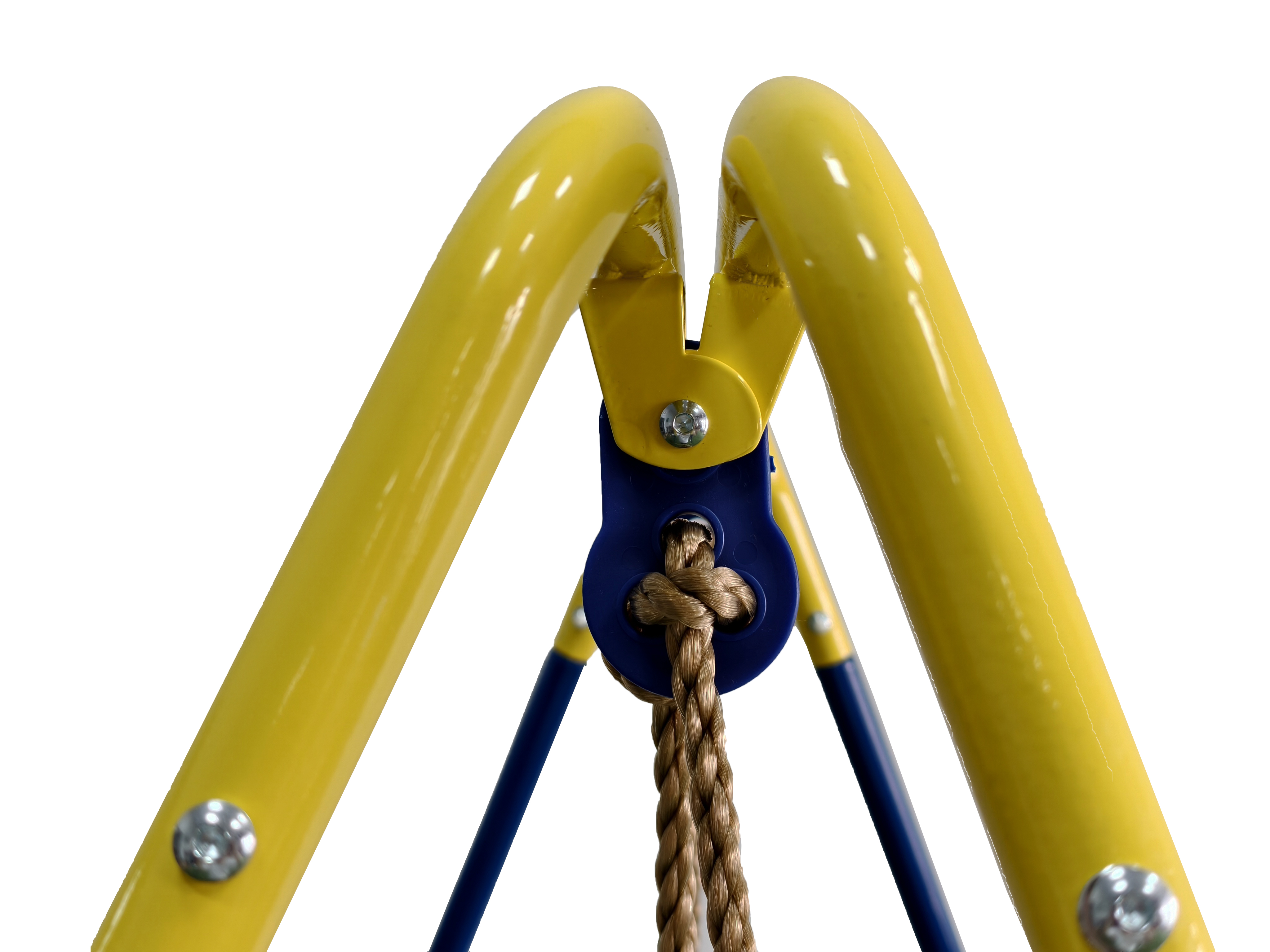
Metal frames made from Galvanized Steel offer another distinct path. They require very low maintenance. Steel delivers a high strength-to-weight ratio, making the structure quite durable. However, scratches can leave the metal susceptible to rust if left untreated. Additionally, dark metal components can absorb intense heat in direct sunlight. This poses burn risks during mid-summer afternoons.
Review the comparison below to guide your material choice:
Material Type | Primary Advantages | Maintenance Requirements | Potential Drawbacks |
|---|---|---|---|
Natural Wood (Cedar/Redwood) | Heavy, sturdy, customizable, natural look | High (Annual sealing/staining) | Susceptible to rot, splintering, and checking |
Vinyl-Coated Wood | Weatherproof, splinter-free, highly durable | Low (Occasional washing) | Premium pricing, very heavy installation |
Galvanized Steel | High strength-to-weight ratio, rot-proof | Low (Rust spot checking) | Can absorb high heat, rusts if deeply scratched |
Children grow rapidly. Buying a system designed only for their current size limits your investment's lifespan. Future-proofing your outdoor swing slide set ensures it adapts as they mature.
The modularity principle serves as your best strategy. You should buy for the oldest child's frame size, but customize the attachments for the youngest. A tall, sturdy frame easily accommodates a toddler if you install the correct high-back bucket attachments. You retain the height needed for later years.
Look closely at upgradable components. Choose swing beams accepting interchangeable carabiner clips. This hardware allows you to swap a baby bucket for a standard web swing or a challenging trapeze bar later. Quick-link hardware makes these transitions effortless. Avoid systems featuring permanently bolted accessories.
Evaluate brands offering modular add-on capabilities. Premium manufacturers sell separate extensions. You can add a monkey bar unit or a secondary tower as children demand more complex physical challenges. This approach spaces out your investment while continuously renewing their interest in outdoor play.
A sturdy frame means little without proper ground surfacing and secure installation.
You must ensure the equipment meets or exceeds residential ASTM safety standards. Check manufacturer specifications for hardware strength and lead-free finishes. Verify the design includes pinch-point elimination. Covered chains and recessed bolt heads prevent clothing snags and skin pinches.
Ground surfacing requirements often surprise new buyers. Grass is not a compliant impact material. It compresses quickly and turns rock-hard during dry spells. You must evaluate proper impact-absorbing materials based on critical fall height ratings:
Rubber Mulch: Offers the highest impact absorption. It will not decompose or attract insects. It requires a solid border to contain the pieces.
Engineered Wood Fiber (EWF): Provides an excellent, natural-looking alternative. It meets safety standards but requires occasional topping off as it compacts over time.
Poured-in-Place Rubber: Delivers premium, seamless protection. It offers maximum accessibility but requires specialized professional installation.
Finally, address the installation risks carefully. Decide realistically between DIY and professional assembly. A DIY approach saves upfront cash but often takes 15 to 20 hours of grueling labor. It also requires precise ground leveling skills. Professional installation mitigates warranty voiding risks. Experts ensure structural instability never becomes an issue during heavy use.
Making the right choice transforms your backyard into a lasting hub of physical activity. Base your final decision on three core pillars. First, choose the maximum deck height suitable for your yard space. Second, select the material matching your realistic maintenance willingness. Third, prioritize a modular design spanning multiple age groups.
Take these action-oriented next steps before making a purchase:
Measure your intended yard space thoroughly, mapping out the mandatory 6-foot safety perimeter.
Test the ground for levelness using stakes and a string line to determine site preparation needs.
Finalize a budget accounting for both the play system and the necessary safety surfacing materials.
A: Rubber mulch provides exceptional impact absorption and lasts for years, though it has a higher initial price. Engineered wood fiber offers a more budget-friendly alternative that effectively meets safety standards. Grass and dirt are never recommended because they lack proper shock absorption for falls.
A: A high-quality wooden set can easily last 10 to 15 years or more. This lifespan depends heavily on regular maintenance. You must apply a water-repellent sealant annually and check hardware for tightness. If neglected, wood will rot, splinter, and deteriorate much faster.
A: No. Installing play equipment on unlevel ground creates serious structural risks. Uneven surfaces cause structural torque, weakening the joints over time. It also drastically increases the risk of tipping hazards during vigorous play. You must always level the designated backyard zone before assembly begins.
A: Heavy-duty wood or thick-gauge vinyl-sleeved options generally offer superior stability for older kids. They provide the necessary weight to handle the dynamic forces of aggressive swinging. Lightweight tubular metal frames often bend or lift off the ground under the heavier weight of growing kids.


