

close
Choose Your Site
Global
Social Media

Author: Site Editor Publish Time: 2026-06-30 Origin: Site
Creating a dedicated backyard play area brings families together and keeps kids active outdoors. Investing in a backyard play area requires balancing budget, yard dimensions, and long-term durability. You want a secure setup where your children can safely play for years. However, beyond the initial purchase price, buyers must account for site prep, installation time, and ongoing maintenance. Finding the perfect balance between fun features and real-world space constraints often confuses parents. Ignoring structural requirements or ground leveling needs can lead to unexpected frustration down the road.
This guide provides a robust framework to evaluate materials, safety standards, and structural configurations. We will explore how to ensure the exact right fit for specific family needs and yard constraints. You will learn everything necessary to confidently choose a playground setup. By following these principles, you will build an engaging environment capable of withstanding heavy daily use.
Space dictates selection: The actual footprint of the equipment requires an additional 6-foot safety perimeter; sloped yards will incur hidden leveling costs.
Material longevity varies: Cedar and vinyl-coated wood offer the best rot resistance, while powder-coated metal requires specific climate considerations.
Plan for scalability: Modular designs that upgrade from toddler buckets to standard belts offer better long-term ROI than static sets.
Grass is not a safety surface: Proper shock-absorbing ground cover (rubber mulch, wood chips) is a mandatory safety requirement, not an optional aesthetic.
Many homeowners underestimate the physical footprint required for backyard playsets. Measuring the equipment dimensions alone will leave your yard feeling cramped. You must account for dynamic movement. Swings need clearance for full arcs. Slides require safe exit zones at the bottom. Understanding the strict safety perimeter rules prevents hazardous spatial planning.
The standard requirement dictates a 6-foot obstacle-free zone in all directions around the equipment. This safety perimeter protects children from colliding into fences, trees, or retaining walls. Swing arc trajectories demand special attention. You measure the swing height from the ground to the pivot point. Multiply this height by two. This calculation gives you the exact horizontal distance needed in front of and behind the swings. You cannot compromise on this spacing. Obstacles within this zone pose severe collision risks.
Evaluating yard topography is equally critical. Sloped ground introduces significant structural risks. Even a minor incline disrupts the center of gravity. Equipment placed on uneven terrain will eventually warp or tip. Professional yard leveling becomes a mandatory prerequisite for sloped yards. Grading soil, building retaining walls, or excavating dirt adds substantial upfront expense. You must factor these preparation fees into your initial budget.
Footprint sizing varies drastically based on your chosen configuration. To clarify these differences, consider the following space evaluation steps:
Locate your flattest yard section and measure its total length and width.
Subtract 12 feet from both dimensions to account for the mandatory 6-foot perimeter on all sides.
Use this final safe zone dimension to filter your product search.
A compact single swing set typically requires a much smaller footprint. You can easily fit these minimalist structures into narrow urban yards. Conversely, comprehensive multi-deck configurations demand massive open areas. Multi-level forts often feature sprawling monkey bars, wide rock walls, and spiral tubes. These complex layouts frequently consume over 600 square feet of dedicated yard space once you include the safety borders.
The structural core of your playset determines its lifespan and daily maintenance needs. Different environments demand specific material properties. Sun exposure, humidity levels, and local insect populations influence material degradation. You must choose a material aligning with your climate and your willingness to perform upkeep. Evaluating these options ensures you select children outdoor play equipment capable of surviving harsh weather.
Wood remains the most popular traditional choice. Premium cedar and redwood offer natural resistance to rot. Treated pine provides a more budget-friendly alternative. The classic aesthetic blends seamlessly into residential landscaping. Wood also features lower heat retention compared to bare steel. Kids can safely touch wooden beams during peak summer heat without suffering burns.
However, wood demands consistent maintenance. You must commit to annual sealing and staining. Neglected wood quickly becomes susceptible to rot and severe warping. Carpenter bees and termites also target untreated lumber. You should regularly inspect all wooden posts for insect damage or dangerous splintering.
Powder-coated and galvanized metal structures provide a stark contrast. These materials deliver exceptionally high structural integrity. Metal sets require much lower baseline maintenance. They are entirely immune to wood-boring insects. Powder coating protects the underlying steel from immediate oxidation. These structures often survive decades of heavy use in temperate climates.
Metal carries its own distinct risks. Bare or dark-colored steel can heat up dramatically in direct sunlight. You must monitor rust at all joint connections. Scratches in the powder coating expose the steel core to moisture. Coastal environments accelerate this rusting process significantly.
Vinyl-encased wood represents the premium hybrid option. Manufacturers wrap a structural timber core inside a thick PVC sleeve. This design creates a completely splinter-free surface. It offers a zero-maintenance exterior. You never need to sand, stain, or seal the beams. The underlying wood remains protected from moisture and insects.
This hybrid approach requires the highest upfront investment. Families must budget significantly more for vinyl-coated models. Furthermore, extreme UV exposure can cause gradual color fading. Darker vinyl sleeves may become brittle after years of intense desert sunlight.
Material Comparison Overview
Material Type | Key Advantages | Primary Disadvantages |
|---|---|---|
Cedar / Redwood | Classic aesthetic, naturally rot-resistant, low heat retention. | Requires annual sealing, susceptible to carpenter bees. |
Powder-Coated Metal | High structural integrity, immune to insects, low maintenance. | Retains summer heat, requires rust monitoring at joints. |
Vinyl-Encased Wood | Splinter-free, zero exterior maintenance, strong timber core. | Highest upfront price, potential UV color fading over time. |
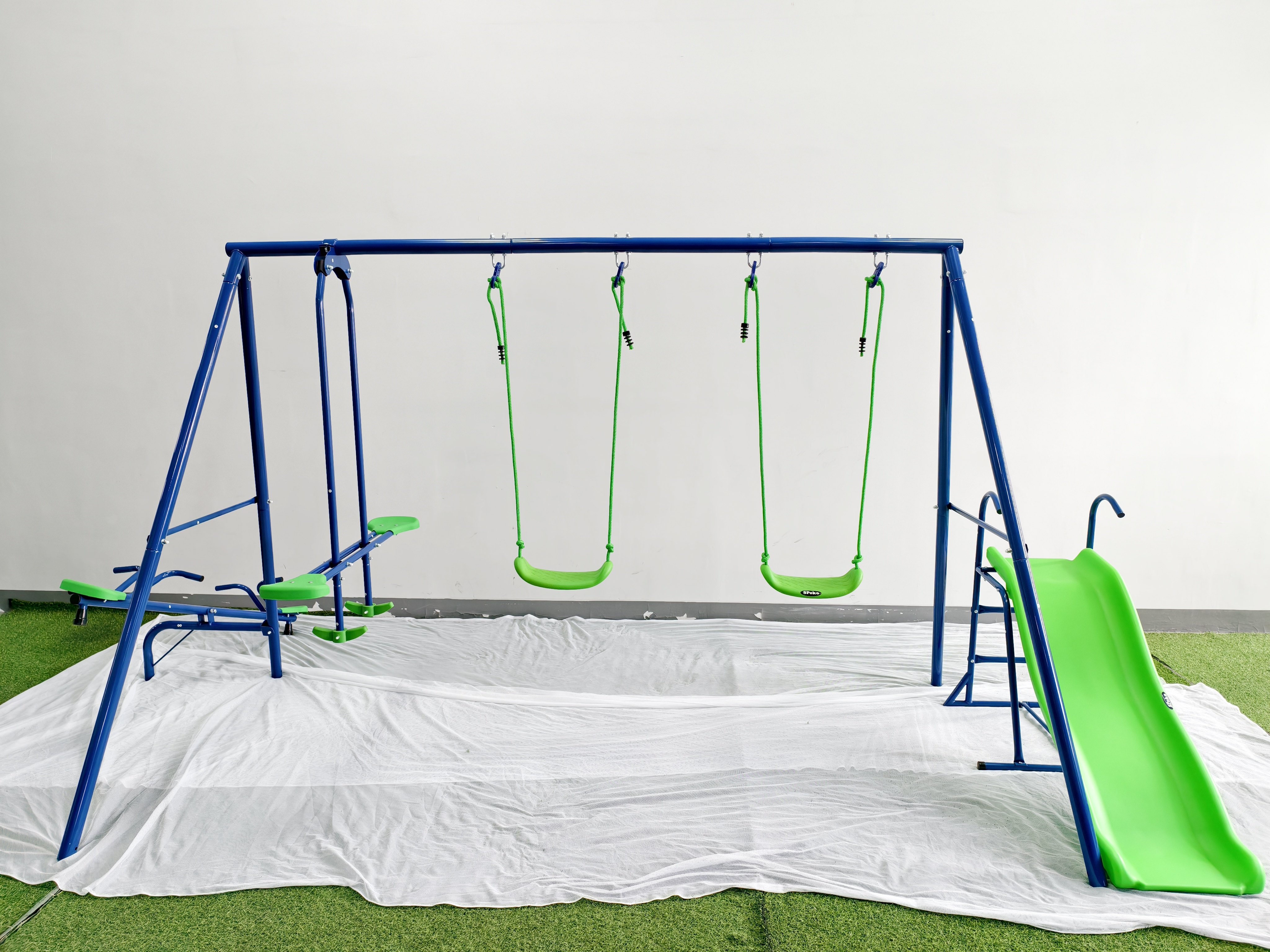
A poorly configured playset loses its appeal as children grow taller and heavier. You should view this purchase as a decade-long investment. Selecting the right structural components ensures the equipment adapts to changing developmental needs. A truly versatile outdoor slide and swing set will keep teenagers just as engaged as toddlers.
Swing beam capacity dictates the true strength of the entire system. You must strictly verify the weight limits per individual swing station. Do not just look at the total aggregate capacity. Standard residential sets often support around 115 pounds per seat. Commercial-grade setups handle over 250 pounds per seat. Always examine the hardware mounting the swings. You should look for heavy-duty, commercial-grade ductile iron swing hangers. Standard plastic hangers degrade quickly and snap under dynamic loads. Through-bolt iron hangers provide vastly superior safety margins.
Age-appropriate scaling guarantees sustained engagement. Toddlers aged two to five require specific protective features. You should install enclosed bucket swings to provide back support. Shorter scoop slides prevent intimidating drop-offs. Enclosed lower playhouses offer safe, ground-level imaginative play. These features protect developing motor skills while building confidence.
Older children aged six to twelve demand greater physical challenges. They quickly outgrow toddler accessories. You should swap basic seats for wide web or nest swings. High-rail wave slides deliver faster speeds safely. Vertical rock walls and taller deck heights exceeding five feet encourage climbing and strength building. Advanced configurations might even include overhead monkey bars or standalone tire swings.
Modularity stands as the most vital configuration strategy. You should prioritize buying from manufacturers offering extensive add-on catalogs. Modular designs let you swap a baby swing for a trapeze bar years later. You can attach an extra sliding tube or expand the main fort deck. This upgrade path extends the functional lifespan of the setup. It prevents the equipment from becoming an obsolete yard ornament.
Backyard playgrounds must adhere to strict safety regulations. Structural failures or improper ground conditions routinely cause severe injuries. You cannot treat safety features as optional upgrades. Following established compliance guidelines protects your children during high-energy play sessions.
ASTM compliance serves as the baseline for structural integrity. Certified equipment undergoes rigorous testing for tip-overs and load failures. You should visually inspect the construction style. High-quality sets feature recessed hardware. This prevents protruding bolts from snagging clothing. Through-bolt construction clamps thick beams together securely. Lag screws alone cannot provide adequate long-term shear strength. Sanded radius edges eliminate sharp corners on all wooden components.
Ground surfacing realities often surprise new buyers. Standard backyard grass completely fails impact absorption tests. Dirt compacts into a concrete-like surface under heavy foot traffic. A fall from a five-foot deck onto hard dirt often results in fractures. You must install a dedicated safety surfacing layer. Proper shock-absorbing ground cover is a mandatory safety requirement.
Engineered Wood Fiber (EWF): This option proves highly cost-effective for large areas. EWF knits together to form a firm, wheelchair-accessible surface. However, it requires annual topping up as the wood naturally decomposes into soil.
Rubber Mulch: This synthetic material delivers the highest impact absorption ratings. It remains completely weed resistant and ignores moisture. While rubber mulch demands a much higher initial cost, it rarely needs replacement.
Pea Gravel or Sand: These traditional materials remain incredibly budget-friendly. They drain water well. Unfortunately, they can conceal hazardous objects like broken glass. Sand also frequently attracts neighborhood cats seeking a litter box.
Anchoring systems finalize the safety installation. Freestanding sets will violently tip over if children swing in unison. You must emphasize ground stakes for every structural post. Concrete footings provide the ultimate swing beam stability. You dig precise holes, set the anchors, and pour quick-setting concrete. This permanent anchoring becomes absolutely vital in regions experiencing high wind shear or severe storms.
The journey from purchasing to playing involves significant logistical hurdles. Many buyers drastically underestimate the effort required to assemble thousands of individual parts. Proper planning prevents half-finished projects from languishing in the backyard. You need a clear understanding of labor commitments, legal restrictions, and ongoing upkeep.
Choosing between DIY and professional installation heavily impacts your schedule. You must set realistic expectations for a DIY approach. Building a multi-level fort requires at least two capable adults. You will need specialized tools, including impact drivers, specific drill bits, and precise levels. This is never a single-afternoon project. Average DIY assembly typically demands 12 to 24 hours of intense physical labor. Sorting hardware alone often takes two hours.
Hiring professional installers removes this massive burden. You should utilize a specific framework for evaluating professional installation fees. Reputable assembly services usually charge between 20% and 30% of the total set cost. Flat-rate quotes provide better financial predictability than hourly billing. Always verify their liability insurance before allowing crews into your yard.
Municipal compliance frequently derails backyard projects. Many neighborhoods enforce strict architectural guidelines. You must check local zoning laws before finalizing any purchase. Determine your exact property setback lines. Cities often require large structures to sit at least ten feet away from property fences. Homeowner Associations (HOAs) frequently restrict maximum structure heights. They may also dictate specific roof colors or mandate wooden materials over metal. Submitting plans to your HOA board prevents costly forced removals.
Long-term maintenance commitments keep the structure secure. You must embrace a transparent, recurring checklist. First, schedule a complete hardware inspection three months after installation. Wood settling causes connections to loosen; you must retighten all through-bolts. Second, apply a high-quality wood sealant yearly to prevent rot and UV graying. Finally, inspect all plastic components for UV degradation. Faded plastic slides can become brittle and crack under heavy loads. Consistent upkeep guarantees a decade of safe backyard memories.
Selecting the ideal outdoor playground demands careful strategic planning. You should logically prioritize available flat space and thick safety surfacing first. These foundational elements non-negotiably dictate the safety of your children. Second, select your core materials based entirely on your personal maintenance appetite and local climate. Third, choose modular features offering clear upgrade paths for growing kids.
Take immediate action before browsing specific product catalogs. Grab a tape measure and accurately map your yard. Use landscape paint to mark the mandatory 6-foot safety perimeter. Finally, review your local HOA guidelines regarding height limits. Completing these exact steps ensures your backyard investment delivers years of safe, unobstructed joy.
A: A premium cedar or redwood set routinely lasts 10 to 15 years with proper care. You must apply sealant annually to achieve this lifespan. Cheaper untreated woods or neglected pine sets typically degrade, warp, or rot within 5 to 7 years.
A: We strongly advise against installing sets directly on grass. Standard lawn grass fails all safety impact tests and compacts into hard dirt quickly. Furthermore, mowing around the structure becomes frustrating, and the trapped moisture accelerates wood rot at the base.
A: Individual swing stations on residential sets usually hold between 115 and 150 lbs. The total structural capacity of the main fort deck often exceeds 800 lbs. Always verify the manufacturer's specific per-station limits rather than just the aggregate capacity.
A: Buying a pre-fab kit almost always provides better value. While sourcing raw lumber seems cheaper initially, purchasing individual commercial-grade brackets, slides, and safety-tested hardware quickly inflates costs. Pre-fab kits guarantee precision-cut wood and engineer-certified structural safety.


