

close
Choose Your Site
Global
Social Media

Author: Site Editor Publish Time: 2026-07-05 Origin: Site
Purchasing a backyard playset marks a significant, multi-year investment for your growing family. You want playground equipment built for enduring fun and safe memories. Yet, buyers often face intense decision fatigue when browsing catalogs. You look at seemingly identical models across vastly different price tiers, wondering what actually justifies the premium cost. A truly successful purchase requires looking far beyond basic aesthetic appeal.
You must prioritize long-term structural stability, age-appropriate play scaling, and verifiable safety compliance based on ASTM standards. We created this comprehensive evaluation framework to guide your purchasing journey. You will learn how to objectively assess structural components, safety footprints, and material quality. We will help you understand the spatial requirements needed for safe play. This guide will empower you to shortlist the best options confidently.
Material dictates lifespan: Premium woods (cedar/redwood) or vinyl-sleeved structures offer superior rot and weather resistance compared to standard treated pine.
Space dictates safety: A proper installation requires a minimum 6-foot obstacle-free safety perimeter around the entire footprint.
Modularity extends value: Opting for sets that support interchangeable accessories (like upgrading from toddler buckets to a saucer swing) increases the lifespan of the equipment as children grow.
Hardware matters: Recessed, galvanized, or powder-coated hardware is non-negotiable for structural integrity and preventing rust-related failures.
A strong foundation ensures safe play for decades. The main frame material dictates how long the structure survives harsh weather conditions. Buyers primarily choose between natural wood, vinyl-sleeved wood, or metal. We recommend comparing these materials based on rot resistance, ongoing maintenance needs, and overall structural stability.
Frame Material | Primary Advantage | Maintenance Level | Best Application |
|---|---|---|---|
Cedar & Redwood | Naturally rot and insect-resistant | Moderate (Requires sealant) | Classic backyard aesthetics |
Vinyl-Coated Wood | Splinter-free and moisture-proof | Low (Occasional washing) | Humid or coastal climates |
Powder-Coated Steel | Extreme load-bearing capacity | Low (Check for scratches) | High-traffic residential areas |
Cedar and redwood naturally resist insects. They also repel moisture much better than standard treated pine. You will likely notice minor cracks along the beams over time. Industry experts call this process "checking." Checking happens naturally as wood expands and contracts during temperature shifts. It remains a superficial cosmetic trait. It does not compromise the structural integrity of the main supports.
Vinyl-coated wood offers the lowest possible maintenance. Manufacturers encase pressure-treated wood inside a protective plastic sleeve. This thick barrier prevents moisture damage entirely. It also eliminates the risk of splinters for bare hands. However, you will pay a considerably higher initial price point for this premium protection.
Powder-coated steel provides extreme durability. It withstands intense weather easily. You must thoroughly check the steel gauge thickness before buying. Thin steel might warp under dynamic play loads. Thick gauge steel ensures the frame remains rigid during aggressive swinging.
Beyond the main posts, you must inspect the fasteners carefully. Hardware holds the entire system together under immense pressure. Look specifically for through-bolts and heavy-duty lag screws. Manufacturers should never use standard wood screws for load-bearing joints. We strongly advise choosing models featuring recessed hardware. Recessed bolts sit deep below the wood surface. They prevent dangerous clothing snags. They also protect children from painful skin scrapes during active play.
Implementation reality often surprises new buyers. Heavy-duty material only performs well on perfectly stable ground. A highly leveled installation site remains absolutely non-negotiable. If you install a premium structure on sloped grass, joint stress increases exponentially. Over time, uneven ground causes premature hardware failure and dangerous wobbling.
Many buyers completely underestimate spatial requirements. You must calculate a dedicated safe use zone before purchasing anything. The formula for safe installation requires adding a significant protective perimeter around the physical equipment.
If you buy a standard outdoor swing slide set measuring 10 by 15 feet, the footprint expands drastically. The Consumer Product Safety Commission (CPSC) guidelines require a 6-foot clearance zone. You must add this clearance in all four directions. Therefore, your required safe use zone actually becomes 22 by 27 feet. This obstacle-free perimeter prevents dangerous collisions if a child jumps mid-swing.
Next, evaluate the primary deck height. Deck height directly impacts play value and age suitability. Consider these common configurations before making your choice:
4-Foot Decks: These lower platforms work best for toddlers. They suit preschool-aged children perfectly. The lower height reduces fall risks significantly. They also feature shorter, gentler slides designed for smaller bodies.
5 to 6-Foot Decks: Swing set towers often use this taller industry standard. They cater beautifully to school-aged kids. Higher decks offer steeper, faster slides. They also provide adequate headroom for under-deck features. You can comfortably add large sandboxes, picnic tables, or built-in playhouses underneath.
You must weigh these spatial options against your specific environmental risks. We constantly warn against installing high-deck towers in compact yards. Do not let the safety perimeter overlap with hard wooden fences. Keep the entire play area far away from low-hanging tree branches. A high deck brings children much closer to overhead hazards. Always look up before finalizing your installation spot.
The main horizontal swing beam endures the most dynamic stress. You must evaluate its structural load capacity very carefully. A standard residential beam should support at least 150 to 200 pounds per individual swing position. Heavy-duty sets often exceed this standard limit. Robust capacity ensures older teenagers and parents can safely swing alongside their younger children.
Interchangeable attachments add massive long-term value. Children outgrow toddler bucket seats quickly. You want a system capable of growing alongside their changing physical needs. Highlight the importance of heavy-duty swing hangers during your evaluation. Ductile iron hangers offer incredible tensile strength. Combine them with nylon bushings for a buttery smooth action. Nylon bushings completely eliminate annoying metal-on-metal squeaks. They also allow for easy swapping of seats as seasons change.
Specialty swings transform a basic set into an exciting playground. Standard belt seats only offer solo play. Multi-child options encourage cooperative activities and build social skills.
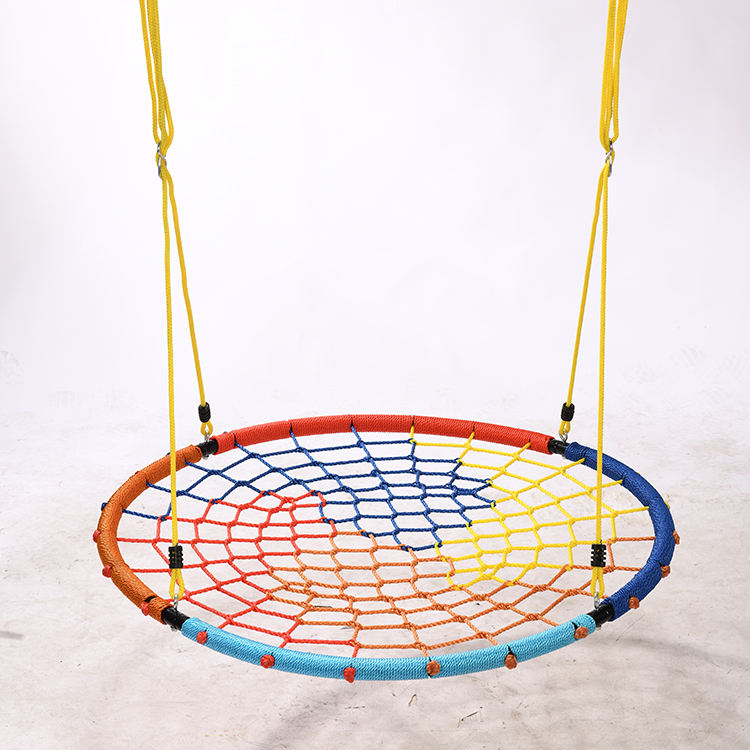
The nest swing provides an excellent cooperative play space. Multiple kids can sit, lay, or stand together simultaneously. You must evaluate these specific units for their dynamic weight limits. They draw much heavier, combined loads than single belt seats. Ensure your top beam can handle this extreme pulling force without bowing.
Similarly, the saucer swing delivers fantastic spinning and swinging motion. When assessing these round models, inspect the material closely. Assess the overall quality of the fabric and webbing. They require premium UV-resistant materials to survive brutal summer sun. Furthermore, check the padding around the outer steel ring. Thick foam padding prevents severe impact injuries if the heavy ring accidentally bumps a bystander.
Always space these specialty accessories properly. They swing in wider, far less predictable arcs than traditional seats. Never install them too close to the main wooden support beams or adjacent swing positions.
Slides often become the main focal point of backyard play. The specific slide design dictates both the thrill level and the overall safety profile.
Wave slides typically serve as the standard factory inclusion. They offer a fun, bouncy descent. When evaluating wave models, check the depth of the plastic side rails. Higher side rails prevent dangerous lateral falls. They keep smaller children perfectly centered during a fast ride.
Tube and spiral slides offer a completely different experience. They enclose the child entirely inside a plastic tunnel. This design makes them ideal for taller decks exceeding five feet. The enclosed space contains the child safely during steep, twisting drops. However, they require much more complex assembly. You must ensure careful alignment during installation. Misaligned tube sections create highly uncomfortable internal seams. These seams can easily scrape elbows and knees.
Material trade-offs strongly impact longevity. Always look for High-Density Polyethylene (HDPE) plastics. HDPE resists freezing cracks beautifully. It also stays cooler under direct afternoon sunlight. In stark contrast, cheaper plastics deteriorate quickly. They fade noticeably after just one summer. Prolonged UV exposure makes cheap plastic brittle, weak, and dangerous.
Apply a strict safety lens when inspecting the slide exit point. Look for slides featuring a wide, flat deceleration zone at the very bottom. The bottom lip should sit almost parallel to the ground. This flat zone ensures the child lands safely on their feet. It prevents them from being ejected forcefully into the ground material. A harsh, abrupt drop-off often leads to painful tailbone injuries or sprained ankles.
Owning a premium wooden playset requires active, consistent upkeep. We want to provide a highly realistic look at backyard ownership. You cannot simply install the equipment and forget about it.
Wood sets demand consistent seasonal care. You must apply a high-quality water sealant every one to two years. This protective coating prevents deep rot and minimizes surface splintering. Furthermore, hardware requires strict seasonal attention. Wood naturally expands in hot summer months and contracts in cold winter months. This constant movement loosens bolts over time. You should perform seasonal tightening across all structural joints. Tight hardware maintains rigid stability and prevents frame swaying.
Evaluating warranties helps you understand actual manufacturer confidence. Do not just look at the total years offered on the marketing brochure. Break down how to read the fine print effectively.
Pro-rated vs. Non-prorated: A prorated warranty loses financial value over time. If a part fails in year five, you might only get a twenty percent discount on the replacement part. Non-prorated warranties cover the full replacement cost for the entire stated term.
Wood Rot vs. Workmanship: A strong warranty explicitly covers structural failure resulting from natural fungal rot. Weaker policies only cover out-of-the-box manufacturing defects discovered during assembly.
Accessory Limits: Manufacturers often split their coverage dramatically. Note the distinct difference between materials. Plastic components usually carry significantly shorter warranties. Slides, canvas tarps, and plastic grips might only have one to five years of coverage. Meanwhile, the main wooden frame might boast a ten-year or lifetime guarantee.
Making the right choice comes down to balancing several crucial factors. The best purchase directly aligns with your available yard space. It accommodates the current and future physical ages of your children. It also requires a brutally honest assessment of your willingness to perform annual maintenance tasks.
Remember these final action steps before buying. First, physically measure your yard. Define the exact safe use zone using the required six-foot rule. Next, evaluate the natural ground level. Determine if you need professional landscaping or grading beforehand. Avoid making a final shortlist until you know exactly what your backyard can safely accommodate. By prioritizing heavy-duty hardware, durable materials, and generous safety perimeters, you ensure years of joyful, secure outdoor play.
A: Standard residential units typically support 150 pounds per individual swing. The main fort structure often holds 800 pounds or more. However, capacity varies wildly between brands. We strongly advise checking manufacturer-specific testing standards. Commercial-grade or heavy-duty residential sets can hold significantly more weight, accommodating teenagers and adults safely.
A: You do not strictly need a professional, but we highly recommend one. Assembly requires two to three adults and 10 to 15 hours of labor. Professional installation minimizes the risk of improper leveling. It also guarantees correct hardware torque, preventing structural issues and avoiding voided warranties.
A: We strongly advise against using plain grass or dirt. They become highly compacted and offer zero impact absorption. Recommended materials include engineered wood fiber (EWF), rubber mulch, or poured-in-place rubber. These materials compress upon impact, meeting standard fall-height safety criteria and drastically reducing injury risks.
A: Yes, you generally can, provided the swing beam has adequate width. A large circular model often requires removing two standard seats to utilize two swing bay spots. You must also verify the beam’s structural capacity to safely handle the increased dynamic weight generated by multi-child play.


