

close
Choose Your Site
Global
Social Media

Author: Site Editor Publish Time: 2026-06-27 Origin: Site
Designing the ultimate backyard playground marks an exciting milestone for any family. You finally move past wondering what equipment to buy. Now you face the harder question of how to evaluate these options. Parents often struggle to balance upfront costs and weekend assembly time against long-term durability. Wooden sets look classic but bring harsh maintenance realities. Alternatively, poorly made frames rust away after one harsh winter. We provide an objective look at the engineering, safety compliance, and actual implementation requirements of a modern playset. You will discover exactly what separates a fragile frame from a reliable structure. Let us guide you through the pros, cons, and essential buying tips. By the end, you will know exactly how to choose a high-quality structure for your yard.
Durability Advantage: Powder-coated galvanized steel resists rot, warping, and splintering better than standard wood alternatives.
Maintenance Profile: Requires periodic rust checks and hardware tightening, but avoids the annual staining or sealing demanded by wooden sets.
Space & Safety: Total footprint requires planning for a minimum 6-foot clearance obstacle-free zone around the set, plus secure ground anchoring.
Cost vs. ROI: Lower initial price point for entry-level models, but commercial-grade gauge steel sets offer a "Buy-It-For-Life" return on investment.
Choosing a robust metal swing set with slide instantly solves many structural worries. Material integrity remains the strongest argument for choosing steel over natural timber. High-gauge metal completely avoids the structural degradation common in untreated wood. Termites and carpenter bees easily destroy natural timber. Steel provides complete immunity against these outdoor pests. Moisture causes wood to rot over time. Galvanized frames block moisture entirely. Your backyard structure remains fundamentally sound for decades.
Modern A-frame designs offer incredible weight and stability efficiency. They distribute weight perfectly without requiring massive support beams. Wood frames rely on sheer bulk for stability. Steel achieves superior strength through intelligent geometry. This makes the entire unit lighter to ship and easier to construct.
Cost predictability is another massive advantage. Owning a wooden frame involves hidden recurring expenses. You must purchase sandpaper, premium exterior stain, and brushes every few years. You also lose an entire weekend to labor. Metal avoids all this grueling maintenance. The predictable lifetime cost heavily favors steel.
Aesthetic retention matters for your property value. Sunlight bleaches natural wood quickly. Rain causes noticeable warping. Wood turns a dull gray within just three years. Metal sets utilize UV-resistant powder coating. This process bakes color directly onto the steel surface. The bright finish prevents fading and weathering effectively.
Material Comparison Chart: Wood vs. Metal | ||
Feature | Metal Frames | Wooden Frames |
|---|---|---|
Pest Resistance | Impervious to insects | Susceptible to termites and carpenter bees |
Maintenance Need | Low (periodic bolt checks) | High (annual staining and sealing) |
Weight Distribution | Efficient A-frame stability | Requires heavy, massive support beams |
Aesthetic Retention | High (UV powder coating prevents fading) | Low (Wood grays and splinters over time) |
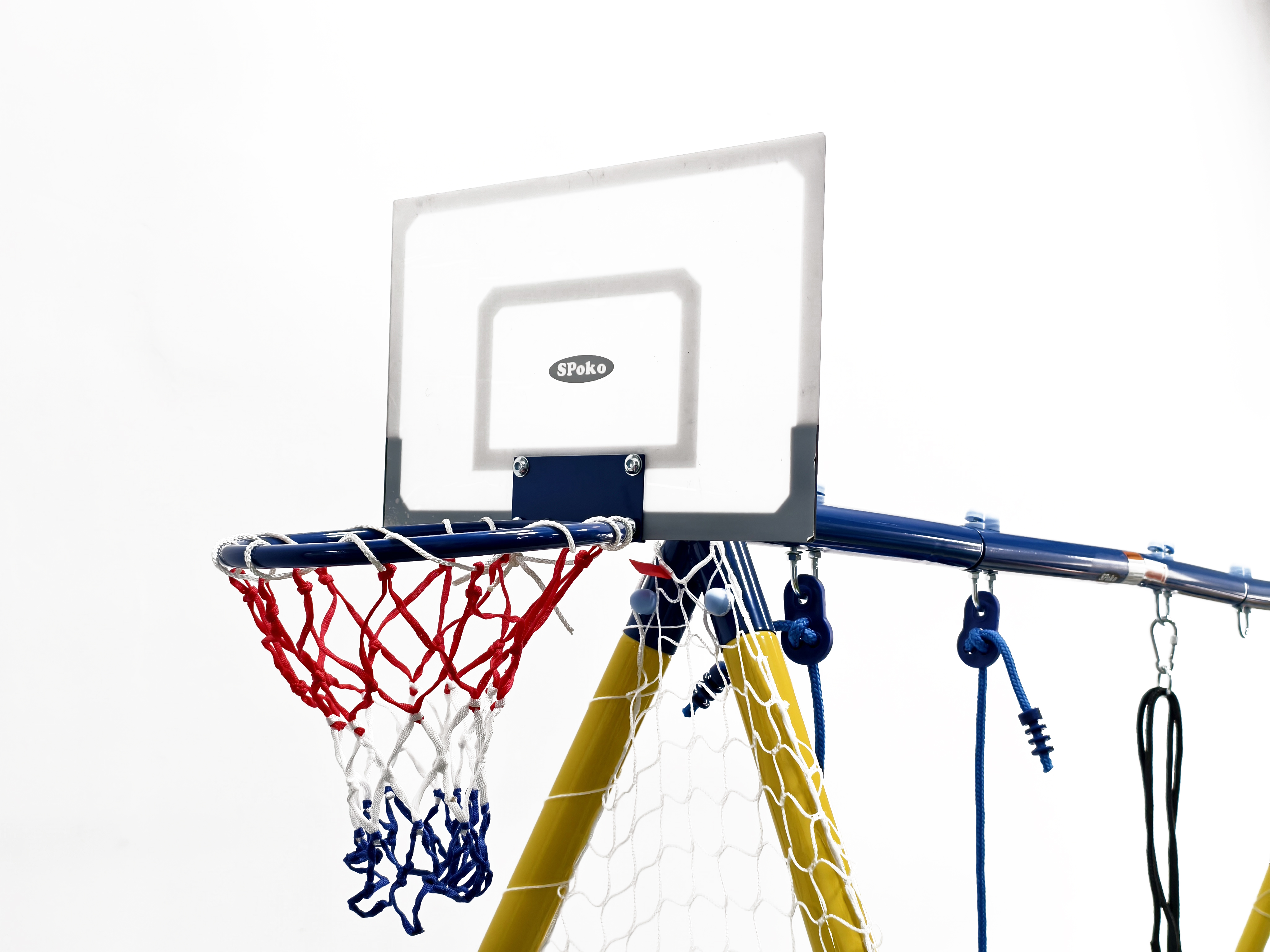
Evaluating a metal swing slide set requires understanding essential engineering specifications. Do not judge a set purely by its visual appeal. You must inspect the structural details carefully.
Steel Gauge and Frame Thickness: The steel gauge determines overall frame strength. A lower gauge number indicates thicker steel. Commercial-grade sets use 10-gauge steel. Cheaper residential options often use 18-gauge steel. We highly recommend 2-inch tubular steel for maximum stability. Thicker frames easily support older children and aggressive swinging without bowing.
Coating and Rust Prevention: Basic paint chips off quickly. Once paint chips, rust destroys the exposed metal. Galvanized steel provides real protection. Manufacturers apply a zinc layer to prevent oxidation. Look for frames featuring both internal and external galvanization. Internal rust acts as a silent killer. Powder-coated finishes offer the ultimate outer shield against harsh weather.
Slide Material and Heat Mitigation: Parents routinely worry about hot metal slides. Modern sets solve this problem easily. High-quality structures use High-Density Polyethylene (HDPE) slides instead of metal ones. HDPE resists heat absorption brilliantly. Manufacturers also add UV-protective chemicals into the plastic. This ensures the slide remains safe to touch even during peak summer afternoons.
Hardware Quality: A strong frame fails if the bolts rust. You must check the hardware specifications before buying. Rust-resistant, commercial-grade hardware ensures long-term safety. Look for Dacromet-coated bolts. These resist corrosion far better than standard zinc bolts. Self-locking nuts prevent the frame from loosening due to daily vibrations.
Safety is entirely non-negotiable. You must verify specific compliance markers before allowing children onto the equipment. Guesswork leads to dangerous accidents.
ASTM Certification: ASTM International sets the global benchmark for safety. Engineers test playground equipment rigorously. They evaluate load-bearing limits and entrapment hazards. Advise buyers to look for sets explicitly meeting these residential standards. Never purchase uncertified backyard equipment.
Weight Capacity Transparency: Many brands advertise an impressive aggregate limit. They claim the structure holds 800 pounds. This number deeply misleads buyers. Five toddlers might safely use it. However, two older teenagers could easily overload a single swing position. Always check the per-user or per-swing limit. A quality seat supports at least 150 pounds. This guarantees longevity into older childhood.
Pinch Points and Entanglement Risk: Moving parts present hidden dangers. Bare metal links pose severe risks to small fingers. Choose plastisol-coated chains instead. This plastic shield covers the lower half of the swing chain. It provides a soft, secure grip. Hardware joints also require scrutiny. Exposed bolt threads catch loose clothing easily. Capped structural joints eliminate these snagging hazards completely.
Proper planning prevents massive installation headaches. The actual footprint demands much more space than the frame itself. Preparing the site takes time and physical effort.
Site preparation requires a highly leveled yard. Uneven ground ruins installations quickly. Wood frames possess slight flexibility to accommodate minor dips. Metal frames remain completely rigid. If the ground drops, the frame wobbles dangerously. You must level the yard perfectly before unboxing any parts. Use a long level and heavy grading tools.
Grass does not cushion falls adequately. Hard dirt acts like concrete during an impact. Safety guidelines mandate a dedicated "fall zone". You need an impact-absorbing surface extending at least 6 feet outward. This rule applies in all directions around the equipment. Use engineered wood mulch, rubber mats, or pea gravel. This critical buffer protects children during inevitable tumbles.
Unanchored structures tip over during heavy swinging. A moving child generates massive kinetic energy. You absolutely must anchor the equipment securely. The right anchoring system depends entirely on your local soil composition.
Anchoring Systems Guide | |||
Anchoring System | Best Soil Type | Installation Effort | Stability Level |
|---|---|---|---|
Ground Augers | Dense, clay-heavy soil | Medium (Twisted deeply into ground) | High |
Concrete Footings | Sandy or highly loose soil | High (Requires digging and pouring) | Maximum |
Stake Systems | Hard-packed earth | Low (Hammered straight down) | Moderate |
Assembly expectations often frustrate unprepared buyers. Building a large playset takes significant time. Expect a timeframe of 4 to 8 hours. You will need two moderately handy adults. We strongly warn against using overpowered impact drivers. Power tools easily strip bolts or crush tubular steel. Use standard socket wrenches to tighten hardware properly.
Proper maintenance transforms a good purchase into a generational asset. Steel requires minimal upkeep compared to wood. However, "low maintenance" does not mean "zero maintenance". You still need a proactive routine.
Proactive rust management extends the equipment lifespan drastically. Deep scratches expose raw steel to moisture. You must treat scratches immediately. Use an exterior rust-inhibiting enamel to touch up the paint. This simple action stops oxidation from spreading underneath the powder coating. Keep a small can of matching enamel in your garage.
Hardware inspections guarantee ongoing safety. We recommend a strict bi-annual audit. Go around the entire frame and tighten every single bolt. Seasonal temperature changes cause metal to expand and contract. This micro-movement loosens nuts slowly. Check all plastic components for micro-cracks following extreme winter freezes or peak summer heat. Replace any brittle plastic immediately.
Modularity keeps the equipment relevant as your family grows. Assess whether the frame allows for hardware upgrades. You want the ability to swap out infant buckets for standard belt swings later. Adding trapeze bars or specialized gliders extends playtime value. A modular frame adapts to changing age groups perfectly.
Smart purchasing relies on a clear decision matrix. You must prioritize gauge thickness, reliable powder coating, and strict ASTM safety ratings. Ignore superficial features until the structural basics pass inspection. A heavy-duty steel frame provides incredible value when evaluated correctly.
We confidently conclude that metal is the optimal choice for modern backyards. It perfectly suits buyers prioritizing low maintenance and high structural integrity. It delivers immediate cost-efficiency by eliminating recurring staining expenses. You simply need the willingness to properly level the ground and anchor the site.
Your immediate next step requires a measuring tape. Walk into your backyard today. Measure your available space carefully. Remember to include the mandatory 6-foot safety buffer zone in your calculations. Once you confirm the dimensions, you can finalize your purchase with absolute confidence.
A: Not if manufactured with galvanized steel and a powder-coated finish. These protective layers block moisture effectively. However, deep scratches that expose raw steel must be touched up immediately. Use exterior enamel paint to prevent localized rust from forming and spreading.
A: The metal frame will naturally get warm. Reputable brands mitigate this by using lighter paint colors. They also use UV-treated High-Density Polyethylene (HDPE) for the slide and swing seats to prevent burns. Placement in partial shade is highly recommended for optimal comfort.
A: Not always. While concrete footings offer maximum stability, they are not strictly mandatory everywhere. Heavily engineered auger-style ground anchors are entirely sufficient for most residential sets. This holds true provided your local soil is dense and not overly sandy.
A: With basic touch-up maintenance and quality powder coating, a heavy-duty frame easily lasts 10 to 15 years. It often outlasts the actual period your children use it. Routine hardware tightening ensures the structural integrity remains sound throughout its entire lifespan.


