

close
Choose Your Site
Global
Social Media

Author: Site Editor Publish Time: 2026-01-29 Origin: Site
A Rectangle Trampoline delivers powerful, controlled bounce that many athletes and families prefer, but this performance only lasts with proper care. Unlike round models, its design relies on precise spring tension, stable frame alignment, and balanced load distribution. Small maintenance oversights can gradually reduce rebound quality and structural stability. In this article, you will learn how consistent inspections, correct cleaning, and seasonal maintenance help preserve bounce accuracy, safety, and long-term performance for both residential and outdoor trampoline use.
A rectangle trampoline uses straight, evenly spaced springs that work independently. This design allows energy to return directly upward rather than pulling jumpers toward the center. When springs stay uniform in tension, the bounce feels controlled and predictable across the entire mat. Poor maintenance causes uneven stretch, which weakens rebound and changes jump timing. Regular inspection keeps spring response consistent and protects the performance advantage that makes a rectangle trampoline popular for athletic and professional use.
The frame acts as the backbone of a rectangle trampoline. If it shifts, twists, or loosens, energy transfer becomes inefficient. Even small alignment issues can cause dead spots or unstable bounce zones. Tight fasteners and straight rails allow springs to release energy evenly. Over time, outdoor exposure can loosen joints, especially on an outdoor trampoline. Routine alignment checks help ensure that jump force moves cleanly through the frame and back into the mat.
Bounce quality slowly changes when maintenance is ignored. Springs stretch, mats lose elasticity, and frames relax under load. These changes often feel subtle at first. Consistent care stops small issues before they compound. When parts stay within design tolerance, rebound remains crisp and controlled. Maintenance protects not just safety, but also the athletic feel users expect from a rectangle trampoline.
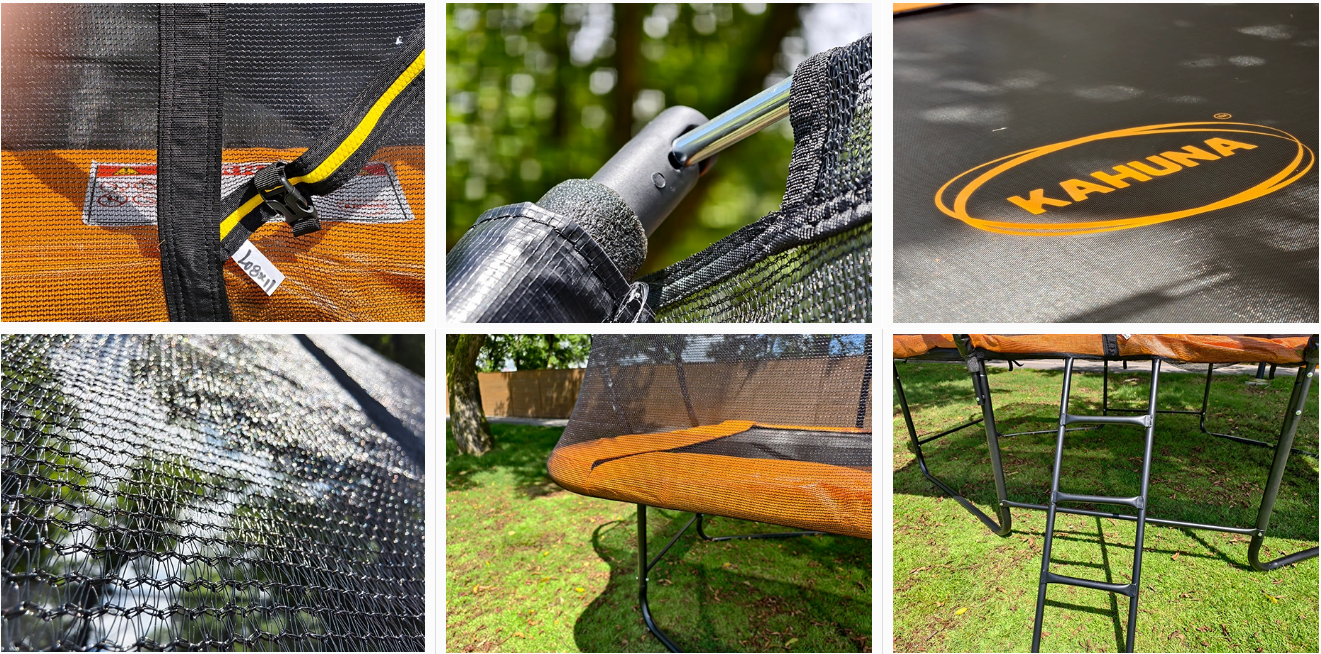
The frame should feel solid during every jump. Monthly checks help confirm that bolts, screws, and weld points remain tight. Outdoor temperature shifts can cause metal expansion and contraction, which loosens joints over time. Inspect rails, legs, and corner connections for movement or noise. A rigid frame keeps spring tension balanced and prevents energy loss. This step is especially important for large outdoor trampoline installations used frequently.
Springs determine how a rectangle trampoline performs. Over time, they may stretch or lose coating protection. Visual checks help spot early signs of wear, such as uneven gaps or slight deformation. Springs should look similar in length and angle. Replacing worn springs early helps maintain uniform tension across the mat. Balanced springs keep bounce height consistent and reduce stress on surrounding components.
The jumping mat is the primary energy-transfer surface of a rectangle trampoline. Fabric tension, stitching strength, and attachment integrity directly influence rebound accuracy and landing stability. Using measurable inspection criteria helps detect early performance changes before bounce quality or safety is affected.
Structured Inspection and Evaluation Table
| Inspection Area | Application Scenario | Inspection Method | Technical Indicators / Reference Values | Units | Professional Notes |
|---|---|---|---|---|---|
| Mat surface thickness | High-use jump zones and landing areas | Visual inspection and hand pressure test | Typical woven PP mat thickness: 0.6–0.8 | mm | Thinning fibers reduce energy return and increase stress on seams |
| Fabric elasticity | Overall rectangle trampoline rebound behavior | Controlled vertical bounce comparison | Rebound consistency deviation: ≤ ±5 | % | Higher deviation signals uneven tension across the mat |
| Sagging depth | Center of mat under no load | Straightedge and depth measurement | Acceptable sag depth: ≤ 20–30 | mm | Excess sag delays rebound timing and affects control |
| Stitching integrity | Perimeter seams and attachment lines | Visual and gentle manual pull test | Broken stitches per 100 mm: 0 | count | Any broken stitch increases load on adjacent fibers |
| Stitch spacing uniformity | Load-bearing seams | Visual measurement along seam | Typical stitch spacing: 5–7 | mm | Irregular spacing causes uneven load transfer |
| V-ring attachment points | Spring connection locations | Visual inspection for tearing or stretch | Allowable elongation at attachment: ≤ 2 | mm | Excess stretch weakens spring-to-mat energy transfer |
| Surface coating condition | Outdoor trampoline exposure areas | Visual inspection under natural light | UV coating intact, no cracking | qualitative | Coating damage accelerates fiber aging outdoors |
| Edge reinforcement band | Mat perimeter reinforcement zone | Flex test and visual inspection | Reinforcement width: 40–60 | mm | Reinforcement absorbs shear stress from springs |
| Load distribution symmetry | Left-right and front-back jump areas | Repeated jump height comparison | Bounce height variance: ≤ ±5 | % | Asymmetry often indicates mat wear rather than spring issues |
| Moisture retention | After rain or cleaning | Touch test and drying time observation | Complete drying time: ≤ 2–4 | hours | Prolonged moisture weakens stitching fibers |
Tip:Pay close attention to stitching and V-ring attachment areas during inspections. These zones often show early wear before visible fabric damage and have a direct impact on bounce predictability and long-term performance of a rectangle trampoline.
Effective cleaning protects both performance and material integrity. Trampoline mats are typically woven polypropylene, which can lose tensile strength if exposed to high heat or aggressive solvents. Using lukewarm water helps dissolve organic residue without softening fibers. Mild, neutral-pH soap removes oils while preserving UV coatings. Soft brushes limit surface abrasion that can roughen the mat and reduce grip. Gentle, consistent cleaning maintains elasticity and ensures the rectangle trampoline responds evenly under load.
Contaminants act as stress multipliers during repeated jumping cycles. Embedded dirt increases localized friction, while moisture trapped in seams accelerates fiber fatigue and coating breakdown. Residue buildup also adds weight to the mat, slightly altering rebound timing. Thorough rinsing removes particles before they migrate into stitching and attachment zones. Complete drying restores normal material stiffness and reduces long-term deformation. Controlling dirt and moisture preserves rebound efficiency and extends usable service life.
Cleaning frequency influences how materials age over time. Weekly light cleaning limits abrasive particle accumulation on high-traffic areas. Monthly deeper cleaning addresses residue that affects surface friction and fiber response. After rainfall, prompt drying prevents prolonged moisture exposure that weakens seams. A structured routine stabilizes material behavior across seasons, helping the outdoor trampoline maintain predictable grip, consistent rebound height, and reliable landing feel during repeated use.
Spring performance changes gradually as metal undergoes repeated load cycles. As fatigue builds, springs may lose stiffness, which lowers rebound efficiency and alters timing during takeoff and landing. Uneven bounce height across the mat often signals localized spring fatigue rather than mat issues. Audible squeaks or metallic clicks can indicate surface wear at hook contact points. Measuring spring length during inspections helps detect overstretching before failure. Early identification allows selective spring replacement, preserving balanced energy return and maintaining consistent rectangle trampoline performance.
Friction at spring hooks and frame contact points increases wear and energy loss during motion. Silicone-based lubricants reduce surface resistance without softening metal or attracting abrasive particles. Proper lubrication lowers localized heat buildup caused by repeated compression cycles. Applying lubricant only to connection points preserves spring stiffness and avoids contamination of mats or padding. Reduced friction improves motion efficiency, limits noise, and helps springs return to their original length more reliably, supporting smoother bounce behavior over extended use periods.
The frame absorbs and redistributes forces generated during every jump. Outdoor exposure introduces moisture, temperature shifts, and airborne contaminants that accelerate surface degradation. Regular drying after cleaning prevents water from remaining in joints or weld areas. Protective coatings slow oxidation by isolating metal from oxygen and humidity. Maintaining a clean, protected frame ensures uniform load transfer to springs and legs. Structural integrity at the frame level is essential for preserving alignment, minimizing fatigue, and sustaining long-term trampoline stability.
Extended heat and ultraviolet exposure accelerate polymer aging in trampoline mats and padding. High surface temperatures increase fiber relaxation, which slowly reduces elastic recovery after each bounce. Using breathable UV-resistant covers lowers radiant heat absorption while still allowing moisture to escape. Positioning the trampoline to receive partial shade during peak midday hours further limits thermal stress on both fabric and springs. Maintaining lower material temperatures helps preserve tensile strength, surface grip, and consistent rebound behavior throughout heavy summer use.
Moisture affects trampoline performance by increasing material weight and reducing elastic response. In humid environments, trapped water inside seams and padding slows drying and promotes gradual fiber weakening. Promoting airflow beneath and around the trampoline allows evaporation to occur evenly across the mat and frame. Elevating the structure slightly above ground level improves circulation and soil drainage. Removing covers promptly after rain prevents condensation buildup, helping the trampoline maintain predictable bounce and structural balance.
Cold temperatures alter metal elasticity and increase brittleness in synthetic fabrics. Accumulated snow adds static load that stretches springs beyond normal operating ranges and distorts frame alignment. Clearing snow promptly prevents uneven downward force on the mat and rails. In colder regions, removing padding and enclosure components reduces wind drag and material fatigue. Proper winter preparation keeps spring angles consistent, protects joint integrity, and ensures the trampoline returns to full performance when temperatures rise again.
Anchoring plays a structural role beyond simple wind resistance. A properly anchored outdoor trampoline maintains consistent frame geometry under dynamic loads created by repeated jumping and uneven ground forces. When the frame remains fixed, spring angles stay within design tolerance, allowing energy to return vertically instead of dispersing laterally. Ground anchors also reduce cyclic micro-movement at leg joints, which slows bolt loosening and metal fatigue over time. For open installations, anchoring should match soil type and load rating to ensure long-term stability, bounce accuracy, and predictable performance.
The area around a rectangle trampoline directly affects maintenance workload, material lifespan, and bounce consistency. Vegetation growth, falling debris, and routine yard equipment can introduce hidden wear risks. Managing these factors with measurable distances and clear standards helps protect mats, pads, and frame components over long-term outdoor use.
| Risk Source | Application Scenario | Recommended Control Measure | Technical Parameters / Data | Units | Maintenance Notes |
|---|---|---|---|---|---|
| Overhanging tree branches | Trees located near outdoor trampoline installation | Prune branches back from trampoline perimeter | Minimum horizontal clearance: ≥ 1.5–2.0 | meters (m) | Reduces leaf accumulation, sap stains, and impact damage during wind |
| Falling leaves and organic debris | Seasonal leaf drop in spring and autumn | Weekly debris removal using soft broom or blower | Cleaning frequency: 1–2 times per week during peak season | times/week | Organic matter retains moisture and accelerates mat coating degradation |
| Grass clippings | Lawn mowing around trampoline base | Remove clippings immediately after mowing | Recommended clearing time: ≤ 24 | hours | Wet clippings promote mildew and increase pad surface friction |
| Robotic lawn mowers | Automated mowing systems near trampoline | Set boundary wire away from frame | Minimum boundary distance: ≥ 0.3 | meters (m) | Prevents repeated frame contact and sensor-triggered collisions |
| Push or ride-on mowers | Manual mowing around trampoline legs | Maintain physical buffer zone | Safe clearance radius: ≥ 0.5–1.0 | meters (m) | Prevents accidental frame strikes and coating damage |
| Flying debris during mowing | High-speed blade operation | Pause mowing when trampoline is uncovered | Blade tip speed (typical): 70–90 | m/s | Loose objects can puncture mats or damage safety padding |
| Weeds and tall grass | Growth beneath trampoline frame | Trim manually with shears, not powered tools | Maximum grass height: ≤ 50 | millimeters (mm) | Improves airflow and reduces moisture retention under mat |
| Soil and dust buildup | Dry climates or bare soil areas | Install ground cover or grass beneath | Recommended ground cover thickness: ≥ 30 | millimeters (mm) | Limits dust abrasion on mat underside and spring hooks |
| Garden tools storage | Tools placed near trampoline | Designate tool-free safety zone | Tool exclusion zone radius: ≥ 1.0 | meters (m) | Prevents accidental contact and tripping hazards |
Tip:Treat the trampoline area like a controlled equipment zone, not just open yard space. Clear distances, regular trimming, and mower planning reduce surface wear, moisture damage, and unexpected impacts, helping an outdoor rectangle trampoline maintain stable bounce and lower long-term maintenance demands.
Placement affects how loads travel through the trampoline frame and into the ground. Installing a rectangle trampoline on level terrain keeps vertical forces evenly distributed across all legs, reducing torsional stress on the frame. Sloped or uneven surfaces shift load to one side, increasing joint wear and spring imbalance. Adequate ground drainage prevents standing water from softening soil, which can lead to gradual settling. Allowing airflow beneath the trampoline helps mats dry faster, reducing moisture exposure and maintaining consistent bounce behavior over time.
Effective rectangle trampoline maintenance is essential for preserving bounce consistency, structural stability, and long-term safety. Regular inspections, proper cleaning, focused spring and frame care, and seasonal protection work together to keep performance predictable and reliable. These practices are especially important for outdoor trampoline installations exposed to changing environments. Zhejiang Zoshine Sports Equipment Co., Ltd. delivers added value through robust frame engineering, durable materials, and manufacturing expertise designed to support long service life, stable bounce behavior, and dependable performance across demanding use conditions.
A: Regular Rectangle Trampoline maintenance keeps bounce consistent, protects safety, and extends service life, especially for outdoor trampoline setups.
A: Inspect a Rectangle Trampoline monthly for frame alignment, spring tension, and mat wear; outdoor trampoline units may need more frequent checks.
A: Use lukewarm water and mild soap on the outdoor trampoline mat and pads to protect fibers and maintain responsive bounce.
A: Uneven bounce usually comes from worn springs, loose fasteners, or mat sagging on a Rectangle Trampoline.
A: Yes, proper Rectangle Trampoline maintenance reduces part replacements and lowers long-term outdoor trampoline ownership costs.


