In 2026, families no longer choose trampolines just for entertainment. Safety, control, and long-term reliability now guide every purchase decision, especially in homes with children of different ages. A Rectangle Trampoline has become the preferred option because it delivers predictable bounce behavior, clearer landing zones, and advanced enclosure protection. In this article, you will learn why rectangle designs outperform other formats, how safety standards have evolved, and which rectangle trampoline brands offer the highest level of protection and performance for modern family use.
What Defines the Safest Rectangle Trampoline for Families in 2026
Family-Centered Safety Design in Modern Rectangle Trampolines
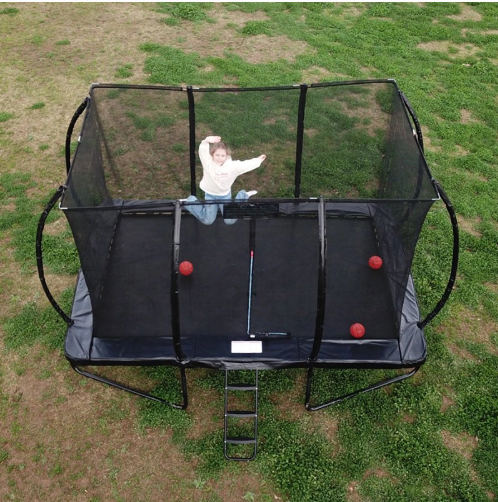
Modern rectangle trampolines are designed around real family use patterns. Brands now assume multiple age groups, varying weights, and frequent daily use. Safety design starts at the mat level, using reinforced stitching and UV-resistant fibers to maintain grip and elasticity. Enclosure systems are fully integrated, preventing gaps between the mat and net. Frames are engineered to flex under load instead of transferring shock. These choices reduce impact stress and help families feel confident letting children play on an outdoor trampoline under normal supervision.
How Rectangle Trampoline Geometry Improves Control and Jumping Safety
In both family and professional settings, the rectangular shape is more than a visual difference. Geometry directly affects force distribution, balance recovery, and user spacing. A Rectangle Trampoline is engineered to deliver predictable rebound behavior, which is why it is widely adopted in athletic training and safety-focused outdoor trampoline applications.
| Geometry / Technical Aspect | Rectangle Trampoline Performance | Impact on Control & Safety | Typical Technical Metrics (Industry Ranges) | Practical Applications | Selection & Use Considerations |
| Spring force distribution | Each spring works independently | Prevents energy concentration and sudden lift | Spring length commonly 210–250 mm; spring rate variation ±5–8% | Family use, youth training | Check for consistent spring spacing |
| Rebound direction control | Primarily vertical rebound | Reduces lateral drift and imbalance | Lateral displacement typically 20–30% lower than round designs (to be verified) | Children, beginners | Requires level ground installation |
| Jumping zone distribution | Large effective jump area | Clearer and safer landing zones | Usable mat area ≈ 80–90% of total surface | Multi-user play | Measure yard dimensions carefully |
| Center pull effect | Minimal center attraction | Lowers collision risk between users | Center pull force notably higher in round designs by ~25% (to be verified) | Family recreation, instruction | Best combined with usage rules |
| Energy decay profile | More linear energy release | Predictable landing response | More consistent rebound timing at millisecond scale | Training-oriented outdoor trampoline | Monitor spring aging over time |
| Edge performance stability | Edge rebound close to center | Reduces edge-related loss of control | Edge rebound height decay <10–15% | Child-focused installations | Still requires no-gap enclosure |
| Space utilization efficiency | Elongated usable layout | Safer spacing between jumpers | Usable area 15–25% higher than round units with similar footprint | Narrow or rectangular yards | Match trampoline size to yard shape |
Tip:When evaluating a Rectangle Trampoline for family or B2B projects, focus on independent spring behavior, effective jump surface ratio, and lateral movement control. These factors provide a more reliable indicator of real-world safety than maximum load ratings alone.
Safety Certifications and Compliance Families Should Look For
Safety certifications help families compare products with confidence. In 2026, leading rectangle trampoline brands meet or exceed ASTM and EN safety standards. These certifications cover structural integrity, enclosure strength, padding performance, and material durability. Compliance testing ensures the outdoor trampoline performs safely under repeated stress and environmental exposure. For parents, certification labels act as a clear signal that the product has been independently tested.
Top Safest Rectangle Trampoline Brands for Families 2026
Brands Leading in Safety Innovation for Rectangle Trampolines
The safest rectangle trampoline brands in 2026 share a commitment to continuous safety innovation. They invest in springless systems, reinforced enclosures, and impact-absorbing frames. Many also refine net pole geometry to bend outward, reducing contact risk. These brands treat safety as a system rather than a single feature. Families benefit from designs that anticipate uneven jumping, repeated use, and outdoor conditions across seasons.
How Premium Materials and Engineering Reduce Injury Risk
Material selection directly affects trampoline safety. Premium rectangle trampolines use hot-dip galvanized steel for frames, which resists corrosion and maintains strength over time. Mats rely on dense weave fabrics that balance grip and elasticity. Padding thickness is increased to absorb missteps near edges. Engineering teams test load distribution under dynamic movement, not static weight alone. Together, these choices reduce sudden recoil and improve stability for family users.
Comparing Brand-Level Safety Systems for Family Use
When comparing rectangle trampoline brands, safety systems should be evaluated as a whole. Some focus on springless designs, while others optimize traditional springs with layered padding. Enclosure attachment methods also vary, affecting gap prevention and net tension. Frame anchoring solutions improve resistance against tipping or shifting. The safest brands deliver balanced protection across structure, surface, and enclosure rather than relying on a single standout feature.
Advanced Safety Technologies Used in Rectangle Trampolines
Springless and Low-Impact Systems in Rectangle Trampoline Design
Springless rectangle trampolines are gaining popularity for family use. Instead of metal springs, they use composite rods or elastic systems that flex smoothly under load. This removes pinch points and reduces abrupt rebound forces. For an outdoor trampoline used by children, the softer response improves landing control and lowers joint stress. These systems also maintain consistent bounce across the mat, supporting safer play sessions.
No-Gap Enclosure and Integrated Net Solutions
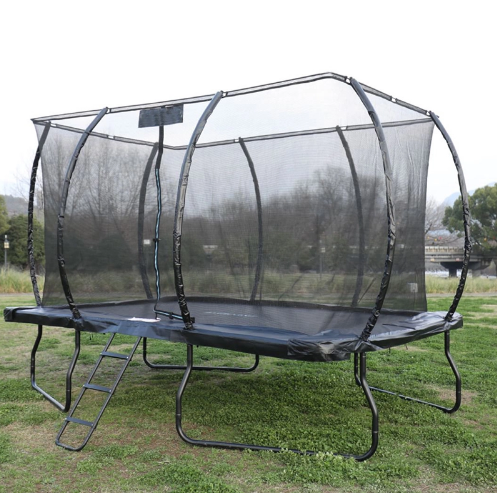
No-gap enclosure technology has become a standard expectation. Integrated nets connect directly to the jumping surface, eliminating exposed edges. This prevents accidental slips through the perimeter during active play. Modern net materials are UV-stabilized and tensioned to flex on impact rather than rebound sharply. For families, this creates a forgiving boundary that keeps users safely contained inside the rectangle trampoline area.
Frame Protection, Padding Thickness, and Edge Safety
Frame protection has evolved beyond basic foam covers. In 2026, rectangle trampolines use multi-layer padding systems with weather-resistant outer surfaces. Padding wraps fully around edges and maintains shape after repeated compression. Frames are positioned lower or outside the jump zone to minimize contact. These improvements protect users during missteps and support long-term outdoor trampoline safety.
Why Rectangle Trampolines Are a Safer Choice for Families
Controlled Bounce Distribution Across the Rectangle Trampoline Surface
From a mechanical perspective, rectangle trampolines achieve controlled bounce by maintaining uniform spring spacing and equal tension along straight edges. This structure reduces energy gradients that can cause sudden vertical spikes. Consistent rebound response improves neuromuscular timing, helping users anticipate landing forces. For children, predictable force return supports balance development and safer posture correction. Adults benefit from reduced joint shock and smoother deceleration, which contributes to safer long-term recreational use.
Reduced Collision Risk for Multiple Family Jumpers
Spatial dynamics play a key role in collision prevention. Rectangle trampolines distribute users along length and width rather than concentrating motion toward a central point. This separation lowers the probability of intersecting jump trajectories. In supervised play, adults can assign zones to each jumper, further reducing interference. Clear directional movement also improves visual awareness, giving users more time to adjust position and maintain safe spacing during active family sessions.
Better Space Utilization and Safer Landing Zones
The rectangular layout creates defined movement corridors that align with natural forward and backward motion. This supports controlled deceleration and intentional landings rather than reactive adjustments. Clear landing zones reduce abrupt directional changes that often lead to slips. For families, the ability to pause, reorient, and reenter play without crossing active jump paths encourages safer habits and makes efficient use of limited backyard dimensions.
Choosing the Right Rectangle Trampoline for Different Family Needs
Rectangle Trampolines for Young Children vs. Teens
Age-specific biomechanics should guide rectangle trampoline selection. Younger children generate lower impact forces but have less developed balance control, so energy-absorbing mats and flexible enclosure systems help moderate rebound and reduce abrupt directional changes. Lower frame heights also shorten fall distance during entry and exit. Teens produce higher vertical forces due to body mass and jump intensity, requiring stronger spring systems and higher dynamic load tolerance. The safest designs use modular structures that maintain controlled rebound while supporting increased force output as users grow.
Weight Capacity and Stability for Multi-User Family Play
Weight capacity should be considered as a dynamic system limit rather than a static rating. During simultaneous use, combined forces can exceed individual body weights due to synchronized movement and rebound amplification. High-quality rectangle trampolines use reinforced frames and evenly spaced spring layouts to distribute loads across the entire structure. Anchoring systems reduce lateral shift caused by uneven loading. This integrated approach maintains structural stability, preserves spring performance, and supports safer supervised multi-user play over long-term family use.
Above-Ground vs. In-Ground Rectangle Trampoline Safety Considerations
For families and project planners, the choice between above-ground and in-ground Rectangle Trampoline installations directly affects fall risk, supervision needs, and long-term safety management. Each installation type relies on different protective mechanisms, making it important to evaluate site conditions, user age, and usage intensity before selection.
| Safety / Technical Dimension | Above-Ground Rectangle Trampoline | In-Ground Rectangle Trampoline | Safety Impact & Rationale | Typical Technical Parameters (Industry Ranges) | Application Scenarios | Key Considerations |
| Fall height | Elevated above ground | Mat level close to ground | Lower fall height reduces injury severity | Above-ground height: ~0.8–1.1 m; In-ground: ~0–0.3 m | Families with younger children | In-ground reduces reliance on enclosure alone |
| Enclosure dependency | Critical safety component | Often optional or secondary | Above-ground relies on net to prevent falls | Enclosure height: 1.8–2.5 m (ASTM common range) | Mixed-age family use | Net quality directly affects above-ground safety |
| Frame exposure | Frame elevated and accessible | Frame partially or fully concealed | Reduced impact risk when frame is lower | Frame top clearance varies by model | Residential backyards | Padding thickness remains important for both |
| Access and entry | Ladder or step system required | Walk-on / walk-off access | Easier entry reduces misstep risk | Ladder rise: ~300–450 mm per step | Homes with frequent child use | Ladders require supervision control |
| Ground interaction | No excavation required | Requires excavation and drainage | Drainage prevents subsidence and instability | Drainage gap: 200–300 mm airspace (typical) | Permanent installations | Poor drainage increases long-term risk |
| Stability against tipping | Anchors strongly recommended | Naturally stabilized by ground | In-ground resists wind and lateral forces | Anchor pull-out resistance varies by soil | Wind-prone regions | Above-ground needs certified anchor kits |
| Visual supervision | Elevated visual profile | Flush with landscape | Easier sightlines reduce blind spots | Yard sightline varies by fence height | Large family yards | Landscaping should not obstruct view |
| Maintenance access | Easy frame inspection | Subsurface components harder to access | Maintenance affects long-term safety | Annual inspection recommended | Long-term ownership | In-ground requires planned inspection access |
Tip:For safety-focused family installations, in-ground Rectangle Trampolines are often preferred where soil conditions and drainage allow. Above-ground models remain highly safe when paired with certified enclosures, proper anchoring, and consistent adult supervision.
Installation and Setup Factors That Enhance Rectangle Trampoline Safety
Proper Placement to Maximize Rectangle Trampoline Safety
Correct placement is a foundational safety factor that directly influences how a rectangle trampoline performs over time. The installation surface should be level within ±1–2 degrees to avoid uneven load transfer that can distort the frame and springs. A minimum clearance of 2–3 meters on all sides helps prevent secondary impacts with fences or structures. Ground composition also matters. Compacted soil or reinforced turf provides better load distribution than loose fill. Proper drainage planning reduces moisture buildup, which can weaken soil stability and affect long-term alignment and safety.
Installation Features That Improve Stability and Balance
Stability-focused installation features are engineered to maintain structural balance during repeated dynamic loading. Anchoring systems distribute uplift and lateral forces into the ground, reducing frame movement during high-energy jumps or wind exposure. Reinforced leg joints improve torsional resistance, keeping the rectangle trampoline square under stress. Balanced frame geometry ensures even spring tension across the mat, which prevents localized overstretching. These features work together to deliver consistent rebound performance while minimizing uneven wear that could compromise safety over extended use.
How Professional or Guided Setup Supports Long-Term Family Safety
Professional or guided setup plays a critical role in translating design safety into real-world performance. Installers follow precise torque specifications for joints and verify that spring tension is evenly distributed. They also confirm enclosure alignment to maintain proper net response during impact. Guided self-installation supported by detailed manuals and labeled components can achieve similar results when instructions are followed closely. Proper setup reduces structural stress, supports predictable bounce behavior, and helps ensure the rectangle trampoline maintains safe operating conditions throughout years of family use.
Conclusion
In 2026, choosing the safest Rectangle Trampoline goes beyond price and appearance. Families should focus on controlled bounce geometry, certified safety standards, durable materials, and proper installation to ensure long-term protection and performance. Rectangle designs offer clearer landing zones, reduced collision risk, and predictable rebound, making them ideal for multi-age households. Companies like Zhejiang Zoshine Sports Equipment Co., Ltd.add value by delivering well-engineered frames, reliable enclosure systems, and consistent product quality, helping families invest confidently in outdoor trampolines that balance safety, enjoyment, and lasting reliability.
FAQ
Q: Why is a Rectangle Trampoline considered safer for families in 2026?
A: A Rectangle Trampoline offers controlled bounce, wider landing zones, and reduced collision risk for family use.
Q: How does a Rectangle Trampoline compare to round outdoor trampoline models?
A: A Rectangle Trampoline provides more usable space and predictable rebound than a round outdoor trampoline.
Q: What safety features should families check before buying a Rectangle Trampoline?
A: A Rectangle Trampoline should include no-gap enclosures, certified frames, thick padding, and stable anchoring.
Q: Are Rectangle Trampoline brands more expensive than other options?
A: Rectangle Trampoline prices are higher, but safety, durability, and long-term value justify the cost.


