

close
Choose Your Site
Global
Social Media

Author: Site Editor Publish Time: 2026-07-09 Origin: Site
Modern parents often struggle to secure 60 minutes of daily active play for their children. Bad weather, limited outdoor space, and high screen-time defaults make this challenge increasingly difficult. How do you keep a child moving when going outside simply is not an option? A kids fitness trampoline solves this precise problem. Also known as a mini-trampoline or rebounder, it serves as a targeted indoor health tool rather than just a recreational backyard toy. It brings high-energy, cardiovascular movement indoors safely.
This article provides a transparent, evidence-oriented framework for evaluating and selecting the right equipment. You will learn how to integrate daily bouncing routines successfully without compromising home safety or space. We will explore everything from evaluating resistance mechanisms to finding the safest frame designs. By the end, you will know exactly how to transform indoor playtime into a highly productive physical habit.
Fitness trampolines provide low-impact, high-efficiency cardiovascular exercise that supports gross motor development and lymphatic health.
Selecting the right model requires evaluating bungee vs. spring resistance, weight capacities, and footprint constraints.
Long-term adoption relies on structured routines and engagement tools like trampoline accessories (e.g., target games, interactive mats).
Safety configurations—specifically adjustable handlebars and non-slip stabilizers—are non-negotiable for independent, daily indoor use.
Rebounding offers physiological benefits beyond simple calorie burning. When a child jumps on a fitness trampoline, they experience varying G-forces. This unique motion stimulates bone density improvements without subjecting young joints to high-impact stress. Traditional indoor activities like running or jumping on hard floors create jarring impacts. Rebounding absorbs the majority of this shock.
The cardiovascular endurance built during a trampoline session rivals traditional running. It also supports lymphatic health. The vertical up-and-down motion encourages the circulation of lymphatic fluids. This process helps flush toxins from the body and strengthens the immune system naturally.
Controlled bouncing deeply influences developmental milestones. Pediatric physical therapists frequently use trampolines to help children reach specific physical goals. The continuous need to land upright forces the brain to calculate spatial positioning instantly. This enhances a child's proprioception and overall balance.
Here are the primary developmental milestones supported by rebounding:
Bilateral Motor Coordination: Jumping requires both sides of the body to work together synchronously.
Core Stabilization: Maintaining an upright posture during a jump forces core muscles to engage constantly.
Ocular-Motor Control: Tracking objects or focusing on a fixed point while moving improves visual focus.
Energy regulation represents another major advantage. Neurodivergent children often require specific sensory input to feel grounded. A trampoline acts as an excellent self-regulation tool. Kids needing heavy work or vestibular stimulation can bounce for ten minutes. This concentrated activity helps them release pent-up energy, solving a major behavioral challenge for many parents.
Understanding resistance mechanisms is crucial for choosing the right equipment. Most indoor trampolines rely on either traditional steel springs or elastic bungee cords. These two systems offer vastly different jumping experiences.
Steel springs represent the traditional approach. They stretch minimally and snap back quickly. This creates a highly responsive, stiff bounce. Unfortunately, steel springs also generate noise. Every jump often produces a squeak or metallic grinding sound. Furthermore, steel springs expose children to pinch injuries if small fingers slip under the safety pad.
Elastic bungee cords provide a modern alternative. Bungee systems utilize thick, interwoven elastic bands instead of metal coils. They stretch deeply and decelerate the jumper smoothly. This creates a softer, more forgiving landing.
The bungee advantage for indoor kids' fitness is substantial. Bungee trampolines operate almost silently. You can easily keep one in a living room while others watch television. The smooth deceleration curve protects developing knees and ankles. The absence of metal coils entirely eliminates the risk of pinch injuries.
Durability realities do differ between the two systems. Steel springs generally last longer under heavy outdoor weather conditions. However, elastic cords perform exceptionally well indoors away from UV light. Bungee cords do wear out eventually and lose their elasticity. You should establish clear expectations for maintenance. Plan to replace the bungee cords every one to two years depending on usage frequency.
Resistance Mechanism Comparison
Feature | Steel Springs | Bungee Cords |
|---|---|---|
Bounce Quality | Stiff and abrupt | Smooth and deep |
Noise Level | Loud (squeaking metal) | Nearly silent |
Joint Impact | Moderate | Very low |
Safety Risk | Pinch hazards present | No pinch hazards |
Maintenance | Low replacement need | Requires periodic replacement |
Buying a fitness trampoline requires precise spatial planning. You cannot simply guess if a model will fit. Indoor environments have rigid constraints. You must calculate both the floor footprint and the vertical clearance needs.
Follow this strict formula to determine your required ceiling height:
Measure the base height of the trampoline mat from the floor (usually 10 to 14 inches).
Add the current height of your tallest child.
Add an expected maximum jump height (typically 12 to 18 inches).
Add an additional 24 inches for absolute safety clearance.
If your ceiling cannot accommodate this total sum, you must select a lower-profile model or a different room. You also need a minimum of two feet of perimeter clearance around the equipment. This buffer prevents collisions with furniture or walls if a child loses balance.
Weight limits demand careful evaluation. Never purchase a model based solely on your child's current weight. Children grow rapidly. You want a product that scales with their growth over a three-to-five-year horizon. If your child weighs 40 pounds today, look for a trampoline supporting at least 100 pounds. This buffer ensures the suspension system remains resilient as they gain mass and jumping power.
Crucial safety features separate premium health tools from cheap toys. Adjustable handlebars remain absolutely non-negotiable for young children. A fixed handlebar quickly becomes useless as a child grows. An adjustable bar ensures proper postural alignment, preventing kids from hunching over while bouncing. It allows them to lean back slightly, transferring their weight safely into the mat.
Frame construction matters immensely. Standard tubular steel bends easily under repetitive stress. Look for commercial-gauge frames treated with powder coating. Leg design also dictates stability. Straight legs often lift off the ground during vigorous, off-center bouncing. Arched legs bow outward, creating a wider, tip-resistant base. This architectural difference prevents the entire unit from flipping during intense play.
The adoption reality for home exercise equipment is notoriously poor. Standalone equipment is often abandoned after the initial excitement fades. A new trampoline might thrill a child on day one. By day ten, it frequently becomes a very expensive clothes hanger. Overcoming this novelty wear-off requires deliberate planning.
Structuring the routine guarantees long-term usage. You must embed trampoline time into existing daily habits. Consider implementing a ten-minute morning "wake up" bounce. This gets blood flowing before school and improves early-day focus. Alternatively, use it for a post-school energy release. When kids come home overstimulated, direct them immediately to the rebounder.
Integrating add-ons successfully extends the product lifecycle. Kids thrive on variety and challenges. By introducing specific tools, you maintain high engagement levels over months and years. These additions transition kids from aimless jumping to structured athletic movements. They give the child a specific target to focus on.
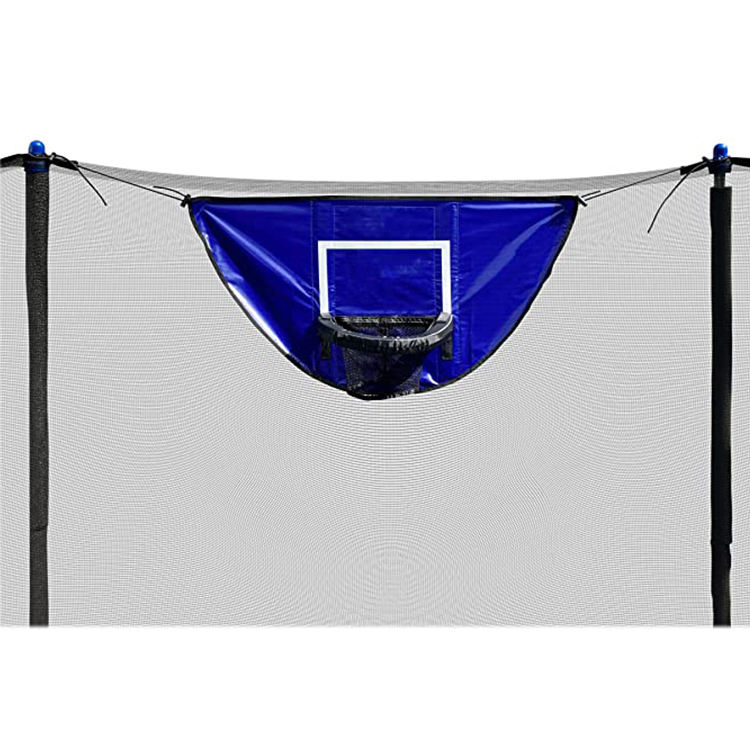
Goal-oriented play completely changes the bouncing experience. Simply jumping up and down gets boring. Adding a trampoline basketball hoop gamifies the fitness routine. Kids will spend hours trying to time their jumps perfectly to sink a shot. You can also use digital jump-counters or smart mats. These tools track metrics and create friendly household competitions. They turn a basic physical activity into an interactive challenge.
The children's fitness market contains exaggerated marketing claims. You must approach product descriptions with a critical eye. Learning to spot red flags saves you money and ensures child safety.
Beware of models claiming "unlimited weight capacity." This is physically impossible for elastic or spring suspensions. A legitimate manufacturer always provides a strict upper weight limit based on material testing. Additionally, watch out for "foldable" claims on cheap models. Many brands advertise easy storage. In reality, folding them requires full disassembly of the legs and handlebar. This cumbersome process means you will likely never fold it away.
Always verify warranty and compliance standards. Look for ASTM (American Society for Testing and Materials) safety certifications. An ASTM badge proves the model passed rigorous independent stability and toxicity tests. Scrutinize the warranty coverage on high-wear parts. The frame should carry a multi-year warranty. The mat and suspension system should offer at least one year of coverage.
Use a structured decision matrix for your final selection. This prevents impulse buying based on aesthetics.
Selection Decision Matrix
Evaluation Step | Primary Consideration | Actionable Rule |
|---|---|---|
1. Space Available | Ceiling height and floor space | Mandate 2ft perimeter clearance and calculate vertical jump limits. |
2. Primary User Age/Weight | Growth scaling | Buy for the child's projected weight 3 years from now. |
3. Budget | Component quality | Prioritize commercial-grade frames over flashy electronics. |
4. Necessary Accessories | Engagement tools | Ensure compatibility with stability bars and hoops. |
A kids fitness trampoline stands as a valid, high-yield investment in daily pediatric health. When chosen correctly, it provides unparalleled indoor cardiovascular exercise. It supports vital developmental milestones, improves spatial awareness, and helps regulate sensory needs. By opting for a bungee-based system with arched legs, you prioritize safety and joint protection.
Your next step is simple and actionable. Grab a tape measure and evaluate your intended indoor space today. Calculate your ceiling clearance and perimeter limits. Then, begin comparing top-rated bungee models featuring adjustable handlebars. With a structured approach and the right equipment, you can successfully secure those crucial 60 minutes of daily active play regardless of the weather outside.
A: Yes, provided you meet strict criteria. Toddlers require models with secure, adjustable handlebars for balance. Pediatricians generally recommend waiting until a child is at least three years old for independent bouncing due to bone development. Adult supervision remains absolutely necessary at all times for this age group.
A: High-quality fitness trampolines will not damage hardwood floors if appropriately equipped. Ensure the model features thick, rubberized, non-slip foot caps. For added protection and noise reduction, we strongly recommend placing a high-density equipment under-mat beneath the trampoline frame.
A: Noise levels depend entirely on the resistance mechanism. Bungee-cord systems operate almost silently, producing very low decibels suitable for apartment living. Traditional steel springs squeak loudly with every jump. To avoid complaints from downstairs neighbors, always choose a bungee model and use a dampening floor mat.
A: Adults should only use a child's trampoline if they fall strictly under the manufacturer's stated weight limit. Exceeding this limit over-stretches the bungee cords, damages the mat, and risks catastrophic frame failure. If adults plan to bounce, you must purchase a heavy-duty, adult-rated rebounder.


