

close
Choose Your Site
Global
Social Media

Author: Site Editor Publish Time: 2026-07-06 Origin: Site
Rainy days and harsh winters often trap boundless childhood energy inside your home. Parents face constant friction during these seasonal weather constraints. You fight exhausting screen-time battles daily. You constantly redirect unsafe furniture-jumping. Children absolutely need predictable, high-yield energy expenditure to thrive physically. Relying on living room couches creates property damage and unnecessary injury risks. Fortunately, structured rebound play offers a highly effective alternative. We evaluate the kids fitness trampoline not just as a standard toy, but as a functional tool for developmental support. This guide offers a skeptical, feature-to-outcome look at indoor trampolines. We help you determine if this equipment is the right space investment for your home. You will learn exactly how to measure physical outcomes. We cover how to ensure daily safety strictly. You will also discover how to build healthy daily routines easily.
Targeted Energy Burn: Rebound exercise provides high cardiovascular output in a minimal footprint, ideal for constrained indoor spaces.
Developmental ROI: Consistent use supports vestibular system development, gross motor skills, and proprioception (highly beneficial for neurodivergent children or those with ADHD).
Evaluation Criteria: Safety hinges on suspension type (bungee vs. spring), handlebar stability, and base construction.
Implementation Reality: Proper setup requires dedicated clearance zones and adherence to strict single-jumper weight limits.
Unstructured indoor play creates daily stress for many families. Kids naturally want to bounce on couches. They unknowingly damage expensive living room furniture. Parents often surrender to passive screen time eventually. Rainy seasons and winter months amplify this specific problem. Children desperately need a physical outlet indoors. An indoor kids trampoline provides a dedicated physical boundary. It approves high-energy exertion in one safe spot. You set clear physical limits easily. Kids immediately understand where they can jump safely.
How do we measure success for this equipment? We evaluate the purchase using practical, daily metrics.
Daily minutes of active use.
Reduction in disruptive behavior.
Ease of storage and daily maintenance.
These criteria prove the value of the space investment. We look for tangible behavioral improvements. You want fewer sibling arguments. You expect smoother bedtime routines. A structured jumping zone delivers these results reliably. Kids burn off excess adrenaline quickly. They settle down much faster afterward. You avoid the constant need to police their physical movements. The equipment acts as a dedicated approved zone. When children ask to jump, you finally have a definitive location. This shifts the parenting dynamic from restrictive to permissive. You encourage physical health without risking your home interior.
Jumping offers profound physiological benefits for growing bodies. It goes far beyond simple physical exhaustion. Rebounding directly stimulates the complex vestibular system. This vital system controls balance and spatial awareness. Rhythmic bouncing regulates excessive sensory input effectively. Children often experience improved focus after brief movement breaks. This proves highly useful for daily homework routines. It also supports children managing ADHD symptoms. Targeted jumps release beneficial dopamine naturally. They reset the overwhelmed nervous system effectively.
Clinical consensus highlights significant bone density benefits. Low-impact rebounding strengthens growing bones safely. The flexible mat absorbs harsh impact forces entirely. Joints stay fully protected during rigorous daily play. Kids develop better bilateral coordination over time. They learn to control both sides of their body simultaneously. They improve their overall physical dexterity.
Cardiovascular efficiency matters greatly for busy families. Ten minutes of rigorous jumping yields incredible results. It equates to roughly thirty minutes of steady running. You achieve high cardiovascular output incredibly quickly. Busy parents appreciate this efficient energy burn. It fits perfectly into tight evening schedules. You do not need to pack bags for the park. You skip the commute to an indoor playground entirely. The cardiovascular benefits happen right in your living room. Consistent aerobic exercise improves sleep quality dramatically. Children fall asleep faster after rigorous daytime movement.
Below is a breakdown of common indoor cardiovascular activities.
Activity Type | Space Required | Energy Burn Rate | Joint Impact Level |
|---|---|---|---|
Rebound Jumping | Minimal (Designated Zone) | High | Low |
Running in Place | Minimal | Medium | High |
Jumping Jacks | Medium | Medium | High |
Indoor Obstacle Course | Large (Multiple Rooms) | Variable | Medium |
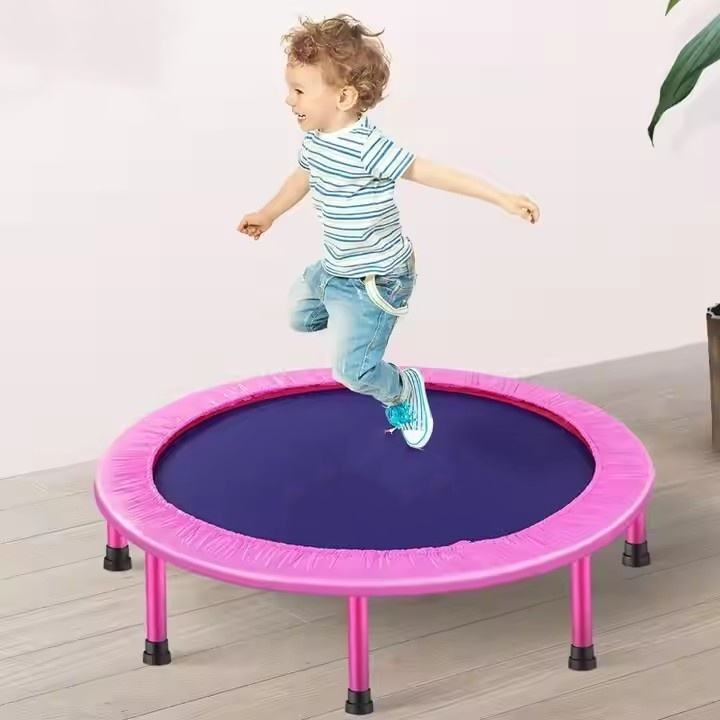
Choosing the right equipment requires strict, methodical evaluation. Suspension systems dictate both safety and noise levels. You must choose carefully between springs and bungee cords.
Springs: These represent the traditional, older choice. They carry a significantly higher pinch risk. They generate loud, disruptive noise during use. They degrade faster under uneven weight distribution.
Bungees: We strongly recommend these for indoor settings. They operate quietly on any floor type. They offer joint-friendly, smooth elasticity. They eliminate dangerous metal pinch hazards entirely.
Stability components ensure safe, worry-free play. Toddlers absolutely require foam-padded, adjustable handlebars. Handrails provide necessary balance support for beginners. They prevent dangerous falls during uncoordinated jumps. Base configurations matter equally for home safety. Suction feet protect delicate hard flooring surfaces. Rubber caps prevent unwanted tipping during aggressive play. The frame must stay planted firmly at all times.
Visual design actively drives daily adoption. Child-friendly aesthetics reduce intimidation for cautious kids. A bright yellow smile kids fitness trampoline utilizes inviting colors. Cheerful character elements encourage daily, unprompted use. Kids naturally gravitate toward fun, familiar designs. Friendly aesthetics make the equipment feel highly approachable.
Footprint and scalability impact your daily living space. Foldable frames offer easy, out-of-sight storage. Rigid frames provide superior, long-lasting structural integrity. You must assess this specific trade-off carefully. Foldable units work exceptionally well in tight apartments. Rigid frames suit dedicated basements or playrooms better. You should consider the long-term placement of the unit. Moving a fully assembled rigid frame through narrow doorways proves difficult. Measure your door frames if you plan to move it frequently. Consider the weight of the frame as well. Heavier steel frames resist tipping but complicate storage. Lightweight aluminum frames move easily but may slide on smooth floors.
Safety protocols demand strict, uncompromising enforcement. The single jumper rule remains absolutely non-negotiable. Roughly 90 percent of trampoline injuries happen when multiple users jump simultaneously. Smaller children experience dangerous, unpredictable double-bounces. You must set strict household boundaries immediately. Only one single child jumps at any time.
Spatial requirements dictate proper, safe setup. You must calculate required ceiling clearance highly accurately. Add the child's height to the maximum expected bounce height. Then add a strict two-foot safety buffer. Create necessary buffer zones around the equipment. Keep it far away from walls. Avoid sharp furniture corners completely. Keep the unit well away from glass windows.
Assembly often creates unexpected friction for parents. Stringing heavy-duty bungee cords requires significant physical strength. You should always use the provided pulling tools. We highly advise a two-person assembly protocol. This straightforward approach prevents painful pinched fingers. It ensures proper, even cord tension across the mat.
Routine maintenance prevents sudden equipment failure. You should create a strict monthly checklist.
Check thoroughly for frayed or stretching bungees.
Tighten any loose handlebar bolts immediately.
Inspect the jumping mat for tiny micro-tears.
Verify all rubber floor grips remain intact.
Wipe down the handrail foam to maintain hygiene.
Sweat and sticky hands degrade foam materials quickly. A simple antibacterial wipe prevents surface breakdown. Replace the foam immediately if kids bite or tear it. Exposed metal handles pose a serious dental hazard during falls.
A trampoline works best as a daily routine tool. You should integrate it into specific daily transitions. It bridges the gap between different activities.
The morning primer wakes up the sleepy nervous system. Five minutes of jumping clears early morning grogginess. It prepares kids physically for school activities. Heart rates elevate safely and steadily. Blood flow increases directly to the brain. Children arrive at breakfast feeling fully alert.
The post-school decompression protocol burns pent-up classroom energy. Schools force children to sit still for hours. Jumping provides a structured, highly effective transition activity. Kids release academic frustration safely. They reset their mood completely before homework begins. This reduces late afternoon meltdowns significantly.
Structured games extend active engagement time significantly. Random jumping loses its novelty appeal eventually. You must introduce engaging, simple variations. Have them count specific jumps out loud. Play Simon Says using different jump styles. Try jumping to a high-energy music playlist. Try setting a timer for active intervals. These strategies keep the activity feeling fresh. They maximize your initial space investment. Consider adding soft floor mats around the perimeter. This creates a distinct visual boundary for the play area. It provides a soft landing spot when stepping off the mat. Transitioning smoothly off the equipment prevents accidental stumbles.
A proper jumping unit transforms unpredictable indoor energy entirely. It turns daily chaos into structured, developmental play. You gain a highly powerful parenting tool. Kids gain a safe, reliable physical outlet. They build strength while staying indoors safely.
Remember our practical shortlisting logic always. Prioritize quiet, safe bungee systems over metal springs. Insist on padded, adjustable safety handles. Verify accurate weight limits strictly before purchasing. Ignore appealing budget pricing if safety features lack quality. Cheap frames wobble and present severe risks.
Take immediate action today to improve indoor play. Measure your intended room space carefully. Calculate your ceiling clearance correctly using our formula. Ensure you have safe buffer zones mapped out. Do this before clicking buy online. Proper upfront planning guarantees a successful indoor play experience. You will transform long winter weekends completely. You will eliminate the stress of rainy afternoons. The right equipment empowers your children to move freely. It protects your home while nurturing their physical development.
A: They do not have to be loud. High-quality indoor models use thick rubber feet to dampen impact vibrations. Bungee cord systems operate almost silently compared to traditional metal springs. Avoid spring-based models if noise remains a primary concern for your household.
A: Most children can safely use them starting around age three. At this age, toddlers develop sufficient gross motor skills and grip strength. The handlebar provides essential balance support. However, parents must always provide active supervision, regardless of the child's age or coordination level.
A: You should use a simple, practical formula to determine safe clearance. Add your child's current height to the maximum expected bounce height. Finally, add a strict two-foot safety buffer. This calculation prevents accidental head bumps and accommodates rapid growth spurts safely.
A: We strongly advise against outdoor use. Indoor-grade mats suffer rapid UV degradation when exposed to direct sunlight. The frames typically use indoor-grade steel. This material will rust quickly if exposed to morning dew, rain, or high exterior humidity.


