

close
Choose Your Site
Global
Social Media

Author: Site Editor Publish Time: 2026-07-07 Origin: Site
Parents everywhere know the daily struggle of managing boundless energy indoors. When cold weather or tight schedules keep you inside, your living room quickly turns into a chaotic playground. Finding a healthy way for children to burn off steam in confined apartments or small homes often leads to property damage. Sometimes, it results in angry noise complaints from downstairs neighbors.
Naturally, you might hesitate to buy bulky indoor equipment. Many buyers fear these items will simply become unused clutter. You might worry they pose a serious safety risk or prove entirely too difficult to store. Fortunately, the right setup solves these issues without overwhelming your shared living space.
This guide provides an objective, criteria-based framework to help you evaluate your options. We will explore crucial factors like actual footprint, suspension mechanics, essential safety features, and realistic storage capabilities. By understanding these elements, you can safely select the best equipment for your home and family.
Suspension matters most: Bungee cords offer a quieter, lower-impact bounce ideal for indoor spaces and developing joints compared to traditional metal springs.
True footprint vs. jump space: A 36-inch trampoline may only offer 26 inches of actual jumpable surface; measure room clearance accordingly.
Foldability is often conditional: Many "foldable" models require partial disassembly (removing legs or handlebars) before they can actually slide under a bed.
Stability over height: Indoor models require a low center of gravity, non-slip rubber footing, and a sturdy handlebar to prevent tipping on hard floors.
Choosing indoor jumping gear requires careful thought. You must first clearly define the primary use case for your family. A cheap, casual play toy behaves very differently from a dedicated kids fitness trampoline. Casual toys often feature lightweight plastics and minimal suspension. Dedicated fitness models prioritize cardiovascular output. They also support crucial motor skill development and core strengthening.
Space limitations dictate what you can safely bring into your home. You cannot simply eyeball an empty corner. You must calculate strict clearance rules to prevent accidents. Proper clearance ensures safe, daily usage.
Vertical Clearance Formula: Calculate your required ceiling height before shopping. Take your child's current height. Add the maximum possible bounce height. Finally, add a mandatory two-to-three-foot safety buffer. This simple math prevents devastating ceiling collisions.
Horizontal Clearance: Do not wedge the unit between couches. We strongly recommend maintaining a minimum two-foot clear radius around the equipment. Keep it far away from sharp furniture corners. Ensure it remains distant from windows, glass doors, and televisions.
You must also confront the "eating space" risk. This term describes the psychological friction of dedicating permanent floor space to a single-use item. A 40-inch diameter frame consumes a significant portion of a small living room. If the equipment dominates your walking paths, you will grow to resent it. Placements must feel natural. You need to visualize the unit in your daily traffic flow. If it blocks a hallway, it will become an annoyance rather than a helpful energy-burner.
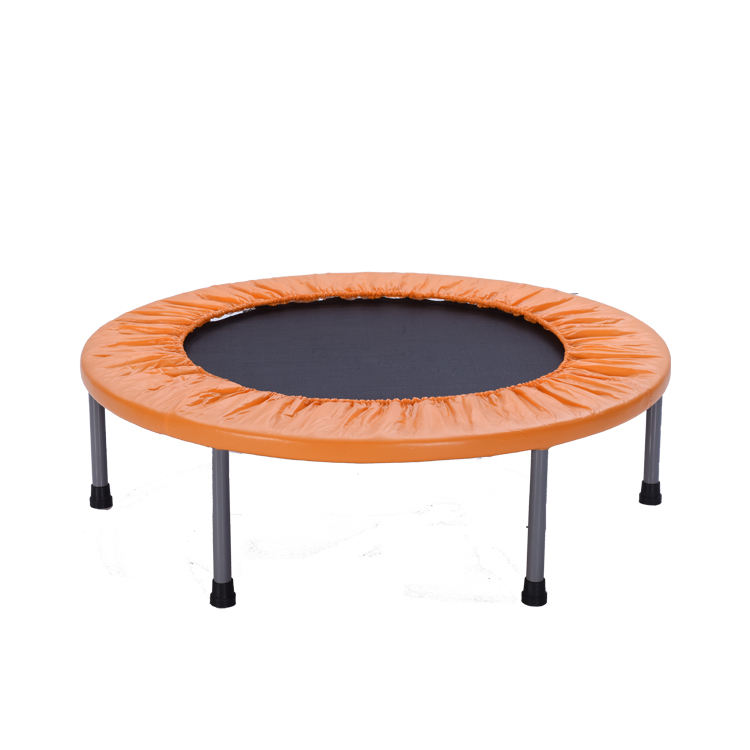
The suspension system dictates the entire jumping experience. It impacts noise levels, safety, and longevity. Buyers generally choose between two primary mechanisms: bungee cords and traditional metal springs. Understanding their mechanical differences helps you make a secure, informed choice.
Bungee cord systems are highly recommended for indoor environments. They offer distinct physical advantages for growing children.
Pros of Bungee Systems: Bungees are virtually silent. This noise reduction remains essential if you share walls or floors with neighbors. They also provide a much softer deceleration phase. This gentle landing protects developing knees and ankles from jarring impacts. Furthermore, bungees eliminate dangerous pinch-points, keeping tiny fingers perfectly safe.
Cons of Bungee Systems: Elastic materials degrade over time. Cords can eventually fray. You may need to replace the bungee bands after heavy, prolonged usage.
Traditional metal springs dominate the outdoor market. They also appear frequently on indoor models, though they present unique challenges.
Pros of Metal Springs: Steel springs boast higher weight capacities. They generally prove more durable over a long-term period. They withstand aggressive, heavy jumping better than elastic.
Cons of Metal Springs: Springs are notoriously prone to squeaking. This high-pitched noise becomes problematic in tight apartments. They also deliver a harsher, abrupt impact on joints. Springs absolutely require thick, secure padding to prevent severe pinch injuries.
Your decision logic should remain straightforward. Opt for a bungee system if noise reduction and joint safety are your primary household concerns. The quiet operation alone makes bungees the superior choice for apartment living.
Feature | Bungee Cords | Metal Springs |
|---|---|---|
Noise Level | Virtually silent (ideal for apartments) | Prone to loud squeaking |
Joint Impact | Soft deceleration (protects joints) | Harsh, abrupt impact |
Safety Risk | No pinch-points for fingers | High pinch risk (needs thick pads) |
Durability | Cords may fray and need replacement | Highly durable long-term |
Marketing photos often show parents effortlessly sliding equipment under a sofa. The everyday reality proves much more complicated. If you need a foldable kids fitness trampoline, you must understand the mechanical trade-offs involved in folding designs.
Manufacturers generally offer quarter-fold or half-fold designs. A half-fold unit folds in half like a taco. A quarter-fold unit folds in half, and then in half again. Mechanical engineering principles dictate that more hinges lead to less structural integrity. A quarter-fold model minimizes storage space. However, it introduces multiple potential points of failure along the frame. Half-fold models remain sturdier but require larger closets for storage.
You must carefully consider the "disassembly" caveat. Marketing materials rarely mention the labor involved. Most folding mechanisms require the user to perform manual labor first. You typically must unscrew four to six metal legs. You must also unbolt and remove the safety handlebar. Only after removing these components can you fold the main frame. You then have multiple loose parts to store alongside the frame.
Frame this decision around your everyday reality. If the entire folding process takes ten minutes, you will not do it daily. Parents quickly grow tired of assembling and disassembling gear every afternoon. We advise buying a foldable unit only for long-term storage or occasional travel. Do not expect to clear it from your living room every single evening. Buy it assuming it will stay assembled for weeks at a time.
A smaller footprint does not mean you can ignore safety protocols. In fact, a tighter frame requires tighter engineering tolerances. When evaluating a compact kids trampoline, you must scrutinize the handlebar, the base, and the weight limits.
Handlebar engineering serves as the primary rollover prevention method. Children pull, lean, and hang on these bars. You must evaluate adjustable versus fixed heights. Adjustable handles grow with your child, offering better long-term value. More importantly, inspect how the handlebar attaches to the frame. Look for handlebars that attach directly to the floor legs in a "U-shape" design. Avoid handles that merely bolt onto the top frame rail. A U-shape connection grounds the bar to the floor, preventing the unit from tipping forward when a child leans heavily on it.
Base stability represents another non-negotiable feature. Indoor models require wide-stance legs. Straight, vertical legs tip over easily. Slightly angled legs distribute force over a wider area. You also need heavy-duty rubber ferrules on the feet. These thick rubber caps grip slippery hardwood or tile surfaces. They also absorb downward shock, preventing the frame from skidding during aggressive jumping sessions.
Weight limit transparency matters greatly. Buyers should always look for models with a dynamically tested weight limit. Dynamic testing measures the force of a moving, jumping body, not just static resting weight. The stated limit should exceed your child's current weight by at least 30 percent. This buffer safely accommodates rapid growth spurts. It also handles the massive high-impact forces generated during energetic play.
Best Practice: Routinely check all floor-leg bolts once a month to ensure vibrations haven't loosened the frame.
Common Mistake: Ignoring missing or cracked rubber foot pads, which instantly creates a sliding hazard on hardwood floors.
Bringing jump equipment indoors introduces immediate logistical challenges. Setup, flooring preservation, and acoustic management require proactive solutions. Ignoring these risks leads to damaged property and intense frustration.
Assembly often surprises buyers. You must heed assembly warnings regarding bungee suspensions. Stretching heavy-duty bungee cords over a steel frame requires significant physical strength. It demands intense leverage. We strongly recommend planning for a two-person assembly. One person holds the frame steady while the other uses the stretching tool. Alternatively, look for premium models that ship pre-strung. Pre-strung units save hours of exhausting labor and prevent scraped knuckles.
Protecting hard flooring remains a top priority. While equipment features rubber feet, these caps can sometimes leave dark scuff marks. Over time, constant downward force can also dent softer wood finishes. Built-in rubber feet often fail to absorb heavy vibrations completely. We highly recommend placing the unit on a high-density EVA foam mat. A heavy, thick rug also works well. These secondary barriers protect your floor from scratching and distribute the mechanical load safely.
You must also address the "downstairs neighbor" factor. Impact noise does not just travel through the air. Low-frequency vibrations travel directly down through structural floor joists. Every jump acts like a drumbeat on your neighbor's ceiling. Understanding this acoustic transmission helps you mitigate it. Combining a high-density EVA mat with a bungee cord system significantly dulls these vibrations. The bungees absorb the initial kinetic shock. The mat absorbs the remaining acoustic transfer. This layered approach keeps your household peaceful.
You now understand the mechanical criteria. It is time to narrow down your options based on your child's specific developmental stage. Different ages require entirely different equipment profiles.
For toddlers aged three to five, safety trumps performance. Prioritize models featuring closed-loop bungees that hide elastic gaps. A central, easily grippable handlebar is absolutely vital for this age group. They need balance assistance more than they need high cardiovascular output. Look for an ultra-low profile over bounce height. A frame sitting just a few inches off the floor prevents severe falls if they step off the edge accidentally.
For grade-schoolers aged six to ten, performance needs increase rapidly. Prioritize higher weight capacities to handle their growing muscle mass. Adjustable handles become mandatory, as their height will change noticeably each year. You must also prioritize wider jump surfaces. Look for frames measuring 40 inches or larger. Older children attempt complex movements. They need a larger target area to land safely without striking the padded springs or frame edges.
Your next step requires immediate action before checking out. Grab a tape measure. Measure the exact intended floor space in your living room. Confirm your room's ceiling height matches the safety formula. Finally, verify the dynamic weight limit of your top three choices. Cross-referencing these physical realities guarantees a successful purchase.
The ideal jumping equipment perfectly balances your child's intense energy needs with the strict physical constraints of your home. You do not have to sacrifice your living room's safety or aesthetics to provide a healthy physical outlet.
We strongly reiterate the recommendation to prioritize bungee suspension systems. Pair them with sturdy, U-shaped handlebar attachments. These functional elements matter far more than bright colors or aesthetic features. Quiet, safe operation ensures the equipment gets used daily rather than shoved in a closet.
Finally, always review exact product dimensions. Never rely solely on manufacturer lifestyle photos, which often use clever camera angles to make products look smaller. Measure your space, respect your ceiling height, and invest in high-quality suspension. Taking these precise steps ensures safe, joyful bouncing for years to come.
A: Pediatric consensus cautions against repetitive, high-impact jumping for very young toddlers on stiff equipment. However, low-impact bungee rebounders with safety handles are generally considered safe. They provide a softer landing. Ensure sessions remain short and highly supervised to protect their developing joints and prevent early fatigue.
A: You must strictly observe the stated weight limits. Most compact kids models max out between 100 and 150 pounds. If an adult exceeds this limit, they risk bottoming out the mat against the floor. This permanently stretches bungees and bends the structural frame.
A: Built-in rubber feet often lose their grip over time as dust accumulates. They cannot prevent sliding during aggressive play. To stop sliding entirely, place the unit on a secondary gripping surface. A high-density EVA foam puzzle mat or a thick rug with a rubberized backing works best.
A: It depends on your primary goal. Rebounders provide intense cardiovascular burn and rapid energy depletion. Foam blocks offer static motor play and creative building. If you have severe noise tolerance issues and zero vertical clearance, foam blocks are safer. If you need to exhaust a highly energetic child, the rebounder wins.


