Weight limits are often the most misunderstood part of buying a rectangular trampoline, yet they directly affect safety, performance, and long-term value. Many buyers focus on size or bounce feel, while ignoring how weight ratings shape real use. This article explains rectangular trampoline weight limits in a clear, practical way. You will learn which numbers truly matter, why rectangular designs handle weight better, and how to choose an outdoor trampoline that performs reliably and safely over time.
What “Weight Limit” Really Means on a Rectangular Trampoline
Single-user weight limit vs total structural capacity
When evaluating a rectangular trampoline, weight ratings often look similar but mean very different things in real use. Each value is designed for a specific physical condition and decision purpose. Understanding how they differ helps buyers avoid misuse, improve safety, and select models that truly match real jumping demands.
| Aspect | Single-User Weight Limit | Total Structural Capacity |
| Definition | Maximum body weight of one person while actively jumping | Maximum total weight the frame can hold when completely stationary |
| Typical range (Rectangular Trampoline) | 300–500 lbs (≈136–227 kg) | 800–1500 lbs (≈363–680 kg) |
| Load type | Dynamic load | Static load |
| Primary physics involved | Gravity + acceleration + impact force | Gravity only |
| Force multiplier | 3–5× body weight during landing (requires verification) | 1× body weight |
| Real-world use case | Daily jumping, training, fitness, athletic practice | Factory testing, transport, storage, static evaluation |
| Safety relevance | Direct and critical | Indirect and limited |
| Main stressed components | Springs, jump mat, localized frame sections | Entire frame, legs, joints |
| Testing method (industry practice) | Repeated dynamic impact testing | Static load testing |
| Common units | lbs / kg under dynamic conditions | lbs / kg under static conditions |
| Value for purchase decisions | Very high | Low to moderate |
| Risk if misunderstood | Under-spec selection leading to bottoming out | Overconfidence and unsafe jumping assumptions |
| Effect on equipment lifespan | Exceeding accelerates spring fatigue and mat stretch | Exceeding may cause permanent frame deformation |
| Multi-user jumping guidance | Not applicable; still based on single user | Not designed for jumping judgment |
| Typical standards referenced | ASTM F381, EN 71-14 (dynamic aspects, verification needed) | Internal structural tests, EN structural references |
Tip:When choosing or operating a rectangular trampoline, always base decisions on the single-user weight limit. Structural capacity may look impressive, but it does not represent real jumping forces. Dynamic ratings define true safety margins and long-term performance in everyday use.
Why jumping force is different from standing weight
Jumping creates dynamic force that multiplies body weight on impact. A 200-pound user can generate several times that load during a high bounce. Standing weight does not reflect this reality. Rectangular trampolines are designed to manage these forces more efficiently, yet limits still matter. Understanding this difference helps buyers avoid misleading claims. It also explains why dynamic ratings are always lower than static ones. For any outdoor trampoline, movement matters more than rest.
Which weight number matters most when choosing a Rectangular Trampoline
When comparing products, always prioritize the single-user weight limit. This number directly impacts safety, bounce consistency, and equipment lifespan. Structural capacity can sound impressive, yet it does not represent real use. Manufacturers sometimes highlight higher static numbers for marketing appeal. Experienced buyers focus on dynamic limits instead. For a Rectangular Trampoline, this approach ensures proper performance under real conditions.
Why Rectangular Trampolines Support Higher Weight Limits
Independent spring response and localized load handling
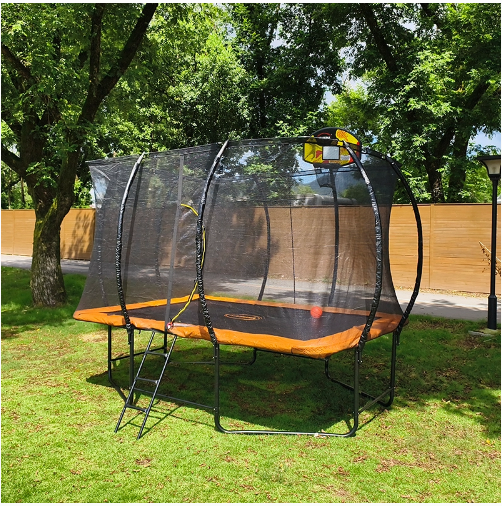
Rectangular trampolines use springs that react independently based on landing position. Only the springs near the jumper absorb impact. This localized response reduces stress across the frame and mat. In contrast, other shapes engage more springs at once, spreading force unevenly. This design allows a Rectangular Trampoline to manage higher loads efficiently. It also improves control during advanced movements. The result is a stronger system built for demanding use.
Reinforced rectangular frame design and corner stability
The rectangular frame distributes force along straight rails and reinforced corners. Corners handle tension more effectively than curved frames. This structure resists bending and maintains alignment over time. Heavy-duty steel tubing further enhances load resistance. For an outdoor trampoline exposed to weather and repeated use, frame geometry plays a major role. Rectangular designs maintain stability even under higher dynamic loads.
Why gymnasts and adults favor Rectangular Trampoline models
Gymnasts and adult users demand consistent rebound and predictable landings. Rectangular trampolines deliver uniform bounce across the mat surface. This consistency supports controlled technique and higher jumps. Adults also require stronger frames and springs to handle greater body weight. The Rectangular Trampoline meets these needs without sacrificing safety. That combination explains its popularity in training facilities and performance-focused homes.
Rectangular Trampoline Weight Limits by Size
Small rectangular trampolines and suitable user weights
Small rectangular trampolines are often designed for children or light recreational use. Their compact frames support lower dynamic loads while maintaining responsive bounce. Typical weight limits suit younger users and early training stages. Despite smaller size, rectangular geometry still offers controlled performance. These models fit limited spaces and basic outdoor trampoline setups. Buyers should match size carefully with user weight to ensure optimal function.
Mid-size Rectangular Trampoline options for families and teens
Mid-size rectangular trampolines balance space and strength. They support higher weight limits suitable for teens and shared family use. These models often appear in residential outdoor trampoline environments. Reinforced frames and longer springs enhance durability. Families benefit from versatile use without upgrading too quickly. A Rectangular Trampoline in this range supports growth and changing needs over time.
Large and performance-grade rectangular trampolines for heavier users
Large rectangular trampolines deliver the highest weight limits and best performance. They are built for adults, athletes, and frequent use. Longer frames and premium materials manage higher impact forces. These models often mirror professional training equipment. For buyers seeking maximum capability, size directly influences load capacity. Proper installation further enhances stability and safety.
Core Components That Determine Rectangular Trampoline Weight Capacity
Frame material, steel thickness, and load resistance
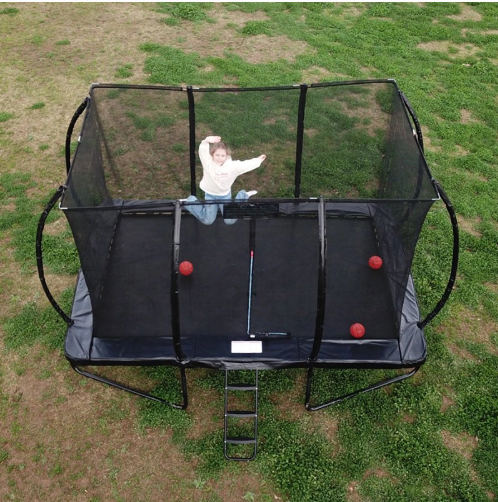
The frame forms the foundation of every Rectangular Trampoline. Galvanized steel resists corrosion and maintains strength outdoors. Thicker tubing increases load resistance and structural integrity. Weld quality and joint design also affect performance. A strong frame absorbs repeated impacts without deformation. For any outdoor trampoline, frame construction directly influences safe weight limits and longevity.
Spring length, tensile strength, and energy absorption
Springs play a central role in how a Rectangular Trampoline manages load and motion. Longer springs increase the time over which force is absorbed, lowering peak stress during landings and improving rebound control. High tensile strength steel allows springs to stretch repeatedly without losing elasticity, which is essential under heavier dynamic loads. Using a greater number of evenly spaced springs further distributes force across the frame, preventing localized fatigue. Over long-term use, well-designed spring systems maintain stable bounce characteristics while protecting frame joints and attachment points.
Jump mat fabric, airflow, and long-term weight performance
The jump mat functions as both a load-bearing surface and an energy regulator. High-density polypropylene fibers provide a balance of tensile strength and flexibility, allowing the mat to deform under load and recover quickly. Increased airflow through the weave reduces air resistance, smoothing rebound and lowering impact forces on the body. This controlled deformation limits permanent stretch, even under higher user weights. For outdoor trampoline use, UV-stabilized fabrics slow material aging, helping the mat retain performance and safe load capacity over time.
How to Choose the Right Rectangular Trampoline Based on Weight
Matching user body weight to appropriate Rectangular Trampoline classes
Selecting the right Rectangular Trampoline starts with identifying the heaviest expected single user, not the average user group. Trampolines are engineered around peak dynamic loads created by one jumper, which can far exceed static body weight. Choosing a model where the primary user operates below the single-user limit ensures springs remain within optimal extension and the mat maintains elastic recovery. This approach delivers smoother rebound, reduces localized frame stress, and keeps performance consistent. It also provides a safety margin for higher jumps, footwear weight, or training intensity changes.
Buying with future growth and changing users in mind
User profiles rarely stay constant. Children gain weight and height, while family trampolines often transition to adult fitness or training use. Selecting a rectangular trampoline with higher weight capacity accommodates these changes without compromising performance. Higher-capacity models typically feature stronger frames, longer springs, and more durable mats, which age more slowly under moderate loads. For outdoor trampoline installations, this forward-looking approach reduces total ownership cost, minimizes replacement cycles, and maintains reliable performance across years of evolving use.
Understanding manufacturer specifications without confusion
Trampoline specifications often include several figures that appear similar but serve different purposes. Buyers should prioritize the single-user dynamic weight rating, as it reflects real jumping conditions. Material details such as steel thickness, spring count, and mat weave density provide additional insight into durability. Recognizing standardized testing references helps distinguish engineered performance from marketing language. When specifications are read in context, buyers can accurately compare models, predict long-term behavior, and select a rectangular trampoline that meets both safety and performance expectations.
Using Rectangular Trampoline Weight Limits for Better Performance
How correct weight limits improve bounce consistency
Bounce quality on a rectangular trampoline is not random. It is the result of controlled energy transfer between the jumper, springs, mat, and frame. Staying within the designed weight range allows each component to operate in its optimal elastic zone, producing stable, repeatable rebound behavior that users can trust.
| Dimension | Within Rated Weight Limits | Approaching / Exceeding Rated Limits |
| Bounce predictability | High consistency between jumps | Increasing variability between rebounds |
| Spring extension range | Operates within elastic design range (typically 20–35% extension) | Approaches plastic deformation zone (>40% extension, verification needed) |
| Energy return efficiency | Stable energy return, ~70–80% (material-dependent, verification needed) | Reduced efficiency due to spring fatigue and mat stretch |
| Jump mat behavior | Elastic recovery maintained, minimal permanent elongation | Progressive elongation, delayed rebound response |
| Vertical rebound deviation | Low deviation, ±5–10% jump height variance | High deviation, inconsistent landing timing |
| User control during landing | Predictable timing improves balance and posture control | Irregular timing increases instability risk |
| Training suitability | Ideal for technique drills, fitness routines, repetition | Poor for structured training due to inconsistency |
| Joint impact loading | Even load distribution reduces peak joint stress | Higher peak forces transmitted to ankles and knees |
| Frame load distribution | Load absorbed locally by springs near landing zone | Load spreads unevenly across frame rails |
| Component wear pattern | Uniform spring and mat wear | Accelerated wear in high-stress zones |
| Recommended use duration per session | Longer sessions supported without performance drop | Performance degrades faster within sessions |
| Effect on long-term bounce quality | Bounce profile remains stable over time | Bounce becomes “dead” or erratic sooner |
| Relevance for adult users | Supports controlled fitness and skill work | Limits confidence and usable jump range |
| Measurement indicators used by manufacturers | Dynamic deflection (mm), rebound height (cm), cycle testing | Increased deflection variance, cycle life reduction |
| Overall performance rating | Optimized, repeatable, engineered behavior | Degraded, unpredictable behavior |
Tip:For fitness programs or skill-based training, bounce consistency matters more than maximum height. Selecting a rectangular trampoline where the primary user operates comfortably below the rated weight limit helps preserve elastic response, improves movement control, and maintains reliable performance over thousands of jump cycles.
Extending trampoline lifespan through proper weight selection
Choosing a Rectangular Trampoline that matches the real user weight range has a direct, measurable impact on service life. Springs operate best within their elastic working range, where metal fatigue develops slowly and predictably. When loads stay within design limits, stress cycles remain uniform, reducing micro-cracks in springs and joint loosening in the frame. The jump mat also maintains tensile stability, resisting permanent stretch. For an outdoor trampoline already exposed to UV radiation, temperature change, and moisture, proper weight matching prevents compounded stress and significantly delays performance degradation.
Creating a safer and more controlled jumping experience
A rectangular trampoline delivers its safest performance when used inside its engineered weight window. Controlled loading keeps mat deflection consistent, allowing users to anticipate landing timing and body position. This predictability improves balance, reduces awkward landings, and lowers peak impact forces on joints. Beginners gain confidence through stable rebound, while experienced users benefit from precise control during repeated movements. Proper weight awareness also limits excessive frame flex and spring overextension, creating a calmer, quieter system. The result is a jumping environment that feels stable, responsive, and trustworthy over long-term use.
Conclusion
Understanding rectangular trampoline weight limits leads to safer and smarter buying decisions. Single-user dynamic ratings matter most in real jumping conditions. Rectangular designs handle weight better through strong frames and balanced spring systems. Size, materials, and future planning all shape long-term performance and value. With the right knowledge, buyers can choose an outdoor trampoline that delivers stable bounce and longer service life. Zhejiang Zoshine Sports Equipment Co., Ltd. provides well-engineered rectangular trampolines that combine durability, safety, and consistent performance for families and professional users alike.
FAQ
Q: What does the weight limit mean on a Rectangular Trampoline?
A: It shows the safe single-user jumping weight for a Rectangular Trampoline during real outdoor trampoline use.
Q: Why is the single-user limit more important than structural capacity?
A: The single-user limit reflects dynamic jumping forces on an outdoor trampoline, unlike static frame ratings.
Q: How do I choose the right Rectangular Trampoline by weight?
A: Match the heaviest user to the Rectangular Trampoline single-user limit for safe outdoor trampoline performance.
Q: Are Rectangular Trampolines better for adults?
A: Yes, a Rectangular Trampoline supports higher loads and offers controlled bounce for adult outdoor trampoline use.
Q: Does staying within weight limits extend trampoline life?
A: Yes, proper loading reduces wear on a Rectangular Trampoline and improves long-term outdoor trampoline durability.


